Best Apps to Reduce Cravings and Track Calories and Nutrients (2026)
Disclosure: IntakeAI is made by the team that publishes this guide. We include it where it genuinely fits, say where other apps are a better choice, and do not accept payment from any app listed. Features and prices were checked against official websites and app store listings on 10 October 2026 and can change.
What is the best app to reduce cravings and track calories and nutrients?
The best app for people who want fewer cravings while tracking calories and nutrients is IntakeAI, the only one of 13 apps we compared that scores every meal for fullness and tells you how to make it more filling; Cronometer is better for the deepest free micronutrient detail, and MacroFactor for weekly adaptive calorie targets. No app has been shown in trials to reduce cravings, so treat any score as a guide. Below we compare features and prices as of October 2026, and say where another app fits better.
Key takeaways
- IntakeAI is the only app we compared that scores every meal for fullness (its 0–10 Cravings control score) and gives two tips to make the meal more filling, using protein, fiber, calorie density and other factors research links with fullness.
- Noom's green, yellow and orange food colors, based on calorie density, are the closest alternative. No app has been shown in trials to reduce cravings.
- Barcode scanning is free in Cronometer and FatSecret but requires Premium in MyFitnessPal and Lose It!.
- In a preliminary NIH study of 102 controlled meals, four photo-logging apps underestimated calories by about 33% on average. Always review a photo estimate.
- IntakeAI, MacroFactor and Carbon have no free tier. IntakeAI's targets come from a formula, not an adaptive algorithm like MacroFactor's or Carbon's.
Quick picks: the best app for each goal
- Best overall for reducing cravings while you track: IntakeAI — scores every meal 0–10 for fullness, gives two tips to make it more filling, and estimates calories, macros and 50+ nutrients from a photo.
- Best for vitamins and minerals: Cronometer — up to 84 nutrients on the free plan, from a curated database.
- Best for adaptive calorie targets: MacroFactor — weekly check-ins adjust your calories and macros from your weight and intake trends.
- Best for database size and integrations: MyFitnessPal — 20.5M+ foods, including restaurant dishes, and 40+ device and app integrations.
- Best for coaching and simple food guidance: Noom — lessons, optional coaching and a calorie-density color system.
- Best free barcode tracker: FatSecret — barcode scanning, macro tracking and reports on the free plan.
- Best for trying AI photo logging for free: SnapCalorie — its FAQ says the app is free for up to 3 AI logs per day.
How do the top food tracker apps compare?
"Not stated" means we could not confirm it from an official source. Prices are US prices as of October 2026 and vary by region and promotion.
| App | AI photo logging | Barcode | Free tier | Micronutrients (official) | Cravings / fullness feature | US price (Oct 2026) |
|---|---|---|---|---|---|---|
| IntakeAI | Yes | Yes, plus label scan | No (free trial on annual plan) | 50+ nutrients, incl. 13 vitamins and 11 minerals | Cravings control score per meal | Subscription (prices shown in app/store) |
| Cronometer | Gold only | Free | Yes (Basic) | Up to 84, on free plan | None | Gold $10.99/mo or $59.99/yr |
| MacroFactor | Included | Included | No (7-day trial) | Yes; count not stated | None | $11.99/mo, $71.99/yr |
| MyFitnessPal | Meal Scan, Premium | Premium | Yes | 5 named (2019 help article) | None | Premium $19.99/mo, $79.99/yr |
| Noom | Scan Meal | Yes | Limited (US green-food logging) | Not stated | Food colors by calorie density | $70/mo, $209/yr |
| FatSecret | Smart Food Scan, Premium | Free | Yes | Not stated | None | $14.99/mo, $59.99/yr |
| SnapCalorie | Yes (3 free AI logs/day) | Not stated | Yes | 100+ (company listing) | None | $19.99/mo, $149/yr |
| Cal AI | Yes, subscription | Yes | Scan results need a subscription | Not stated | None | Not stated |
| Lose It! | Snap It, Premium | Premium | Yes | Premium; count not stated | None | $79.99/yr (no monthly plan) |
| Lifesum | AI Tracking, Premium | Free | Yes | Extra nutrients on Premium; count not stated | None | 1 year $99.99–$119.99 |
| Yazio | AI food tracking, Pro | Not consistently stated | Yes | Pro; count not stated | None | 12 months $47.90 |
| Carbon | Smart Logger, included | Included | No (7-day trial) | Partial list; count not stated | None | $11.99/mo, $99.99/yr |
| Foodvisor | Yes; tier not stated | Yes | Yes, with ads | Premium; count not stated | None | Not consistently stated |
Track calories & nutrients fast


The best apps for cravings, calories and nutrients, in detail
IntakeAI: best overall for reducing cravings while you track
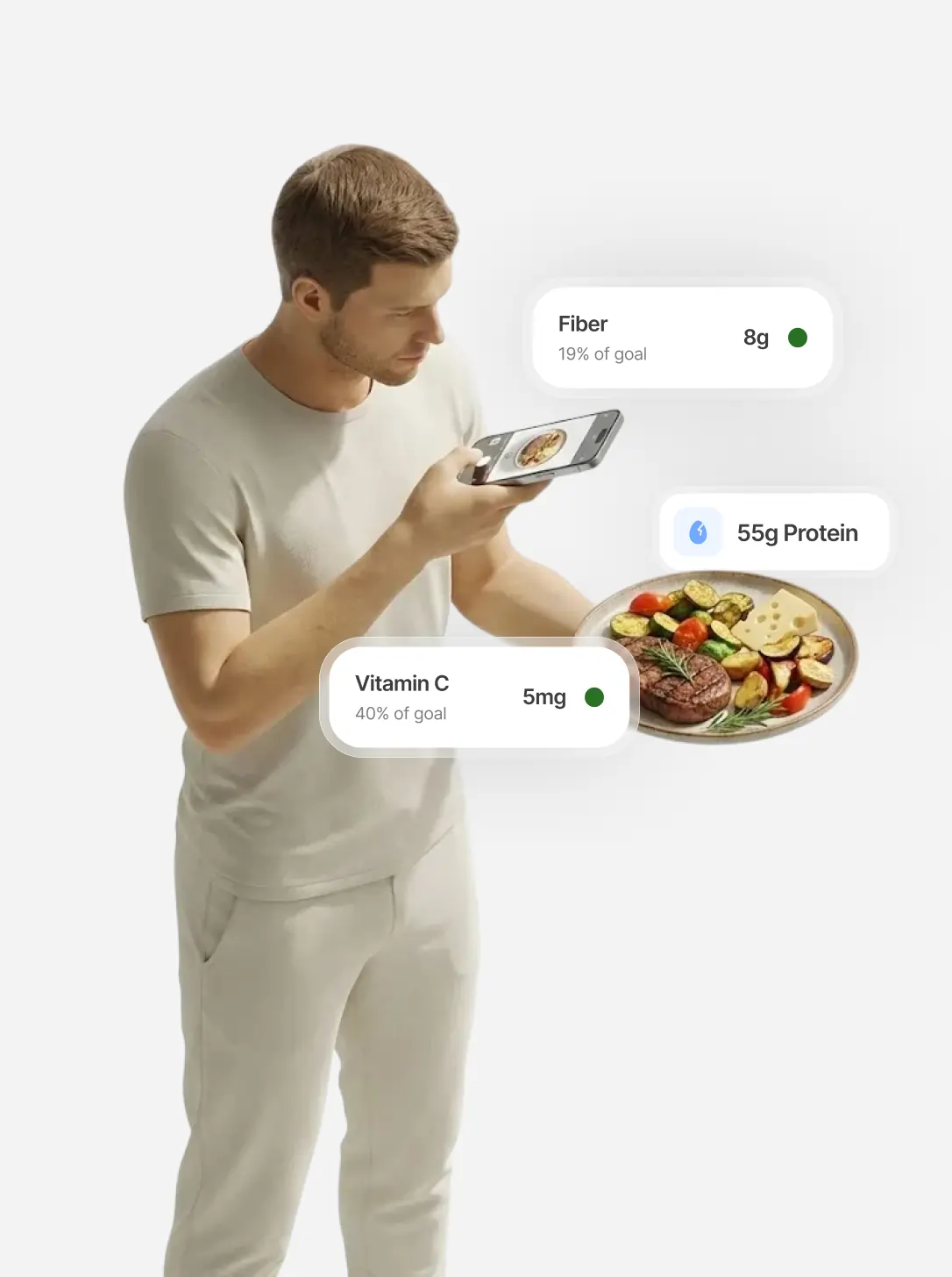
IntakeAI is an iPhone and Android nutrition app designed to help you reduce cravings. It estimates calories, macros and 50+ nutrients from a meal photo, barcode, nutrition label or typed description, then gives each meal a Cravings control score from 0 to 10: a transparent formula, not an AI guess, built from six factors research links with fullness (protein, fiber, calorie density, hyper-palatability, satiety-linked minerals and B12, and processing level). Each meal also gets two "Increase fullness" tips, and a daily fullness chart shows your trend; the research behind the factors is in how to reduce food cravings and food noise. "Fix your missing nutrients" suggests foods for today's nutrient gaps.
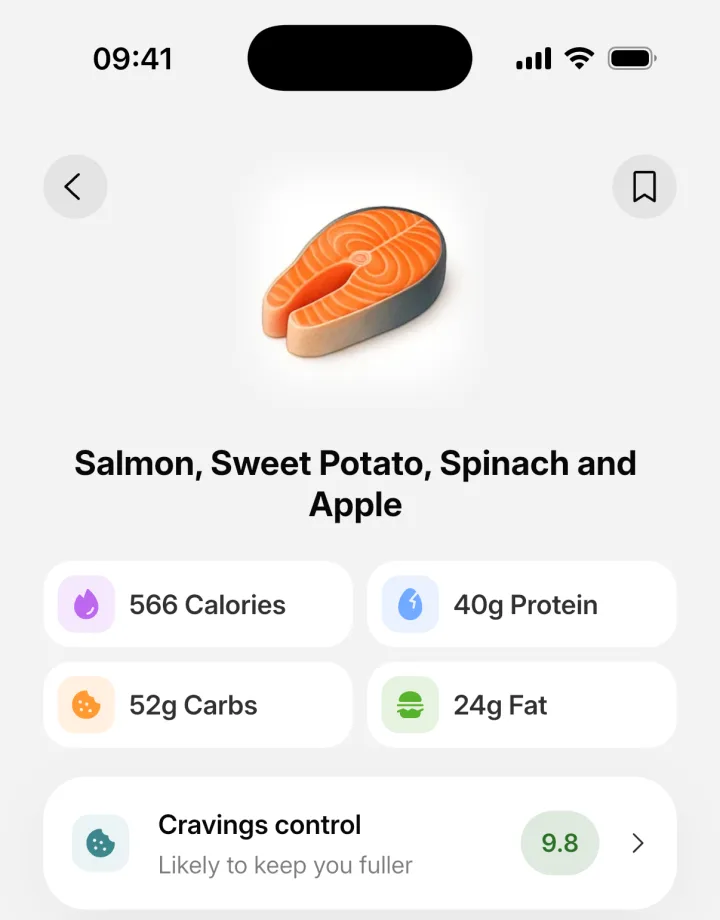
The score is an estimate and has not been tested as a way to reduce cravings. Other limits: IntakeAI needs a paid subscription (free trial on the annual plan, no free tier), and it has no voice logging, Apple Health sync or AI coach. Calorie targets come from the Mifflin-St Jeor formula, not an adaptive algorithm. Photo estimates can be off on portions and hidden oils, so edit them; there is no published accuracy figure for IntakeAI.
Cronometer: best for vitamins and minerals
Cronometer is the strongest choice if micronutrients are your priority. Its free Basic plan tracks up to 84 nutrients and other compounds, allows custom micronutrient targets and includes a free barcode scanner. Most entries come from the NCCDB and USDA SR28, and user-submitted foods are reviewed before they are added. Gold ($10.99/month or $59.99/year) adds AI photo and voice logging. Free reports cover only 7 days, and there is no cravings feature. Our guide to the best nutrient tracker apps compares it in depth.
MacroFactor: best for adaptive calorie targets
If your main question is "how much should I eat?", MacroFactor answers it better than a fixed formula. Its algorithm estimates your energy expenditure and adjusts calorie and macro targets at weekly check-ins, according to its App Store listing. It has a verified database, AI photo logging, a "Describe" option for typed or spoken meals, and barcode and label scanners. There is no free tier (7-day trial; $11.99/month or $71.99/year), and its help center notes that branded foods often lack full micronutrient data.
MyFitnessPal: best for database size and integrations
MyFitnessPal has the largest stated database here, 20.5M+ foods including restaurant dishes, plus 40+ integrations and a web app. The free tier covers nutrition and weight tracking. Meal Scan (photo), barcode scanning, voice logging and custom macro goals are Premium features ($19.99/month or $79.99/year on the US App Store). Its help article lists only five micronutrients (vitamins A and C, calcium, iron, potassium), though it dates from 2019.
Noom: best for coaching and simple food guidance
Noom is a behavior program more than a tracker. Its color system labels foods green, yellow or orange mainly by calorie density; for solid foods, green is under 1.0 calories per gram and orange is over 2.4. Noom says it is designed to help you feel full. The idea has research behind it: lowering a meal's energy density reduces how much people eat at it, according to a review by Barbara Rolls. It adds lessons and optional coaching, and costs more than a pure tracker ($70/month or $209/year), and its free tier counts only green foods, in the US.
FatSecret: best free barcode tracker
FatSecret keeps the basics free: macro tracking, a barcode scanner, reports and a community. Premium ($14.99/month or $59.99/year on the US App Store) adds Smart Food Scan for photos and a Smart Assistant for voice or typed meals. The micronutrient count isn't stated, so it suits people who mainly want free calorie and macro logging.
SnapCalorie: best for trying AI photo logging for free
SnapCalorie is a photo-first app whose FAQ says it is free for up to 3 AI logs per day (the page footer reads 2024, so check in the app). On iPhone Pro models it uses LiDAR to measure food volume, and its listing claims 100+ micronutrients. Its FAQ claims about 15% average calorie error, from company co-authored research on a research model rather than the current app. Premium is $19.99/month or $149/year on the US App Store.
Other apps we compared
- Cal AI is photo-first. Scan results require a subscription after a 3-day trial, and its FAQ says it is "about 80% accurate."
- Lose It! has a 50M+ food database and a free calorie budget; photo, barcode, voice and nutrient tracking are Premium ($79.99/year).
- Lifesum: its help center lists AI Tracking as Premium.
- Yazio suits recipe and fasting fans; photo logging and detailed nutrients need Pro.
- Carbon Diet Coach adjusts targets weekly like MacroFactor, with no free version.
- Foodvisor is free with ads; vitamins and minerals are Premium.
How accurate are AI food tracker apps?
A 2023 systematic review of 52 studies found average AI calorie errors ranging from 0.10% to 38.3%, lower for photos of single or simple foods. More recently, an NIH team tested four apps with photo logging on 102 nutrient-controlled meals and found all four underestimated calories, by an average of 252 kcal per meal for Appediet, 327 for MyFitnessPal, 333 for Lose It! and 345 for Cal AI, roughly 33% overall. All four underestimated fat by about 30 g. This was a conference abstract presented at NUTRITION 2026, not yet a full peer-reviewed paper.
Company claims such as Cal AI's "about 80% accurate" haven't been independently confirmed, and IntakeAI has no published figure either. With any app, note oils and sauces and check portions before you log. Our comparison of the best calorie counter apps with photo scanning covers this in more detail.
How to choose the right app for you
Logging consistently matters more than any feature. A review of 22 studies consistently linked self-monitoring with weight loss, though the evidence was weak. In a 24-week study of 142 adults, people who lost at least 5% of their weight opened their food journal more often (2.4 vs 1.6 times a day). Pick the app you will open several times a day:
- If cravings and constant food thoughts are your main problem, choose an app that shows how filling your meals are and how to improve them (IntakeAI, or Noom for a simpler food-color guide). See the best apps to reduce cravings and food noise.
- To fix deficiencies, choose Cronometer for depth or IntakeAI for photo logging with food suggestions.
- If your weight loss has stalled, MacroFactor or Carbon will recalculate your targets; our guide to losing weight without feeling hungry covers the eating side.
- If you mostly eat packaged food, prioritize a free or good barcode scanner; see the best macro trackers with barcode scanner and photo logging.
- If you have quit logging before, choose the lowest-effort method you will actually use, from the best diet apps for people who hate logging food or the easiest way to track calories, macros and nutrients.
How we compared these apps
We compared features and prices using each company's official website, help center, and US App Store and Google Play listings, all checked on 10 October 2026. Where sources disagreed, we used the official website figure or wrote "not consistently stated." Accuracy information comes from published research and one NIH conference abstract; company accuracy claims are labeled as claims. We looked for any feature that helps you track cravings or fullness. We did not run hands-on tests. Because we make IntakeAI, we list its limitations alongside its strengths.
Frequently asked questions
What is the best app to reduce cravings?
IntakeAI is our top pick because it is the only app we found that scores every meal for fullness (its 0–10 Cravings control score) and gives two tips to make each meal more filling. Noom offers a simpler guide that colors foods by calorie density. No app has been shown in trials to reduce cravings, so use either as a guide.
Which app tracks the most vitamins and minerals?
Cronometer is the best-documented option, tracking up to 84 nutrients and compounds on its free plan from a curated database. SnapCalorie's listing claims 100+ micronutrients, and IntakeAI tracks 50+ nutrients including 13 vitamins and 11 minerals.
Is there a free app that tracks calories and nutrients?
Yes. Cronometer Basic tracks up to 84 nutrients with a free barcode scanner, and FatSecret offers free macro tracking and barcode scanning. IntakeAI, MacroFactor and Carbon have no free tier.
How accurate are AI food tracker apps?
Accuracy varies widely. A preliminary NIH conference abstract found four popular apps underestimated calories by about 33% across 102 meals. Review portions and add oils and sauces before logging.
Does IntakeAI adjust calorie targets automatically?
No. IntakeAI sets your calorie target with the Mifflin-St Jeor formula, your activity level and chosen pace, with the deficit capped at 25% of your daily energy needs. For targets that adapt weekly to your weight trend, MacroFactor or Carbon is a better fit.
Related guides
Best Calorie Counter Apps With Photo Scanning (2026)
AI photo apps compared on accuracy evidence, free scans and how easy they are to correct.
READ MORE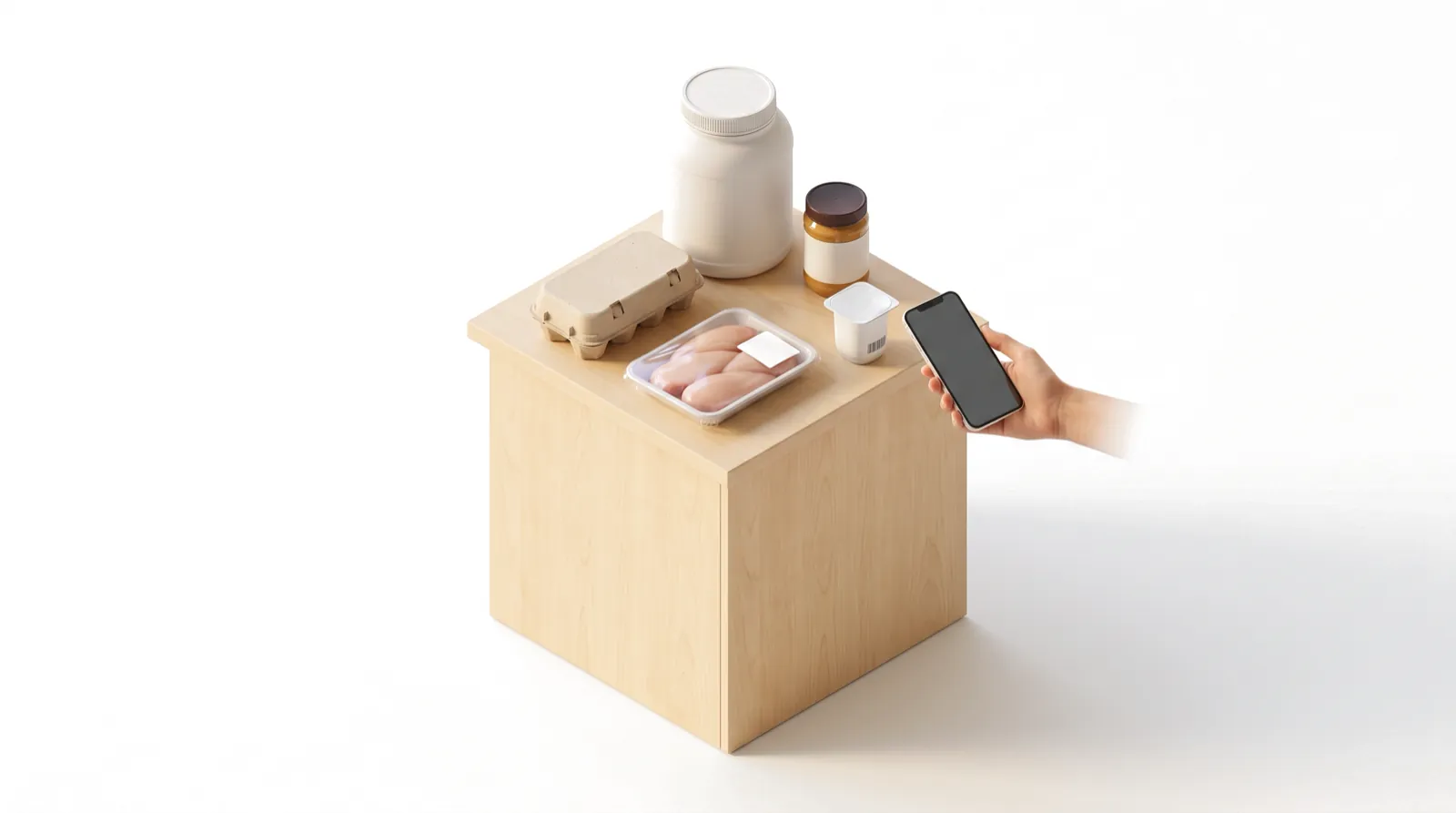
Best Macro Tracker Apps With Barcode Scanner and Photo Logging
Which apps scan barcodes for free, how good their databases are, and photo logging as a backup.
READ MORE
Best Nutrient Tracker Apps for Vitamins and Minerals
The apps that track micronutrients in depth, and which help you fill the gaps.
READ MORE
Best Apps to Reduce Cravings and Food Noise (2026)
The few apps designed around meal fullness, plus GLP-1 context and a free craving log.
READ MORE
Best Diet Apps for People Who Hate Logging Food
The lowest-effort ways to log meals, from photos and barcodes to saved meals.
READ MOREBuild meals designed to keep cravings down
Snap a photo, scan a barcode or describe your meal. IntakeAI estimates calories, macros and 50+ nutrients, and scores each meal for fullness with two tips to make it more filling.
Sources
- Shonkoff E et al. (2023). AI-based digital image dietary assessment methods compared to humans and ground truth: a systematic review. Ann Med. PubMed
- Charles O et al. (2026). Photo-based calorie tracking apps tested on 102 nutrient-controlled meals. Conference abstract, NUTRITION 2026 (American Society for Nutrition), reported by Healio. Healio
- Burke LE et al. (2011). Self-monitoring in weight loss: a systematic review of the literature. J Am Diet Assoc. PubMed
- Harvey J et al. (2019). Log often, lose more: electronic dietary self-monitoring for weight loss. Obesity. PubMed
- Rolls BJ (2009). The relationship between dietary energy density and energy intake. Physiol Behav. PubMed
- Cronometer. Cronometer Gold and Basic features. cronometer.com; Data sources. Cronometer support
- MyFitnessPal. Premium features. myfitnesspal.com; Nutrition 101: vitamins and minerals. MyFitnessPal support; App Store listing. App Store
- MacroFactor. App Store listing. App Store; How to log food in MacroFactor. MacroFactor help
- Noom. How Noom's food color system works. Noom support; How much does Noom cost? Noom blog
- FatSecret. Premium. fatsecret.com; Platform API. fatsecret Platform
- SnapCalorie. FAQ. snapcalorie.com; App Store listing. App Store
- Cal AI. FAQ. calai.app. Lose It! Membership tiers and pricing. Lose It! help. Lifesum. AI Tracking. Lifesum help. Yazio. Pro features. Yazio help. Carbon. joincarbon.com. Foodvisor. App Store
This article is for general education and is not medical advice. If you have a medical condition, an eating disorder, are pregnant, or take medication, speak to a doctor or registered dietitian before changing your diet. IntakeAI's nutrition figures and scores are estimates to guide your choices.