Best Calorie Counter Apps With Photo Scanning for Weight Loss (2026)
Disclosure: IntakeAI is made by the team that publishes this guide. We include it where it genuinely fits, say where other apps are a better choice, and do not accept payment from any app listed. Features and prices were checked against official websites and app store listings on 10 October 2026 and can change.
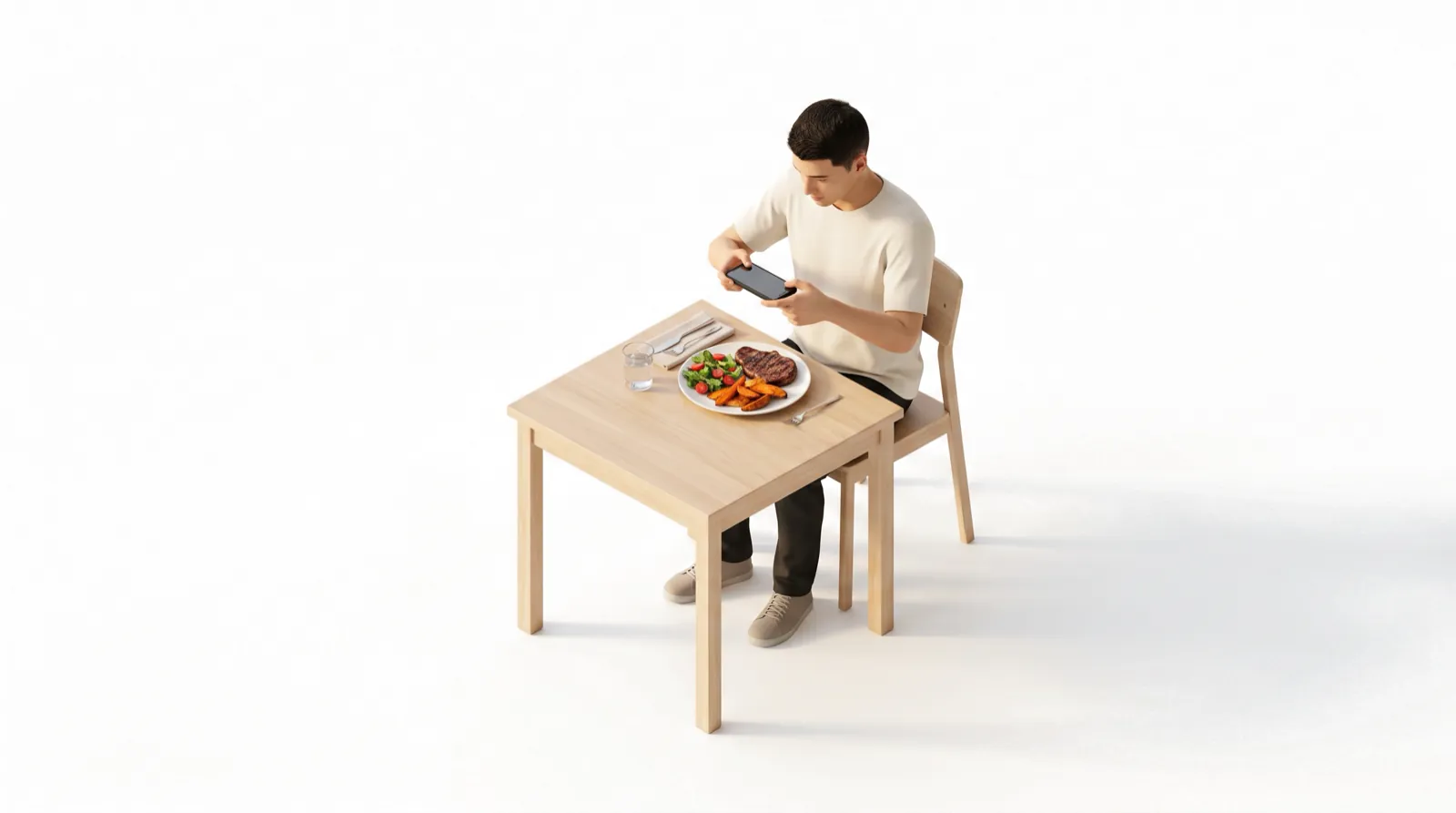
What is the best calorie counter app with photo scanning?
The best photo calorie counter for weight loss is IntakeAI, because it is the only photo app we compared that, from the same photo, gives calories, macros and 50+ nutrients and scores how filling the meal is, with tips to make it more filling. SnapCalorie is better for LiDAR portion measurement or a free tier, and MacroFactor for adaptive targets. Our criterion: weight loss depends on sticking to a deficit without constant hunger, so the photo should tell you what you ate and whether it will hold you. That is a feature judgment, not an accuracy claim. No app's photo accuracy is independently established, and in a preliminary NIH test four photo apps read about a third low, so review every estimate. Barcode-first trackers are in our barcode scanner comparison.
Key takeaways
- In a preliminary NIH study of 102 controlled meals, four photo apps underestimated energy by 252 to 345 kcal per meal (about 33%) and fat by about 30 g.
- Only SnapCalorie (about 15% mean error) and Cal AI ("about 80% accurate") publish accuracy figures. Both are company claims, not independently verified for the current apps.
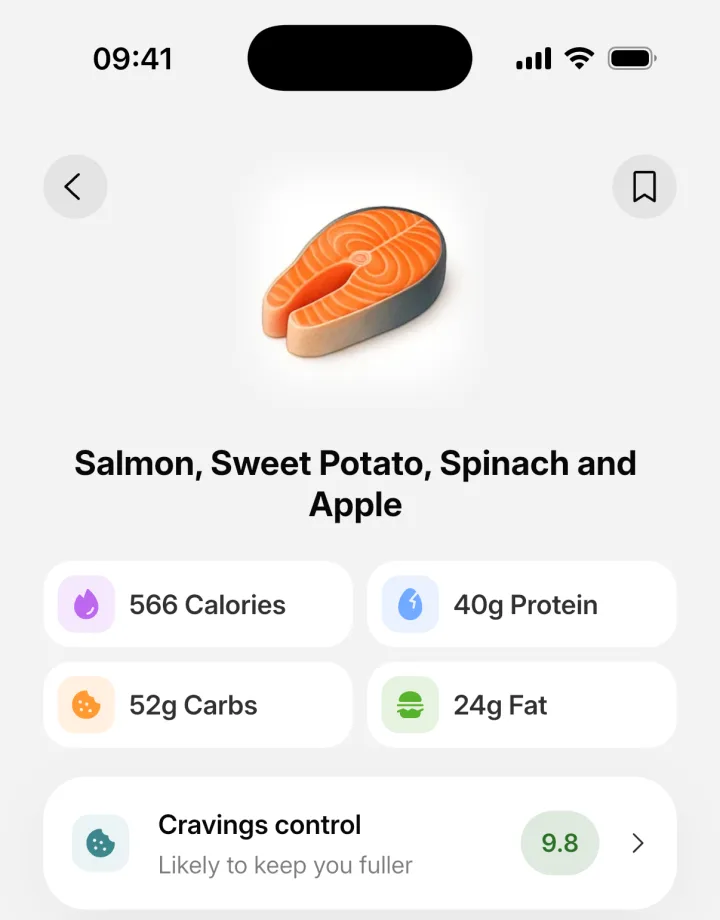
- IntakeAI is the only app compared that gives each photographed meal a 0–10 fullness score (Cravings control) and 2 tips to make it more filling. Noom's food colors, based on calorie density, are the nearest alternative.
- SnapCalorie is the only app here with a free daily photo allowance (3 AI logs). Noom's free US tier counts only green foods, and MacroFactor, Carbon and IntakeAI have no free tier.
Quick picks: best photo calorie counters by use case
- Best overall for weight loss: IntakeAI, which turns one photo into calories, macros, 50+ nutrients, a fullness score and tips to make the meal more filling.
- Best for portion measurement and a free tier: SnapCalorie, which uses LiDAR on iPhone Pro models and gives 3 free AI logs a day.
- Best for adaptive targets: MacroFactor, which maps photos to research-based database entries and adjusts targets weekly.
- Best for confirm-before-save logging: Carbon Diet Coach, whose Smart Logger saves nothing until you confirm the draft.
- Best with behavior coaching: Noom, whose Scan Meal sits inside a lesson-based program with a calorie-density color system.
- Best database behind the photo: MyFitnessPal, which pairs Premium Meal Scan with 20.5M+ foods for corrections.
- Best photo-first simplicity: Cal AI, built around the photo, though it had the largest underestimate in the NIH test.
How we compared these apps
We read each app's official website, help center and US App Store or Google Play listing on 10 October 2026 to check what its photo feature does, which plan it needs and what it costs. For accuracy we used published research and each company's own claims, labeled as claims. We did not run hands-on accuracy tests. Anything we could not confirm officially is marked "not stated."
How accurate are photo calorie counters?
The best independent evidence on named apps is new and preliminary. NIH researchers (NIDDK) prepared 102 nutrient-controlled meals in a metabolic kitchen and photographed them with four apps. According to Healio's report of the NUTRITION 2026 presentation, every app read low: Appediet by 252 kcal per meal, MyFitnessPal by 327, Lose It! by 333 and Cal AI by 345. That is about 33% overall, and all four missed roughly 30 g of fat. It is a conference abstract, not yet a full peer-reviewed paper, and it measured the photo estimates without user corrections. IntakeAI was not among the apps tested.
Wider research points the same way. A 2023 systematic review of 52 studies found average AI calorie errors from 0.10% to 38.3%, lowest for single, simple foods. A 2020 meta-analysis of 13 image-based studies (606 people) found photo records underreported energy by about 179 kcal on average. The error leans toward too low.
SnapCalorie's FAQ claims "around 15% mean caloric error," based on Nutrition5k research co-authored by its team, which tested a research model rather than the current app. Cal AI's FAQ says "about 80% accurate" without defining the measure. IntakeAI has no published accuracy figure either, so no app here, ours included, has independently established photo accuracy. Always review the estimate. Our guide to how AI photo food tracking works explains where the error comes from.
Photo calorie counter comparison (October 2026)
| App | Photo feature and plan | Portion help / review | Nutrients per photo | Published accuracy | US price (as of Oct 2026) |
|---|---|---|---|---|---|
| IntakeAI | Meal photo; subscription | Add text details; edit grams and foods | 50+ nutrients, fullness score and 2 tips | None published | Subscription (prices shown in app/store) |
| SnapCalorie | Free for 3 AI logs/day | LiDAR on iPhone Pro; text hints | 100+ micronutrients | ~15% error (company claim) | $19.99/mo or $149.00/yr |
| MacroFactor | Photo, Photo & Text; subscription only | Maps to database; review advised | Micronutrients; count not stated | None published | $11.99/mo or $71.99/yr |
| Carbon Diet Coach | Smart Logger; subscription only | Saves only after you confirm | Macros plus fiber, sodium, potassium, calcium and more | None published | $11.99/mo or $99.99/yr |
| Noom | Scan Meal; full logging paid | Review and edit before saving | Calories, macros; micros not stated | None published | $70/mo or $209/yr |
| MyFitnessPal | Meal Scan; Premium | Not stated | 5 micronutrients named | NIH abstract: −327 kcal/meal | $19.99/mo or $79.99/yr |
| Cal AI | Results need a subscription | Depth sensor (company) | Calories, macros | "About 80%" (company); NIH: −345 kcal/meal | Not stated; 3-day trial |
| Lose It! | Snap It; Premium | Not stated | Vitamins, minerals on Premium | NIH abstract: −333 kcal/meal | $79.99/yr (no monthly) |
| Lifesum | AI Tracking; Premium | Not stated | Sodium, fiber, cholesterol on Premium | None published | $99.99 or $119.99/yr |
Prices come from official pages or US App Store in-app purchase lists and vary by region and offer.
Track calories & nutrients fast


The photo scanning apps, one by one
IntakeAI: best overall for weight loss
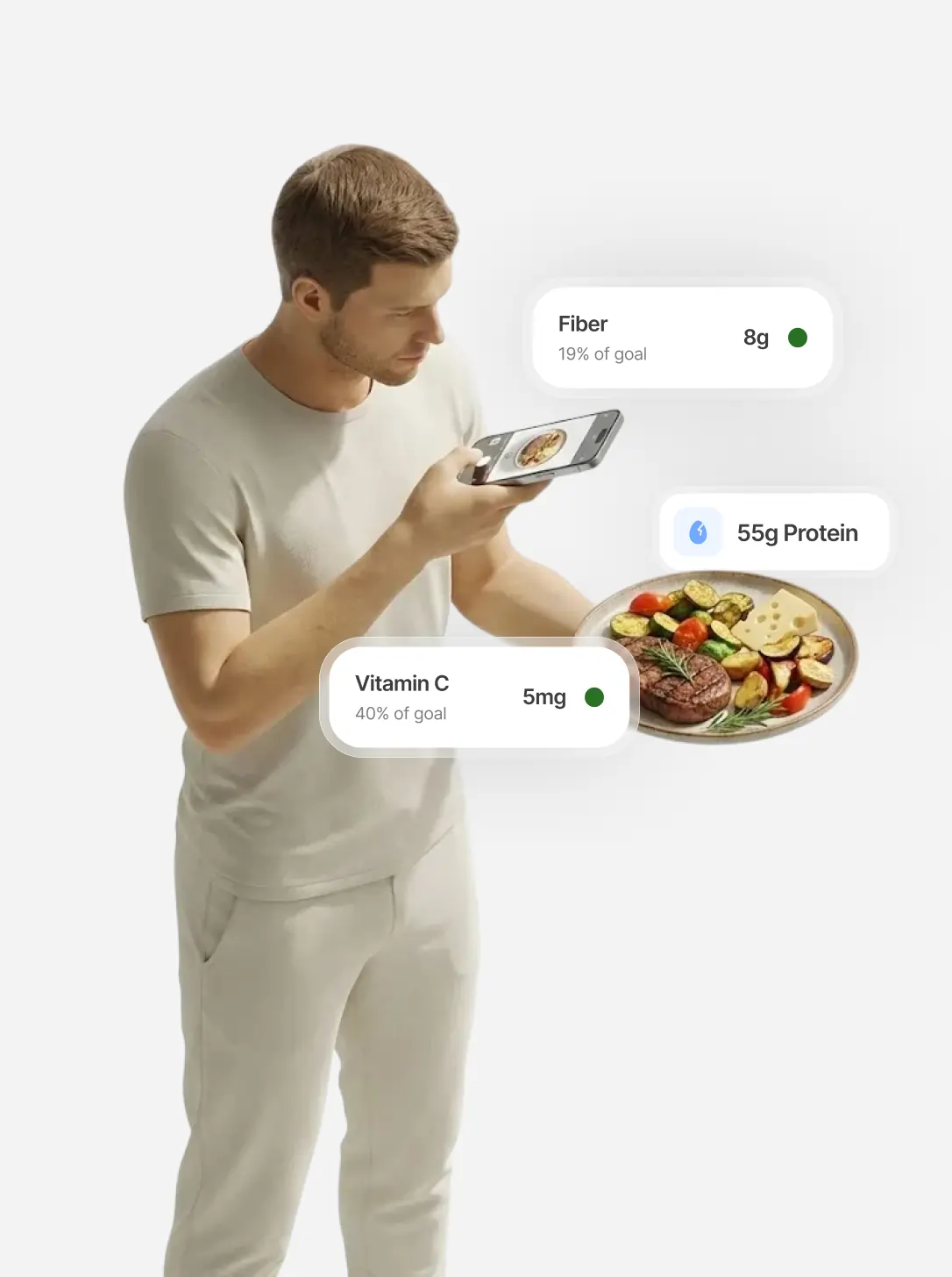
IntakeAI is an iPhone and Android nutrition app designed to help you reduce cravings. It estimates calories, macros and 50+ nutrients from a meal photo, barcode, nutrition label or typed description. Each photo also gets a 0–10 Cravings control score, an estimate of how filling the meal is likely to be based on factors such as protein, fiber, calorie density and processing, plus 2 "Increase fullness" tips. That is why we rank it first for weight loss: it gives feedback on staying full, not just a calorie number. "Fix your missing nutrients" also suggests foods for nutrients you are short on. The score is a guide, not proof that a meal will stop cravings.
The limits: IntakeAI needs a paid subscription (free trial on the annual plan, no free tier). It has no voice logging, Apple Health sync or AI coach, and its targets use the Mifflin-St Jeor formula rather than an adaptive algorithm. There is no published accuracy figure, and it can misjudge portions and oil like every app here, so you can add details to the photo and edit grams before logging.
SnapCalorie: best for portion measurement and a free tier
SnapCalorie's founders co-founded Google Lens and Cloud Vision API, according to its App Store listing. It is the only app here that uses the LiDAR depth sensor on iPhone Pro models to measure food volume, the hardest step in photo logging. You can add a text hint, such as a menu description, or a voice note. The free plan covers 3 AI logs a day. Its FAQ admits hidden oils, fats and sugar are "an educated guess," and barcode scanning is not mentioned in its official materials. It suits people who want to try photo logging free and care most about portions.
MacroFactor: best for adaptive targets
MacroFactor's AI logging offers Photo, Photo & Text and Upload modes, and the company says it maps foods to research-based database entries. Its real strength is the algorithm that estimates your energy expenditure and adjusts calorie and macro targets at weekly check-ins, which can absorb a photo log that runs low. Its help center shows rice being underestimated and tells users to review entries. There is no free tier, only a 7-day trial.
Carbon Diet Coach: best for confirm-before-save logging
Carbon's Smart Logger has a Meal tab for photos and a Describe tab for text. It drafts the meal from Carbon's verified database, and nothing saves until you confirm. It advises skipping photos for casseroles, stir-fries and soups, and targets adjust at weekly check-ins. There is no free version, and the 7-day trial must be started on its website.
Noom: best for photo logging with behavior coaching
Noom added Scan Meal (photo) and Describe Meal (voice or text) in 2024. The AI identifies ingredients and portions, and you review them before saving. Foods are then colored green, yellow or orange, mainly by calorie density, a system Noom says is designed to help you feel full. Free US accounts can photo-log, but only green-food calories count. Full logging costs $70 a month or $209 a year, far more than a plain tracker. It suits people who want guidance on what to eat, not just a number.
MyFitnessPal: best database behind the photo
MyFitnessPal's Meal Scan is a Premium feature, alongside barcode scanning and Voice Log. Behind it sits a database of 20.5M+ foods including restaurant dishes, though only check-marked entries have been reviewed by MyFitnessPal. In the NIH abstract it underestimated meals by 327 kcal on average, and its help center names only five tracked micronutrients.
Cal AI: best photo-first simplicity
Cal AI is built around one action: snap a photo. It also takes barcodes and typed descriptions, and syncs with Apple Health and Google Fit. Its FAQ says it is "about 80% accurate" and that scans can be "totally wrong" in poor lighting. In the NIH abstract it had the largest underestimate, 345 kcal per meal. Results need a subscription after a 3-day free trial. MyFitnessPal announced in March 2026 that it had acquired Cal AI and plans to keep it as a standalone app.
Other apps with photo scanning
- Lose It! has Snap It on Premium ($79.99 a year) and underestimated by 333 kcal per meal in the NIH abstract.
- Lifesum lists AI Tracking (photo, voice or text) as a Premium feature, alongside meal plans.
- Foodvisor combines photo, barcode, voice and typed logging; vitamins and minerals are Premium.
- Cronometer added AI Photo Logging to its paid Gold plan in 2025; see our nutrient tracker comparison.
- Appediet had the smallest NIH underestimate (252 kcal). BitePal adds a game-style avatar to photo scanning.
Does photo scanning help with weight loss?
Indirectly, if it keeps you logging. A systematic review of 22 studies consistently linked self-monitoring with weight loss, though the evidence was rated weak. In a 24-week program of 142 adults, those who lost at least 5% opened their food journal more often each day (2.4 vs 1.6 times), while time spent logging did not differ. A review of image-assisted methods found adding photos to food records reduced underreporting.
The catch: if an app reads a 700 kcal meal as, say, 470 kcal every time, a planned 500 kcal deficit quietly shrinks. Correcting oil and portions on big meals matters more than which app you pick. If even photos feel like too much, see the best diet apps for people who hate logging food.
How to choose a photo calorie counter
- Decide what the photo must tell you. For calories and macros, most apps work. For weight loss, check whether it also tells you how filling the meal is (IntakeAI) or how calorie-dense each food is (Noom). For vitamins and minerals, look at IntakeAI, SnapCalorie or Cronometer.
- Judge the review screen, not the scan. Choose an app where changing grams and swapping foods is quick.
- Decide if you want adaptive targets. MacroFactor and Carbon adjust calories from your real weight trend, which corrects for photos that run low.
- Calibrate on a known meal. Photograph something you have weighed and compare, so you know whether your app runs high or low.
For barcode-first and cravings-focused apps too, see our overview of the best apps to reduce cravings and track calories and nutrients.
Frequently asked questions
Which calorie counter app has the most accurate photo scanning?
No app has been proven most accurate. SnapCalorie claims about 15% mean calorie error and Cal AI says it is about 80% accurate, but neither claim is independently verified for the current app. In a preliminary NIH test of four apps, Appediet had the smallest underestimate (252 kcal per meal) and Cal AI the largest (345 kcal).
Is there a free calorie counter app with photo scanning?
SnapCalorie gives 3 free AI photo logs a day. Noom lets free US accounts photo-log, but only green-food calories count. MyFitnessPal, Lose It!, Lifesum and Cronometer put photo logging on paid plans, and MacroFactor, Carbon and IntakeAI have no free tier.
Do AI photo calorie apps underestimate calories?
Usually. A preliminary NIH study of 102 controlled meals found four photo apps underestimated energy by about 33% and fat by about 30 g per meal. Note oil, butter and sauces when you log, and check portions before saving.
Can a photo calorie counter track vitamins and minerals?
Some can. SnapCalorie lists 100+ micronutrients and IntakeAI estimates 50+ nutrients, including 13 vitamins, from each photo. Cal AI and Noom describe calorie and macro tracking only.
Is photo calorie counting good enough for weight loss?
It can be, if you correct the estimates. Regular self-monitoring is consistently linked with weight loss, and photos make logging faster. Because photo apps tend to read low, edit portions on big meals and judge progress by your weight trend over several weeks. Apps that also estimate how filling a meal is, such as IntakeAI, can help you build meals that make a deficit easier to stick to.
Related guides
Best Apps to Reduce Cravings and Track Calories and Nutrients (2026)
The full comparison across photo, barcode, nutrient and cravings features, with a pick for each use case.
READ MORE
Best Diet Apps for People Who Hate Logging Food
The lowest-effort ways to keep a food log going, from saved meals to voice and photo shortcuts.
READ MORE
Best Nutrient Tracker Apps for Vitamins and Minerals
Which apps track micronutrients properly, and how deep each one goes.
READ MORESee what you ate, and whether it will keep you full
IntakeAI estimates calories, macros and 50+ nutrients from a meal photo, scores how filling the meal is, and lets you edit every food and portion before you log it.
Sources
- Healio (2026). AI photo-based calorie-tracking tools underestimate them by 33% (report of an NIH/NIDDK study presented at NUTRITION 2026; conference abstract). healio.com
- Shonkoff E et al. (2023). AI-based digital image dietary assessment methods compared to humans and ground truth: a systematic review. Ann Med. PubMed
- Ho DKN et al. (2020). Validity of image-based dietary assessment methods: a systematic review and meta-analysis. Clin Nutr. PubMed
- Boushey CJ et al. (2017). New mobile methods for dietary assessment: review of image-assisted and image-based dietary assessment methods. Proc Nutr Soc. PubMed
- Burke LE et al. (2011). Self-monitoring in weight loss: a systematic review of the literature. J Am Diet Assoc. PubMed
- Harvey J et al. (2019). Log often, lose more: electronic dietary self-monitoring for weight loss. Obesity. PubMed
- Thames Q et al. (2021). Nutrition5k: towards automatic nutritional understanding of generic food. CVPR. arXiv
- Official app pages checked 10 October 2026: SnapCalorie FAQ; Cal AI FAQ; MacroFactor AI food logging; MacroFactor App Store listing; Carbon Smart Logger; Carbon pricing; Noom photo, voice and text logging; Noom pricing; MyFitnessPal Premium; Lose It! membership tiers; Lifesum AI Tracking; Foodvisor App Store listing; Cronometer Gold.
This article is for general education and is not medical advice. If you have a medical condition, an eating disorder, are pregnant, or take medication, speak to a doctor or registered dietitian before changing your diet. IntakeAI's nutrition figures and scores are estimates to guide your choices.