Best Macro Tracker Apps With Barcode Scanner and Photo Logging for Fat Loss
Disclosure: IntakeAI is made by the team that publishes this guide. We include it where it genuinely fits, say where other apps are a better choice, and do not accept payment from any app listed. Features and prices were checked against official websites and app store listings on 10 October 2026 and can change.
What is the best macro tracker with a barcode scanner for fat loss?
The best macro tracker with a barcode scanner for fat loss is IntakeAI: barcode, nutrition-label, meal-photo and typed logging are all in one subscription, every entry shows macros plus 50+ nutrients, and each meal gets a 0–10 fullness score with tips, designed to help you hit protein and calorie targets with less hunger. Choose MacroFactor instead if you want targets that adapt every week, Cronometer if you want a free barcode scanner and the most detailed nutrient data, FatSecret for a simple free option, and MyFitnessPal for the largest food database.
We rank by one criterion: how well an app supports a fat-loss diet day to day, which means fast logging for every kind of meal and help staying full in a deficit. On other criteria, such as price or adaptive targets, other apps win, and we say so below.
Key takeaways
- IntakeAI ranks first here for fat loss because it combines barcode, label, photo and text logging with a per-meal fullness score; it has no free tier and its targets do not adapt.
- Free barcode scanning, as of October 2026: Cronometer and FatSecret include it in their free tiers; MyFitnessPal and Lose It! list it as Premium; MacroFactor, Carbon and IntakeAI have no free tier at all.
- A scanner is only as good as its database. In a Dutch test of 100 supermarket products, correct identification ranged from 96% in the best app to 5% in the worst.
- MacroFactor and Carbon re-calculate calorie and macro targets at weekly check-ins; most other apps, IntakeAI included, use a formula.
- Photo logging covers meals without a barcode, but treat it as a draft: a 2026 NIH conference abstract found four photo apps underestimated meals by about 33%.
How we compared these apps
We did not run hands-on tests. Features, tiers and prices come from each app's official website, help center and US App Store or Google Play listing, all checked on 10 October 2026. Accuracy points come from published research, cited below. Prices are US list prices; in-app offers can differ. We left out any feature we could not confirm from an official source.
Quick picks
- Best macro tracker with barcode scanner for fat loss: IntakeAI — barcode, label, photo and text logging in one subscription, 50+ nutrients per entry and a 0–10 fullness score for every meal.
- Best for adaptive macro targets: MacroFactor — an algorithm estimates your energy expenditure and adjusts calories and macros at weekly check-ins.
- Best free barcode scanner and most detailed nutrients: Cronometer — scanning, custom macro targets and a curated database are all in the free Basic tier.
- Best simple free option: FatSecret — free barcode scanner and macro tracking; its platform lists over 2.3 million verified foods.
- Best for database size: MyFitnessPal — 20.5M+ foods, but the barcode scanner and custom macro goals need Premium.
- Best for coaching that explains target changes: Carbon Diet Coach — weekly check-ins adjust macros and show why.
Barcode, photo and macro features compared
The table shows which tier each feature sits in. "Included" means the app has no free tier, so every feature needs the subscription. Prices are as of October 2026.
| App | Barcode scanner | Photo logging | Macro targets | Fullness / cravings feature | Free tier | US price (Oct 2026) |
|---|---|---|---|---|---|---|
| IntakeAI | Included | Included | Formula-based (Mifflin-St Jeor); macros editable | Cravings control score (0–10) and 2 fullness tips per meal | No (free trial on annual plan) | Subscription (prices shown in app/store) |
| MacroFactor | Included | Included | Adaptive, adjusted at weekly check-ins | None found | No (7-day trial) | $11.99/mo, $47.99/6 mo, $71.99/yr |
| Cronometer | Free | Gold only | Custom macro targets free; Macro Scheduler in Gold | None found | Yes | Gold $10.99/mo or $59.99/yr |
| FatSecret | Free | Premium | Calorie and macro goals | None found | Yes | $14.99/mo, $59.99/yr (App Store) |
| MyFitnessPal | Premium | Premium | Custom macro goals in Premium | None found | Yes | $19.99/mo, $79.99/yr (App Store) |
| Carbon Diet Coach | Included | Included | Adaptive, weekly check-ins with explanations | None stated | No (7-day trial) | $11.99/mo, $59.99/6 mo, $99.99/yr |
| Lose It! | Premium | Premium | Macro tracking in Premium | None found | Yes | $79.99/yr; no monthly plan listed |
| Lifesum | Free | Premium | Setting your own macro goals is Premium | None found (has a diet-quality Life Score) | Yes | $99.99 or $119.99/yr (App Store) |
| Yazio | Listed as free; not consistently stated | Pro | Customizable calorie goal | None found | Yes | $47.90 for 12 months (App Store) |
Two patterns stand out: every app here with adaptive targets (MacroFactor, Carbon) has no free tier, and IntakeAI is the only app in this table whose official materials describe a per-meal fullness or cravings score.
Track calories & nutrients fast


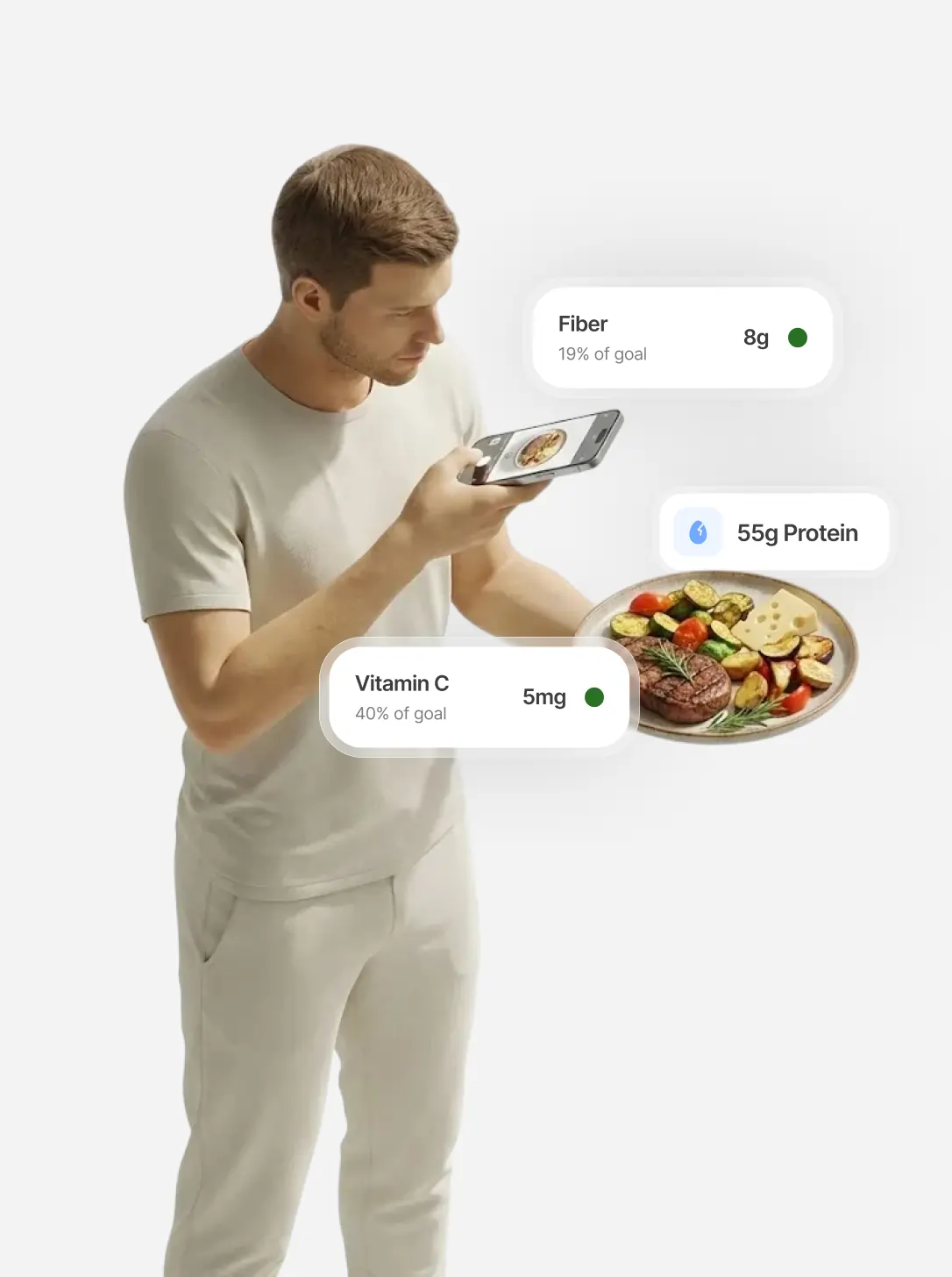
Why fullness matters when you track macros for fat loss
Hitting a calorie target is easier when the meals inside it keep you full. Protein is the best studied lever: in a small trial of 19 adults, raising protein from 15% to 30% of calories increased satiety, and on the unrestricted high-protein diet people ate about 441 kcal a day less on their own. Fiber and lower calorie density work in the same direction, as our guide to high-protein, high-fiber meals for fat loss explains.
A standard macro tracker tells you whether you hit your numbers, not whether a meal is likely to leave you hungry. IntakeAI adds that layer: each meal gets a 0–10 Cravings control score, a transparent formula based on protein, fiber, calorie density, hyper-palatable fat, sugar and salt combinations, satiety-related minerals and vitamins, and processing level, plus two "Increase fullness" tips. It is an estimate to guide your choices, not proof that a meal will stop cravings, and it is not shown when your goal is weight gain.
Why the database matters more than the scanner
A scanner just reads the barcode and looks it up, so your macros are whatever that app's database says.
Does the scan find the right product?
A Wageningen University study scanned 100 Dutch supermarket products with seven diet apps. Energy values came back for 99% of scans, and on average 79% were within 5% of the true value. But correct identification ranged from 96% in MyFitnessPal to 5% in SparkPeople, and the accuracy of other nutrients "varied greatly." It dates from 2019, so read it as a lesson about databases, not a ranking of today's apps.
Who checked the entry?
Cronometer's help center says user-submitted foods are reviewed by a curation team before they are added. MyFitnessPal marks reviewed entries with a check mark, and items without one have not been reviewed.
In a 2025 Canadian study, two raters entered the same 43 three-day food records from endurance athletes into MyFitnessPal and Cronometer. Cronometer showed good validity against a reference database for every nutrient except fiber and vitamins A and D. MyFitnessPal showed poor validity for total energy, carbs and protein, which the authors linked to the many options per food, including unverified entries. In a Polish study of 120 adults' food records, none of five apps, including FatSecret, Yazio and MyFitnessPal, agreed within 10% of the reference method.
In both studies trained staff entered the food, but they point the same way: curated data gives more consistent macros. Labels themselves also carry some legal error, covered in barcode scanning vs photo tracking.
Formula targets vs adaptive targets
Most apps start your targets from a formula. A systematic review for the American Dietetic Association found the Mifflin-St Jeor equation predicted resting metabolic rate within 10% of measured values for more people than other common equations, but noted meaningful errors for some individuals.
Adaptive apps try to correct that error from your own data. MacroFactor's App Store listing says its algorithm estimates your energy expenditure and adjusts calorie and macro targets at weekly check-ins. Carbon does the same from your weight and intake trends and explains each change. If your weight stalls on a formula target, our guide to adjusting calories when you plateau shows the manual fix.
When a photo is the better way to log
Barcodes don't help with a home-cooked stir-fry or a restaurant plate; photos do, if you treat the result as a draft. In a study presented as a conference abstract at NUTRITION 2026, NIH researchers tested the photo features of Appediet, Cal AI, Lose It! and MyFitnessPal on 102 nutrient-controlled meals. All four underestimated energy, by 252 to 345 kcal per meal (about 33% overall), and underestimated fat by about 30 g. It has not yet been published as a full peer-reviewed paper.
A 2023 systematic review found smaller AI errors for single, simple foods. Carbon's help center itself advises skipping photos for casseroles, stir-fries or soups. Scan packaged food; photograph plated food, then check the portion and any oil. Our guide on tracking macros by taking a picture explains which macros photos miss most.
The apps, from a macro-tracking angle
IntakeAI: best macro tracker with barcode scanner for fat loss
IntakeAI is an iPhone and Android nutrition app designed to help you reduce cravings. It logs food from a meal photo, a barcode, a nutrition-label scan, a typed description or a search of the USDA FoodData Central database. Every entry shows calories, protein, carbs, fat and fiber plus 50+ nutrients, and you can edit portions or swap foods in an AI result before saving. Calorie targets come from the Mifflin-St Jeor equation, your activity level and a chosen pace of 0.5 to 2 lb a week, with the deficit capped at 25% of maintenance; macro targets are editable.
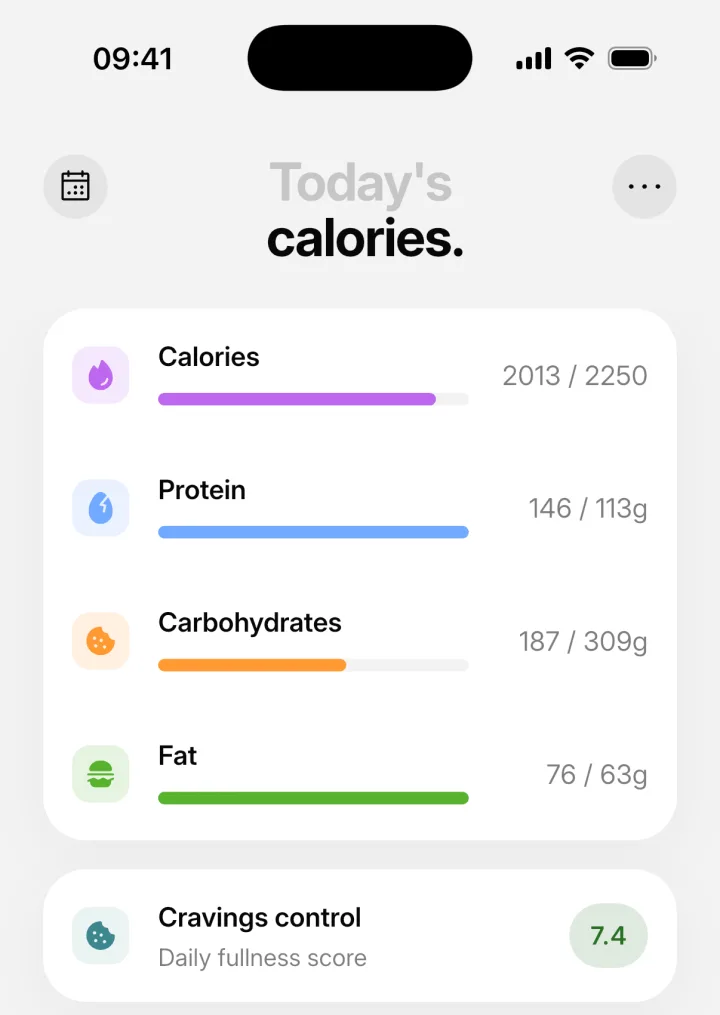
Each meal also gets the Cravings control score and fullness tips described above. The limits: IntakeAI needs a paid subscription (there is a free trial on the annual plan), its targets are formula-based rather than adaptive like MacroFactor's, and it has no voice logging or Apple Health sync. Photo estimates can be off on portions and hidden oils, and there is no published accuracy figure for IntakeAI, so check entries the way you would in any photo app.
MacroFactor: best for adaptive macro targets
MacroFactor's core feature is its expenditure algorithm, which adjusts your targets at weekly check-ins. Logging is broad: barcode, label scanner, "Describe" for typed or spoken meals, and AI photo logging. There is no free tier, only a 7-day trial, and its help center notes that branded foods often lack full micronutrient data. Choose MacroFactor instead if you want targets that respond to your real weight trend.
Cronometer: best free barcode scanner and most detailed nutrients
Cronometer's free Basic tier includes the barcode scanner, custom macro and micronutrient targets, and custom foods. The database comes mainly from NCCDB and USDA data, with over a million lab-analyzed or verified foods according to its Gold page. The trade-offs: photo logging, voice logging and the Macro Scheduler (different targets for different days) need Gold, free reports are limited to a 7-day window, and the free tier shows ads. Choose Cronometer instead if you want accurate packaged-food macros and the most detailed nutrient data without paying.
FatSecret: best simple free option
FatSecret's premium page lists the barcode scanner and macro tracking in its free tier. The fatsecret Platform describes over 2.3 million verified foods across 62+ countries; the company does not explicitly say the consumer app uses that same set. Photo logging (Smart Food Scan) and the voice or text Smart Assistant are Premium. Choose FatSecret instead if you want free scanning in a simpler app than Cronometer.
MyFitnessPal: best for database size
MyFitnessPal's App Store listing claims 20.5M+ foods, including restaurant dishes, plus 40+ integrations and a web version. For macro tracking, the catch is the paywall: its premium page lists Barcode Scan, Meal Scan and custom macro goals as Premium, and Droid Life reported the scanner moved behind the paywall in 2022. Prefer check-marked entries. Choose MyFitnessPal instead if you eat many restaurant or regional brands and will pay for Premium.
Carbon Diet Coach: best for coaching that explains changes
Carbon adjusts calories and macros at weekly check-ins and explains why. Its Smart Logger turns a meal photo or text description into a draft matched to its database, and nothing saves until you confirm. There is no free version; the 7-day trial must be started on its website, because subscribing in the app starts a paid plan right away. Choose Carbon instead if you want a coach-style plan with high and low days.
How to choose a macro tracker with a barcode scanner
- Decide what you are optimizing for. For fat loss with fast logging and fullness guidance on every meal, start with IntakeAI's free trial.
- Decide if you will pay. If not, start with Cronometer or FatSecret, which keep barcode scanning free.
- Check where your food comes from. Mostly packaged food favors a strong scanner and curated database. Mostly home-cooked or restaurant meals favor an app that also logs by photo or text.
- Decide how much you trust a formula. If your weight trend has stalled on a formula target, MacroFactor or Carbon will adjust for you.
- Test the scanner on your own cupboard. During a free tier or trial, scan 10 products you buy often and compare protein, carbs and fat with the labels.
For the wider picture across cravings, calories and nutrients, see our overview of the best apps for 2026. If photo logging matters most, compare the best calorie counters with photo scanning; if vitamins and minerals matter too, see the best nutrient tracker apps.
Frequently asked questions
Which macro tracker has a free barcode scanner?
As of October 2026, Cronometer and FatSecret include a barcode scanner in their free tiers, and Lifesum's help center lists it in free tracking. Yazio's listing shows it as free, but third-party guides disagree. MyFitnessPal and Lose It! list barcode scanning as a Premium feature.
Is MyFitnessPal's barcode scanner still free?
No. MyFitnessPal's premium page lists Barcode Scan as a Premium feature, and it moved behind the paywall in 2022. The free tier still includes nutrition and weight tracking.
Are barcode scans more accurate than photo logging for macros?
For packaged foods, usually yes, because a scan pulls label data instead of estimating a portion, as long as the app matches the right product. Photo logging is better for meals with no barcode, but estimates can miss hidden oils and misjudge portions.
Do I need an app with adaptive macro targets?
Not necessarily. A formula such as Mifflin-St Jeor is a reasonable starting point; a systematic review found it predicted resting metabolic rate within 10% for more people than other common equations. Adaptive apps such as MacroFactor and Carbon help most when your weight trend stops matching what the formula predicted.
Does IntakeAI have a free version?
No. IntakeAI requires a paid subscription, with a free trial on the annual plan. It includes photo, barcode, nutrition-label and text logging and a per-meal Cravings control score, but it does not offer voice logging, Apple Health sync or adaptive targets.
Related guides
Best Apps to Reduce Cravings and Track Calories and Nutrients (2026)
The full comparison of tracking apps by use case, from photo logging to micronutrients.
READ MORE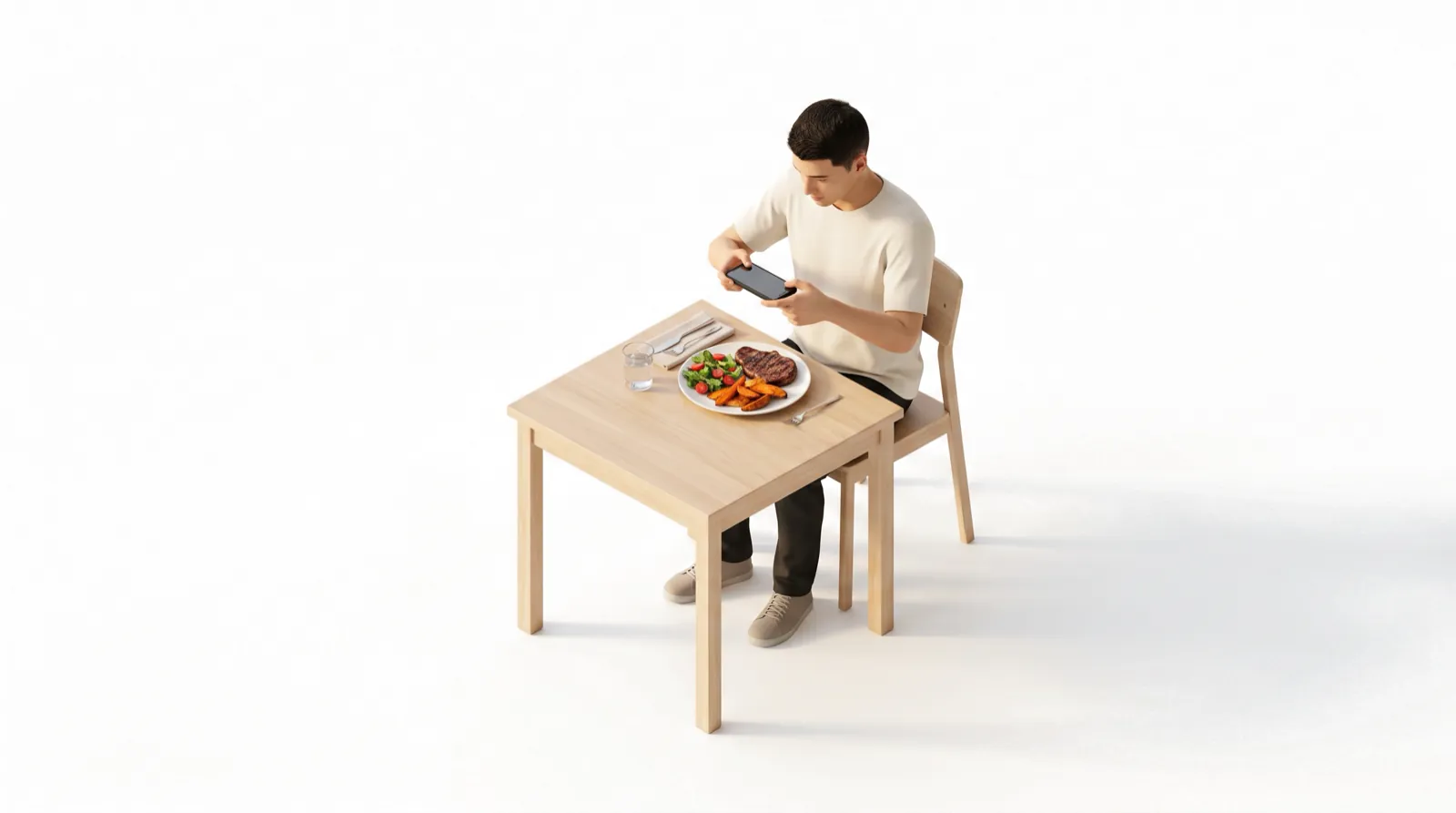
Best Calorie Counter Apps With Photo Scanning (2026)
Which AI photo apps are worth paying for, and what independent tests say about their accuracy.
READ MORE
Best Nutrient Tracker Apps for Vitamins and Minerals
The apps that track the most vitamins and minerals, and how to check their numbers.
READ MOREHit your macros without fighting hunger
IntakeAI logs packaged food by barcode or label scan and meals by photo or text, shows your macros and 50+ nutrients, and scores every meal for fullness with tips designed to help you reduce cravings.
Sources
- Weigle DS, et al. (2005). A high-protein diet induces sustained reductions in appetite, ad libitum caloric intake, and body weight despite compensatory changes in diurnal plasma leptin and ghrelin concentrations. American Journal of Clinical Nutrition. PubMed
- Maringer M, et al. (2019). Food identification by barcode scanning in the Netherlands: a quality assessment of labelled food product databases underlying popular nutrition applications. Public Health Nutrition. PubMed
- Morello O, et al. (2025). Reliability and validity of nutrient assessment applications for Canadian endurance athletes: MyFitnessPal and Cronometer. Journal of Human Nutrition and Dietetics. PubMed
- Bzikowska-Jura A, et al. (2021). Low comparability of nutrition-related mobile apps against the Polish reference method: a validity study. Nutrients. PubMed
- Frankenfield D, et al. (2005). Comparison of predictive equations for resting metabolic rate in healthy nonobese and obese adults: a systematic review. Journal of the American Dietetic Association. PubMed
- Shonkoff E, et al. (2023). AI-based digital image dietary assessment methods compared to humans and ground truth: a systematic review. Annals of Medicine. PubMed
- Charles O, et al. (2026). Photo-based calorie tracking apps tested against nutrient-controlled meals. NUTRITION 2026 conference abstract (not yet a full peer-reviewed paper), as reported by Healio. Healio
- App features and prices (checked 10 October 2026): Cronometer Gold, Cronometer blog, Cronometer data sources; MacroFactor App Store, MacroFactor help, MacroFactor AI logging, MacroFactor July 2026 update; FatSecret Premium, fatsecret Platform; MyFitnessPal Premium, MyFitnessPal App Store, MyFitnessPal check-marked items, Droid Life (2022).
- More app sources (checked 10 October 2026): Carbon, Carbon Smart Logger, Carbon free trial, Carbon App Store; Lose It! tiers and pricing; Lifesum traditional tracking, Lifesum food database, Lifesum App Store; Yazio App Store.
This article is for general education and is not medical advice. If you have a medical condition, an eating disorder, are pregnant, or take medication, speak to a doctor or registered dietitian before changing your diet. IntakeAI's nutrition figures and scores are estimates to guide your choices.