Track Macros by Taking a Picture of Your Food
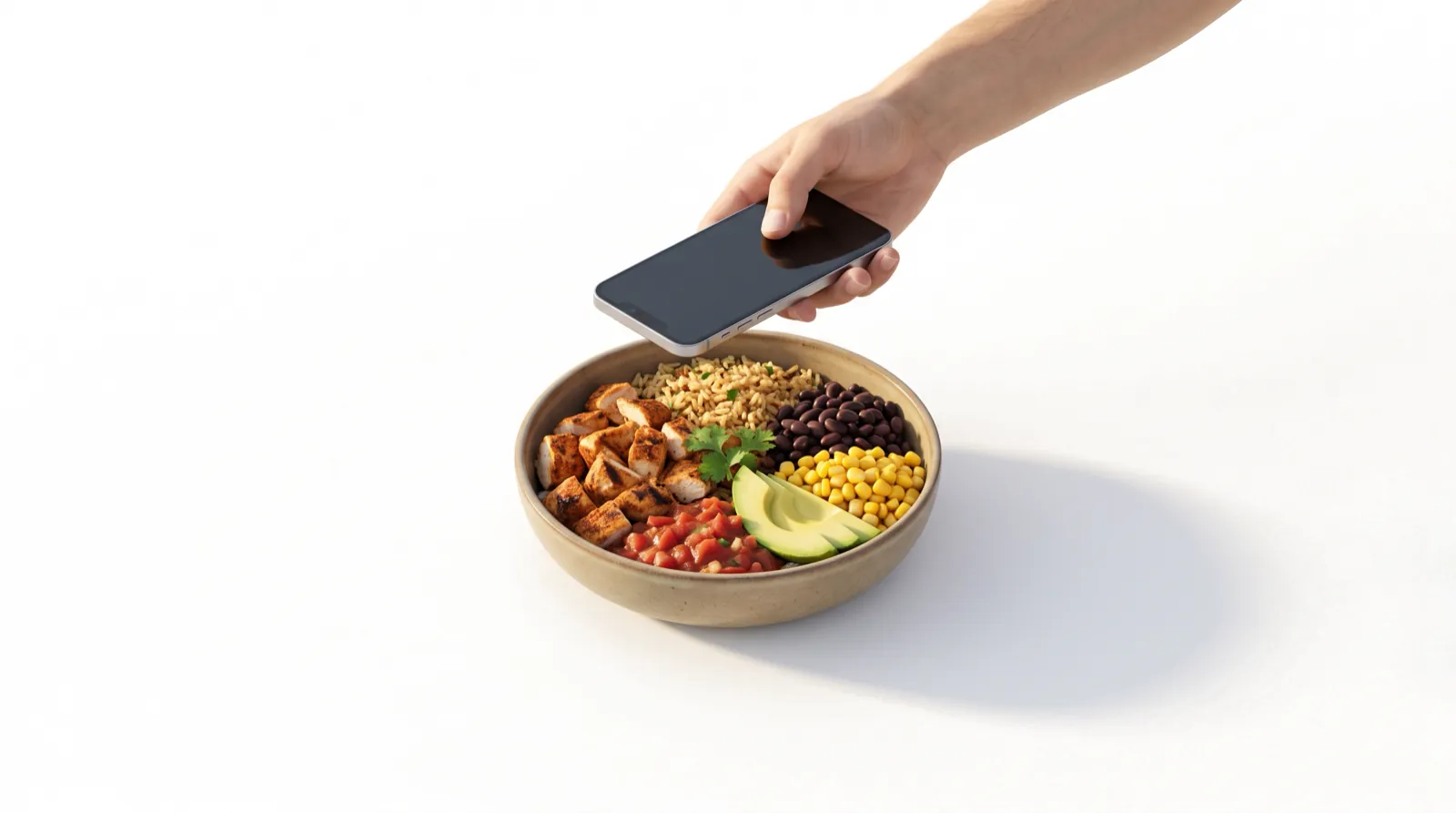
Can you track macros by taking a picture of your food?
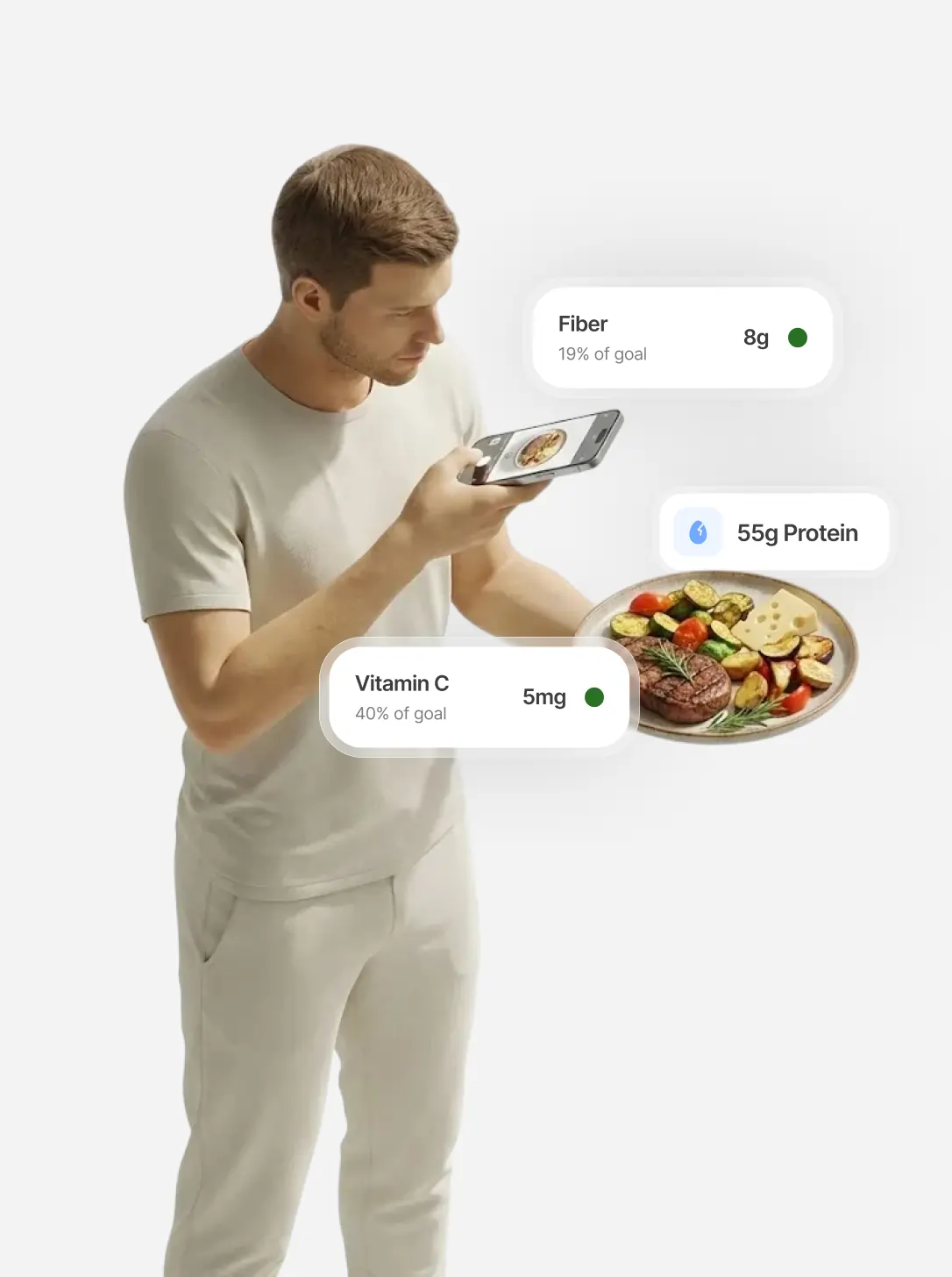
Yes. A photo-based tracker can estimate protein, carbs, fat and fiber from one picture, but it only sees the surface of your plate. Estimates are strongest for visible foods like chicken, rice and vegetables and weakest for cooking oil, sauces and fillings, which are worth checking before you log. Think of a photo as a fast first draft of your macros. Thirty seconds of editing turns it into a record you can trust.
This guide covers what the camera can and can't pick up for each macro, how to set protein, carb, fat and fiber targets from published guidance, and a checklist for judging any photo macro tracker before you commit to it.
Key takeaways
- Fat carries 9 kcal per gram vs 4 for protein and carbs. One tablespoon of olive oil (about 13.5 g of fat, roughly 119 kcal) is the single most common thing a photo misses.
- A 2020 meta-analysis of 13 studies found image-based records under-reported energy by about 179 kcal a day on average, but protein and fat estimates were not significantly different from traditional food records.
- Common protein guidance runs from the 0.8 g/kg RDA up to 1.2–1.6 g/kg for general health and 1.4–2.0 g/kg for people who exercise regularly.
- A good photo macro tracker lets you edit portions and foods, has a barcode or label backup, and tells you where its nutrition data comes from.
What a photo can and can't see, macro by macro
Photo trackers work in stages: they recognise each food, estimate how much of it there is, then look up nutrition values for that amount. Errors can creep in at each step, and they affect each macro differently.
| Macro | What a photo usually gets right | Common blind spots | Quick fix before logging |
|---|---|---|---|
| Protein | Identifying meat, fish, eggs, tofu and beans | Thickness of a steak or fillet; protein powder in a smoothie; cheese inside a wrap | Correct the weight of the main protein; add anything blended or hidden |
| Carbs | Rice, pasta, bread, potatoes, fruit | Portion depth in a bowl; sugar in sauces and drinks; white vs whole-grain versions | Check the starch portion; log drinks separately |
| Fat | Visible fats: avocado, nuts, cheese on top | Cooking oil, butter melted into vegetables, creamy dressings, fried coatings | Add oil or butter by the teaspoon or tablespoon |
| Fiber | Vegetables, beans, lentils, fruit | Whole-grain vs refined bread or pasta; seeds mixed into food | Name the specific product in the details text or edit the food |
How big are the errors? The research is mixed. A 2020 meta-analysis of 13 studies (606 participants) found image-based dietary records under-reported energy by about 179 kcal a day overall, and by around 448 kcal against doubly labelled water, the gold-standard measure. Notably, protein and fat estimates were not significantly different from traditional food diaries, and carbs showed only a small, non-significant trend toward under-reporting. Many of those studies had people or dietitians reading the photos, not AI. A 2023 systematic review of 52 fully automated AI studies reported calorie errors ranging from under 1% to 38%, with the best results for simple, single-food images. The fair conclusion: photo estimates are in the same range as other everyday methods, and they're most reliable when the plate is simple and the extras are added by hand.
Why hidden fat moves your macros most
According to USDA FoodData Central, energy values are calculated using the standard factors of 4 kcal per gram for protein and carbohydrate and 9 kcal per gram for fat. So a small, invisible amount of fat changes your totals more than a visible pile of vegetables. USDA data for olive oil lists about 13.5 g of fat and 119 kcal per tablespoon.
Take a home-cooked chicken and vegetable stir-fry. The camera can see the chicken, peppers and rice. It can't tell whether the pan had one teaspoon or three tablespoons of oil. That difference alone is roughly 35 g of fat and over 300 kcal. If you cook with oil, measure it once with a spoon so you know your usual amount, then add it to every photo-logged home meal. The same goes for butter on toast, mayonnaise in sandwiches and dressing on salads.
Track calories & nutrients fast


How to set your macro targets
Photo logging is only useful if you have targets to compare against. This order works for most adults:
- Set your calorie target first. Macros are a split of your total calories, so start with a sensible maintenance or moderate-deficit figure.
- Set protein by body weight. The RDA of 0.8 g per kg is a minimum to avoid deficiency, not an optimum. A 2016 review concluded that at least 1.2–1.6 g/kg is a better target for health, appetite and weight management in adults. The International Society of Sports Nutrition recommends 1.4–2.0 g/kg for most people who exercise. A meta-analysis of 49 trials found muscle gains from resistance training levelled off at about 1.6 g/kg a day.
- Set fat at 20–35% of calories, the adult range in the Dietary Guidelines for Americans.
- Give the remaining calories to carbs. For most people this lands within the guidelines' 45–65% range.
- Set fiber at about 14 g per 1,000 kcal, the Dietary Guidelines' benchmark, which is roughly 28 g on a 2,000 kcal diet.
| Worked example: 70 kg adult, 2,000 kcal | Grams per day | Calories | Share of total |
|---|---|---|---|
| Protein at 1.6 g/kg | 112 g | 448 kcal | 22% |
| Fat at 30% of calories | 67 g | 600 kcal | 30% |
| Carbs (remainder) | 238 g | 952 kcal | 48% |
| Fiber at 14 g per 1,000 kcal | 28 g | (part of carbs) | n/a |
If you have kidney disease, are pregnant, or have been given targets by a doctor or dietitian, follow their numbers rather than these general ranges. Protein and fiber are also the two macros most linked to feeling full; if you want meal ideas built around them, see high-protein, high-fiber meals for fat loss.
Checklist: how to judge a photo macro tracker
Most photo trackers look similar in screenshots. These questions separate the useful ones from the frustrating ones, whichever app you are considering:
- Can you edit everything? You should be able to change the portion or weight of each food, swap a misidentified food and delete or add items. An estimate you can't correct is just a guess.
- Can you add context to a photo? A short note such as "cooked in 1 tbsp butter" or "whole-wheat pasta" fixes the blind spots in the table above.
- Where does the nutrition data come from? Analytical databases such as USDA FoodData Central are more reliable than crowd-sourced entries that anyone can add. Ask whether the app tells you.
- Is there a barcode or label-scan backup? For packaged foods, the label is more accurate than any photo estimate.
- Does it show fiber, not just protein, carbs and fat? Fiber is often missing from macro views, yet the Dietary Guidelines list it as a nutrient most Americans under-consume.
- Are macro targets editable? Fixed ratios rarely fit everyone. You should be able to set your own protein and fat targets.
- Does it go beyond macros? If you also care about iron, calcium or vitamin D, check whether micronutrients are included. Our guide to a calorie counter that tracks vitamins and minerals explains what to look for.
- Is it honest about accuracy? Be wary of any app that claims exact accuracy from a photo. No method gets there, including manual logging.
Doing it manually vs. with an app
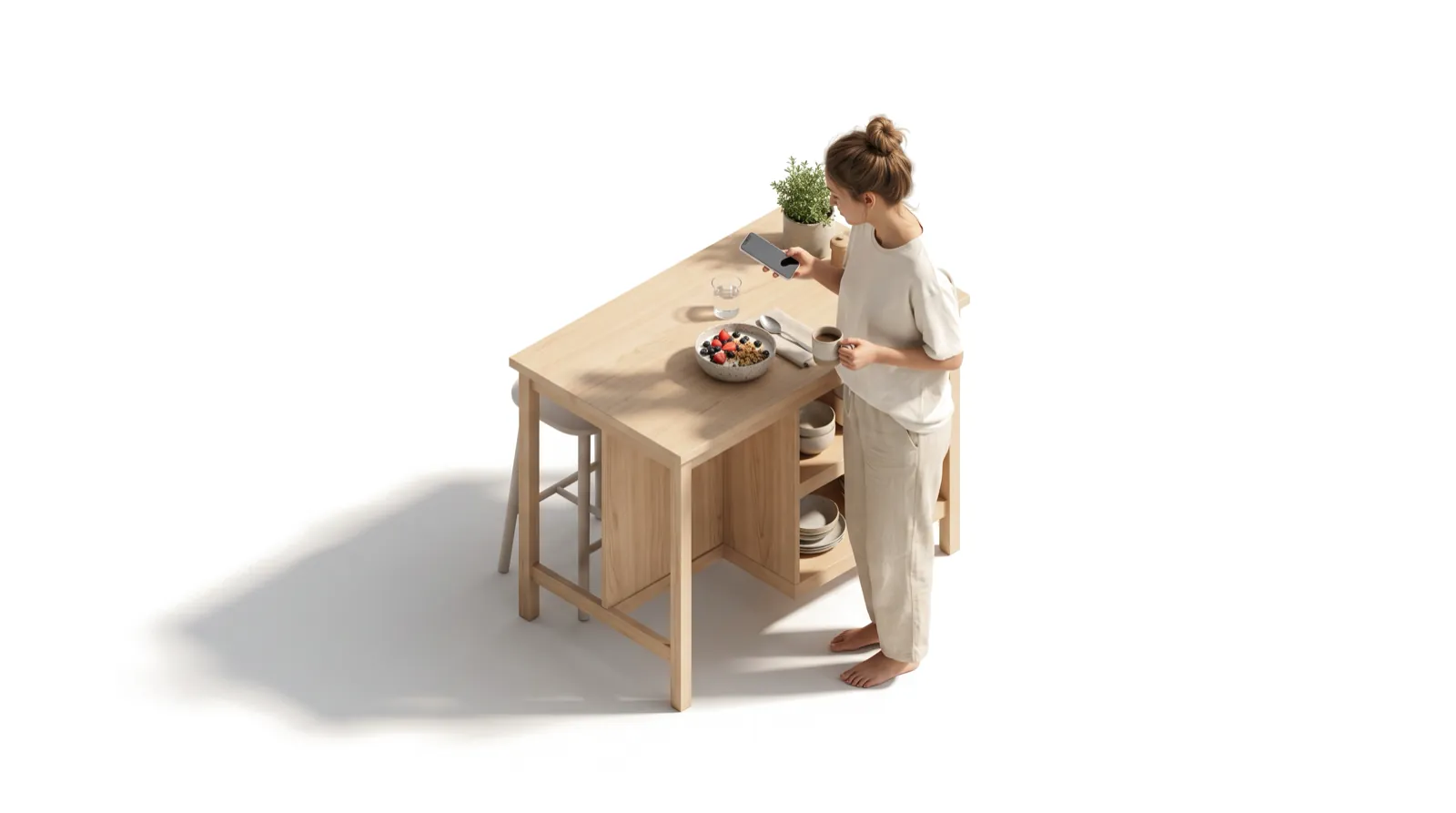
You can track macros from photos without any AI. Photograph every meal, then once a day look up each food in a nutrition database, estimate the portions from the photo, and total protein, carbs, fat and fiber in a spreadsheet. The photos keep you honest, and the lookup step is where you add the oil and sauces. It works, but the daily lookup is exactly the kind of chore people drop after a few weeks.
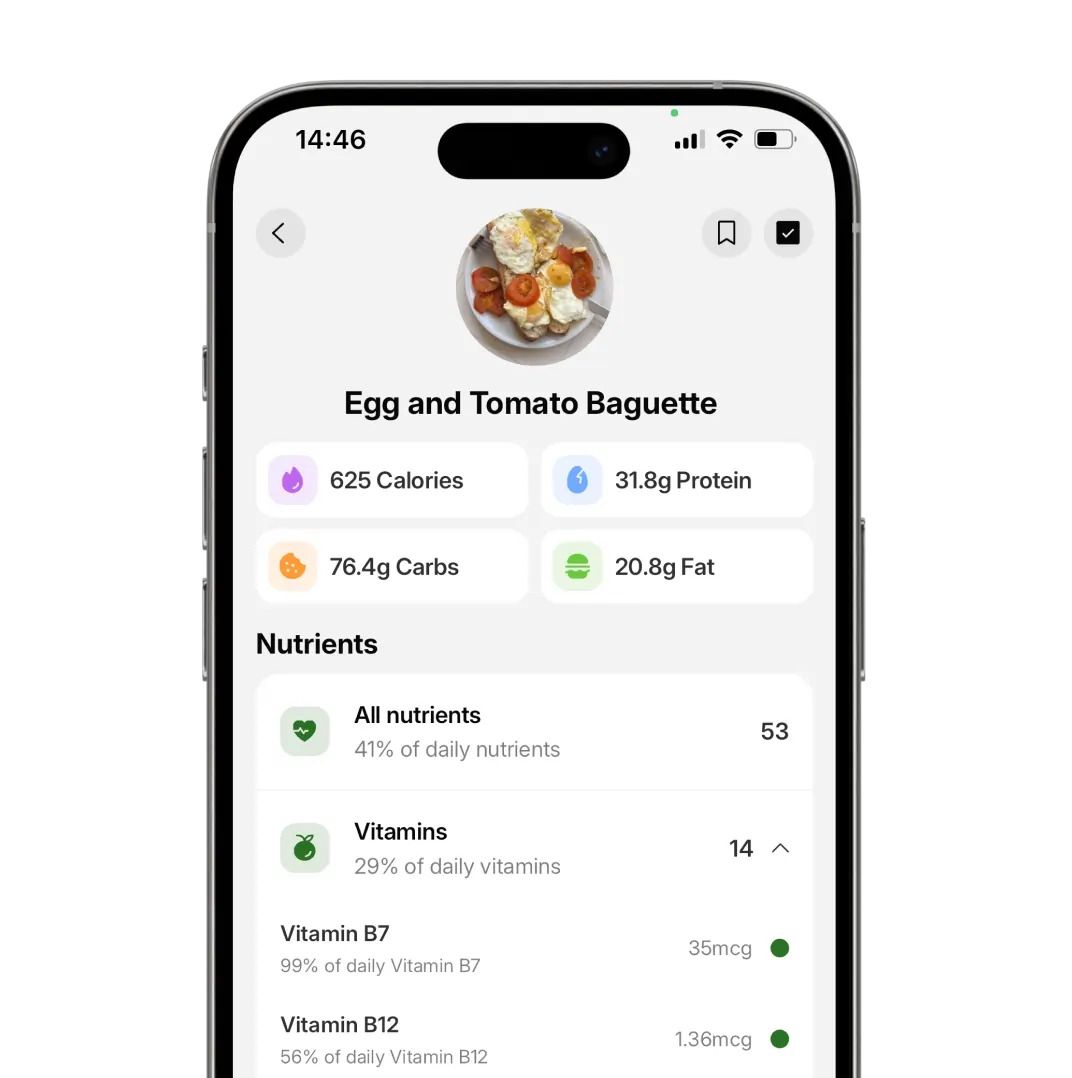
A photo tracker does the identification and the arithmetic in one step. IntakeAI is an iPhone and Android nutrition app designed to help you reduce cravings. It estimates calories, protein, carbs, fat, fiber and 50+ other nutrients from a meal photo, a barcode, a nutrition label or a typed description. You can add details to a photo, edit the weight of each food, replace or delete items the AI got wrong, and set your own macro targets. It can still misjudge portions or miss hidden oil, so the quick checks above still matter.
For the broader comparison of logging methods, start with the easiest way to track calories, macros and nutrients. If you mostly eat packaged food, barcode scanning vs. photo tracking will help you decide which to lean on, and tracking calories from a photo covers how to take photos that estimate well.
Frequently asked questions
Can an app track macros from a picture of food?
Yes. Photo-based trackers identify the foods on your plate, estimate portion sizes and look up protein, carbs, fat and fiber for those amounts. They work best for simple, visible foods and are least reliable for cooking oil, sauces and fillings, so check portions and add hidden fats before logging.
How accurate is photo macro tracking?
Accuracy varies. A 2020 meta-analysis found image-based records under-reported energy by about 179 kcal a day on average, while protein and fat estimates were not significantly different from traditional food diaries. AI studies report calorie errors from under 1% to 38%, with better results for simple meals.
How much protein should I eat per day?
The RDA of 0.8 g per kg of body weight is a minimum. Reviews suggest 1.2 to 1.6 g/kg for general health and weight management, and the International Society of Sports Nutrition recommends 1.4 to 2.0 g/kg for most people who exercise. People with kidney disease should follow their doctor's advice.
What should I look for in the best macro tracker app with photo logging?
Look for full editing of portions and foods, a way to add details to a photo, a reliable nutrition database such as USDA FoodData Central, a barcode or label-scan backup, fiber alongside protein, carbs and fat, editable macro targets, and honest messaging about accuracy.
Why does my photo-logged meal seem low in fat?
Cameras cannot see oil, butter or creamy dressings that are cooked into or mixed through food. Because fat has 9 kcal per gram, a tablespoon of oil adds about 13.5 g of fat and roughly 119 kcal. Add cooking fats manually to home-cooked meals.
Related guides
The Easiest Way to Track Calories, Macros and Nutrients
Compare tracking methods and pick the one you will actually keep using.
READ MORE
Track Calories From a Photo With AI Food Tracking
How AI photo estimates work and how to take photos that estimate well.
READ MORE
Barcode Scanner vs. Photo Tracking
When a barcode beats a photo, and when a photo is the faster, better option.
READ MOREGet your macros from one photo
IntakeAI estimates protein, carbs, fat, fiber and 50+ nutrients from a photo, barcode or text description. Edit any portion, add details, and track progress against your own macro targets.
Sources
- Ho DKN, Tseng SH, Wu MC, et al. (2020). Validity of image-based dietary assessment methods: a systematic review and meta-analysis. Clinical Nutrition. PubMed
- Shonkoff E, Cara KC, Pei XA, et al. (2023). AI-based digital image dietary assessment methods compared to humans and ground truth: a systematic review. Annals of Medicine. PubMed
- Phillips SM, Chevalier S, Leidy HJ (2016). Protein "requirements" beyond the RDA: implications for optimizing health. Applied Physiology, Nutrition, and Metabolism. PubMed
- Jäger R, Kerksick CM, Campbell BI, et al. (2017). International Society of Sports Nutrition position stand: protein and exercise. Journal of the International Society of Sports Nutrition. PubMed
- Morton RW, Murphy KT, McKellar SR, et al. (2018). A systematic review, meta-analysis and meta-regression of the effect of protein supplementation on resistance training-induced gains in muscle mass and strength in healthy adults. British Journal of Sports Medicine. PubMed
- U.S. Department of Agriculture and U.S. Department of Health and Human Services (2020). Dietary Guidelines for Americans, 2020–2025. DietaryGuidelines.gov (PDF)
- USDA Agricultural Research Service. FoodData Central: Foundation Foods documentation (energy conversion factors and analytical methods). fdc.nal.usda.gov
This article is for general education and is not medical advice. If you have a medical condition, an eating disorder, are pregnant, or take medication, speak to a doctor or registered dietitian before changing your diet. IntakeAI's nutrition figures and scores are estimates to guide your choices.