Calorie Counter That Tracks Vitamins and Minerals Too
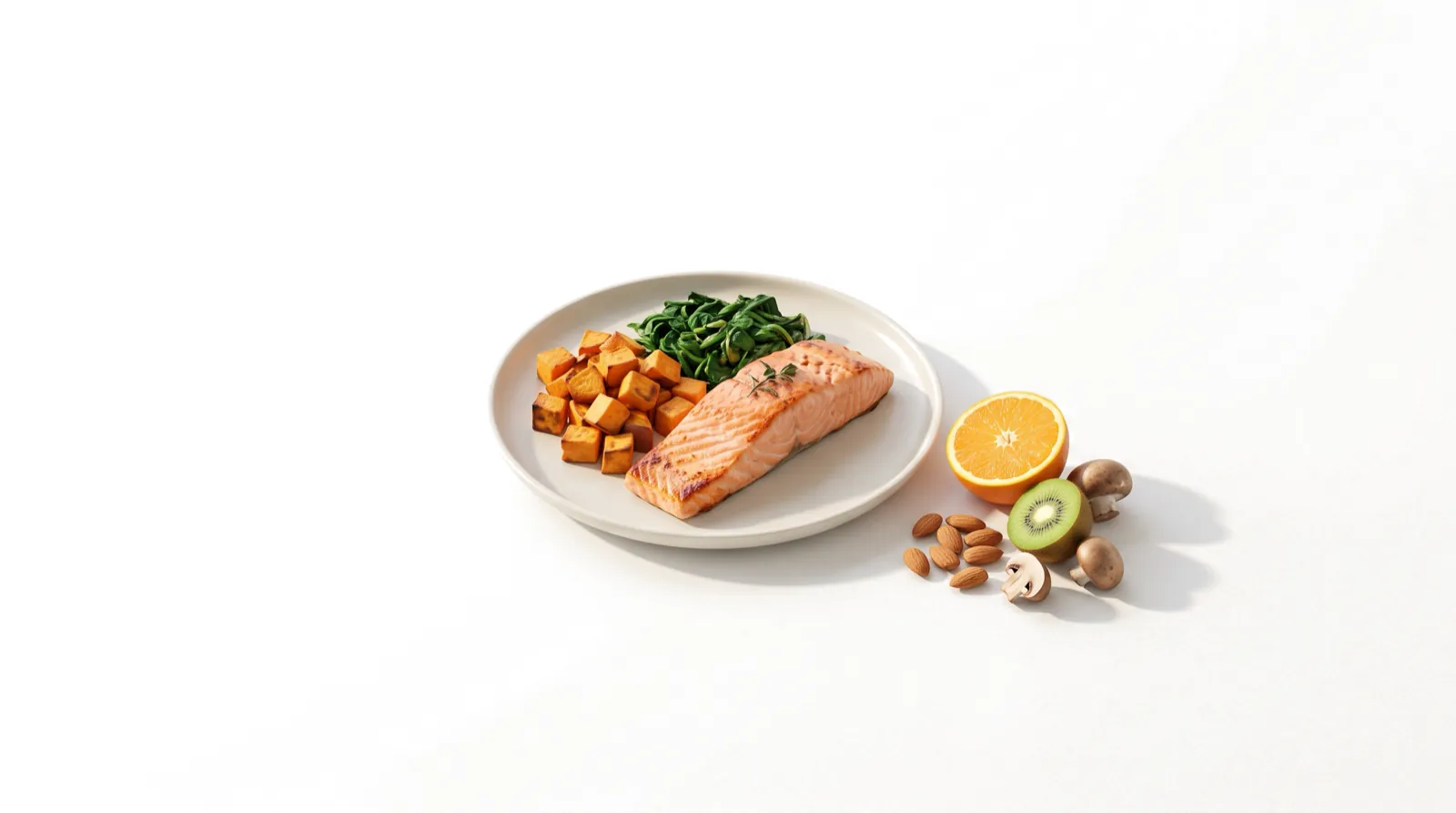
Is there a calorie counter that tracks vitamins and minerals too?
Yes. Several calorie counters also track vitamins and minerals, but the numbers are only as good as the food database behind them. Look for one built on analytical data, such as USDA FoodData Central, that covers the four nutrients US guidelines say most people under-eat: calcium, potassium, fiber and vitamin D. Calories tell you how much you eat. Micronutrients tell you whether what you eat is covering the basics, and that is where most diets quietly fall short.
This guide explains which vitamins and minerals are worth watching, real targets and food sources for each, why data quality matters more for micronutrients than for calories, and how to act on gaps without turning tracking into a worry.
Key takeaways
- The Dietary Guidelines for Americans 2020–2025 name calcium, potassium, dietary fiber and vitamin D as dietary components of public health concern because so many people under-consume them.
- The same guidelines report that more than 90% of US adults don't get enough vitamin D, about 30% of men and 60% of women fall short on calcium, and more than 90% of women and 97% of men miss their fiber target.
- In US national survey data (NHANES 2003–2006, 16,110 people), 45% had magnesium intakes below the estimated average requirement even after counting supplements.
- A tracker can show patterns in your food, not a deficiency. Only a blood test and a clinician can confirm that.
Why track nutrients beyond calories and protein?
It's entirely possible to hit a calorie and protein target every day and still fall short on several vitamins and minerals. A typical high-protein diet built on chicken, rice, eggs and protein snacks can be low in potassium, magnesium and fiber, because those come mainly from vegetables, fruit, beans, nuts, seeds and whole grains.
The gaps are common. The Dietary Guidelines for Americans 2020–2025 state that calcium, potassium, dietary fiber and vitamin D are "dietary components of public health concern for the general U.S. population." (A new 2025–2030 edition replaced those guidelines in January 2026, but the 2025 Dietary Guidelines Advisory Committee's scientific report again flagged the same four as under-consumed.) A 2011 analysis of national survey data found that, counting food, fortification and supplements together, 70% of Americans were below the estimated average requirement for vitamin D, 45% for magnesium, 38% for calcium and 34% for vitamin A. Only 3% reached the adequate intake for potassium. Those data are from 2003–2006, but the 2020–2025 Dietary Guidelines describe the same pattern.
Eating in a calorie deficit makes this harder, because less food means less room for nutrients. That's when seeing your micronutrients alongside calories is most useful.
Which vitamins and minerals are most worth watching?
The table below lists adult targets and some of the richest food sources for the nutrients most often under-consumed, using figures from the NIH Office of Dietary Supplements (ODS) fact sheets and the Dietary Guidelines.
| Nutrient | Adult daily target | Top food sources (per serving) |
|---|---|---|
| Calcium | 1,000 mg (ages 19–50); 1,200 mg for women 51+ | Plain low-fat yogurt, 8 oz: 415 mg · Sardines with bones, 3 oz: 325 mg · Firm tofu made with calcium sulfate, ½ cup: 253 mg |
| Potassium | 3,400 mg men; 2,600 mg women (adequate intake) | Dried apricots, ½ cup: 755 mg · Cooked lentils, 1 cup: 731 mg · Baked potato flesh, 1 medium: 610 mg · Banana, 1 medium: 422 mg |
| Vitamin D | 15 mcg (600 IU) ages 19–70; 20 mcg over 70 | Farmed rainbow trout, 3 oz: 16.2 mcg · Sockeye salmon, 3 oz: 14.2 mcg · Fortified 2% milk, 1 cup: 2.9 mcg · Egg, 1 large: 1.1 mcg |
| Magnesium | 400–420 mg men; 310–320 mg women | Pumpkin seeds, 1 oz: 156 mg · Chia seeds, 1 oz: 111 mg · Almonds, 1 oz: 80 mg · Boiled spinach, ½ cup: 78 mg |
| Iron | 8 mg men; 18 mg women 19–50 | Oysters, 3 oz: 8 mg · Canned white beans, 1 cup: 8 mg · Lentils, ½ cup: 3 mg · Spinach, ½ cup: 3 mg (absorbed less well) |
| Vitamin B12 | 2.4 mcg | Clams, 3 oz: 17 mcg · Atlantic salmon, 3 oz: 2.6 mcg · Canned light tuna, 3 oz: 2.5 mcg · 85% lean ground beef, 3 oz: 2.4 mcg |
| Fiber | 14 g per 1,000 kcal (about 28 g on 2,000 kcal) | Beans, lentils, whole grains, vegetables, fruit, nuts and seeds |
A few patterns stand out. Vitamin D is hard to get from food alone: the Dietary Guidelines note that meeting it usually requires fortified foods and drinks. Plant iron, such as the iron in spinach, is absorbed less well than iron from meat and seafood, and ODS notes vegetarians need 1.8 times as much. Many adults over 50 absorb B12 from food less efficiently, which is why ODS suggests fortified foods or supplements for that group.
Track calories & nutrients fast


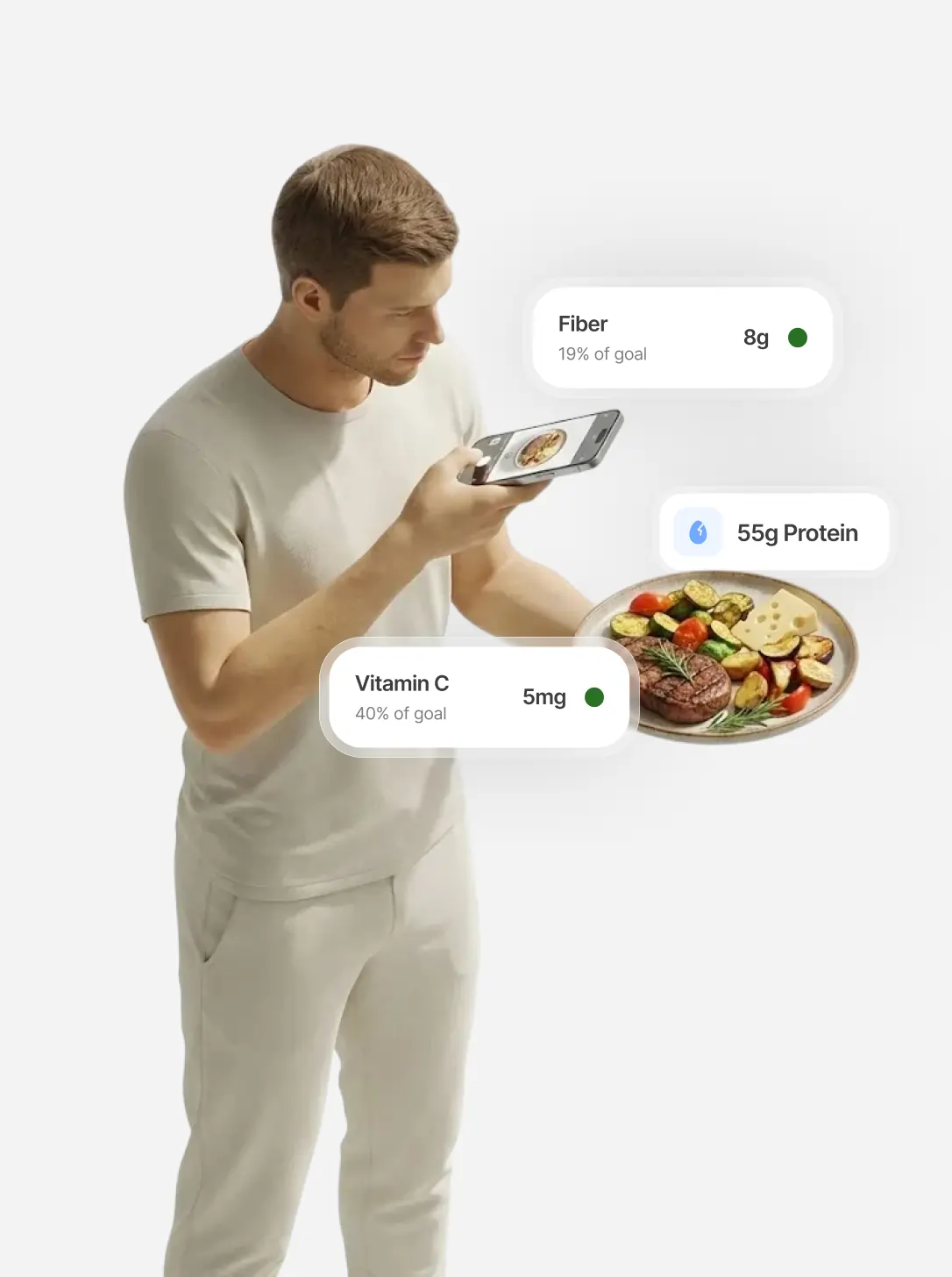
Why micronutrient data depends on the database
Calories are fairly forgiving. Nearly every food entry lists them, and small errors average out. Micronutrients are different: if an entry is missing a value, an app may count it as zero, and your day can look deficient when it isn't.
USDA FoodData Central, the main public US nutrient database, holds several kinds of data. Foundation Foods are analytically measured samples of minimally processed foods. SR Legacy is the historic reference database built from analyses, calculations and published literature. Branded Foods come from manufacturers' label information, so they include only what's on the label. Crowd-sourced databases, where users add their own entries, vary even more.
When you compare calorie counters that track vitamins and minerals, ask three questions: Where does the nutrient data come from? Are missing values shown as missing or as zero? And how many nutrients are tracked for a typical whole food, not just a packaged one?
How to act on nutrient gaps without obsessing
Micronutrient data is most useful as a weekly pattern, not a daily score. This approach keeps it practical:
- Log normally for one to two weeks before drawing conclusions. Single days swing a lot; one salmon dinner can cover a few days' vitamin D.
- Look at weekly averages rather than chasing 100% every day.
- Pick two or three persistent gaps, ideally the nutrients flagged above, and ignore the rest for now.
- Fix them with food first. Adding a pot of yogurt, a handful of pumpkin seeds or a portion of lentils a few times a week often closes a gap on its own.
- Check with a professional before supplementing. Some nutrients have upper limits; ODS sets 45 mg a day for iron and 350 mg for supplemental magnesium in adults. If you suspect a deficiency (for example tiredness with a low iron intake), ask your doctor about a blood test rather than relying on an app.
- Re-check after a few weeks to see whether the change stuck.
Doing it manually vs. with an app
You can track micronutrients by hand: look up each food in FoodData Central, record a dozen nutrient values per food in a spreadsheet, and total them against your targets. It's accurate, free and very slow. Even a simple meal with five ingredients means typing 60 or more numbers, which is why few people keep it up beyond a short audit.
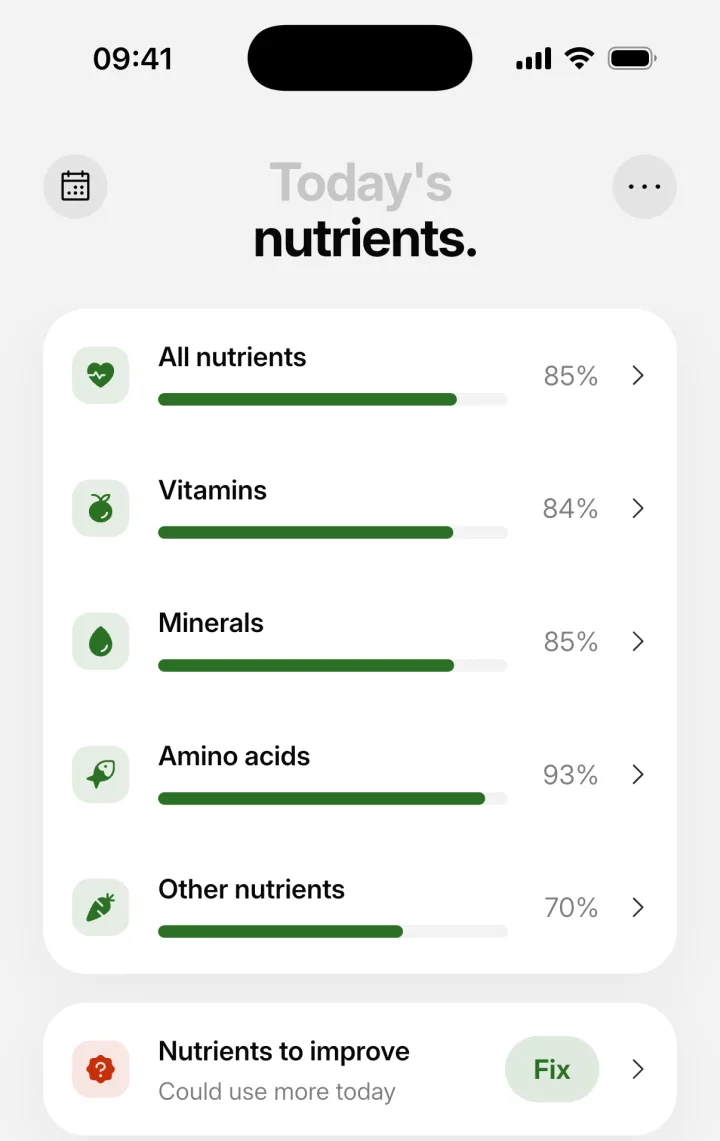
An app makes this automatic. IntakeAI is an iPhone and Android nutrition app designed to help you reduce cravings. It estimates calories, macros and 50+ nutrients from a photo, a barcode, a nutrition label or a typed description, with food search backed by USDA FoodData Central. It tracks 13 vitamins (A, the B vitamins including folate and B12, C, D, E and K) and minerals including calcium, iron, magnesium, potassium, selenium and zinc, against targets scaled by your body weight and sex. Its "Fix your missing nutrients" feature suggests foods that fill the gaps in your day or week. Photo estimates can be off on portion size, so check portions and edit them when needed.
If you mainly care about protein, carbs and fat, our guide to tracking macros by taking a picture goes deeper. For a side-by-side look at logging methods, see the easiest way to track calories, macros and nutrients, and for getting good estimates from meal photos, read tracking calories from a photo.
Frequently asked questions
What should I look for in a calorie counter that tracks vitamins and minerals?
Check where its nutrient data comes from (analytical databases such as USDA FoodData Central are most reliable), whether it covers calcium, potassium, vitamin D, magnesium, iron and fiber for whole foods, whether missing values are shown as zero, and whether your targets are adjusted for your sex and body size.
Which nutrients do most people not get enough of?
The Dietary Guidelines for Americans 2020-2025 name calcium, potassium, dietary fiber and vitamin D as dietary components of public health concern. US survey data also show many adults fall below the average requirement for magnesium and vitamins A, C and E.
Can a nutrient tracking app tell me if I am deficient?
No. An app estimates what is in your food, which can reveal a low-intake pattern. A deficiency can only be confirmed with a blood test or clinical assessment, so talk to your doctor if you have symptoms or a persistently low intake.
How accurate are vitamin and mineral numbers in tracking apps?
They depend on the database and on portion accuracy. Entries from analytical databases are more complete than label-based or user-added entries, which often list only a few micronutrients. Treat daily figures as estimates and look at weekly averages.
Should I take supplements if my tracker shows I am low?
Try food first, and speak to a doctor or dietitian before supplementing. Some nutrients have upper limits; for adults the NIH sets 45 mg a day for iron and 350 mg a day for supplemental magnesium.
Related guides

The Easiest Way to Track Calories, Macros and Nutrients
Compare tracking methods and pick the one you will actually keep using.
READ MORE
Track Macros by Taking a Picture of Your Food
What photos get right about protein, carbs and fat, and how to set macro targets.
READ MORE
Why Most People Quit Calorie Tracking (and How to Make It Stick)
What the data says about tracking drop-off and a plan to keep going.
READ MORESee the vitamins and minerals behind your calories
IntakeAI tracks calories, macros, 13 vitamins and key minerals from a photo, barcode or text description, and suggests foods to fill your nutrient gaps for the day or week.
Sources
- U.S. Department of Agriculture and U.S. Department of Health and Human Services (2020). Dietary Guidelines for Americans, 2020–2025 (Chapter 1, p. 36; Chapter 4, p. 101; Appendix 1). DietaryGuidelines.gov (PDF)
- Fulgoni VL 3rd, Keast DR, Bailey RL, Dwyer J (2011). Foods, fortificants, and supplements: where do Americans get their nutrients? Journal of Nutrition. PubMed
- NIH Office of Dietary Supplements. Calcium: fact sheet for health professionals. ods.od.nih.gov
- NIH Office of Dietary Supplements. Potassium: fact sheet for health professionals. ods.od.nih.gov
- NIH Office of Dietary Supplements. Vitamin D: fact sheet for health professionals. ods.od.nih.gov
- NIH Office of Dietary Supplements. Magnesium: fact sheet for health professionals. ods.od.nih.gov
- NIH Office of Dietary Supplements. Iron: fact sheet for health professionals. ods.od.nih.gov
- NIH Office of Dietary Supplements. Vitamin B12: fact sheet for health professionals. ods.od.nih.gov
- USDA Agricultural Research Service. FoodData Central data documentation. fdc.nal.usda.gov
This article is for general education and is not medical advice. If you have a medical condition, an eating disorder, are pregnant, or take medication, speak to a doctor or registered dietitian before changing your diet. IntakeAI's nutrition figures and scores are estimates to guide your choices.