Why Most People Quit Calorie Tracking (and How to Make It Stick)

Why do most people quit calorie tracking?
Most people quit calorie tracking because logging takes too much effort, real meals are hard to enter, and the payoff fades once the novelty wears off. In one study of 189,770 people who tried a free photo food-logging app, only 2.58% went on to use it actively. Drop-off is normal and starts early. The useful question isn't whether you will lose momentum, but how to set tracking up so a bad week doesn't end it.
Below is what the research says about how quickly people stop, the specific reasons they give, an honest note on who shouldn't track calories at all, and a four-week plan to make it last.
Key takeaways
- In a 6-month trial of a popular calorie-counting app, 97% of users logged in during month 1 but only 35% in month 6, and by month 3 the median user was no longer logging in at all.
- Among 94 people who had stopped food journaling, the top reasons were that it no longer felt valuable (37%), too much effort (25%), too time-consuming (16%) and lost motivation (10%).
- 40% of survey respondents skipped logging foods that were too hard to enter, and 13% avoided logging when they ate something unhealthy or went over their calorie budget.
- Consistency beats intensity: in a year-long study of 220 women, those who logged consistently in at least half of the weeks kept their weight roughly stable, while less consistent loggers regained about 5%.
- Calorie tracking is not a good fit for people with a history of eating disorders.
How fast do people stop tracking? What the data shows
You will often see claims that a precise share of people quit calorie apps within a week or two. We couldn't find a reliable study behind those exact figures. What the research does show clearly is that use drops steeply in the first weeks and keeps falling.
| Study | Who and what | What happened to logging |
|---|---|---|
| Helander et al., 2014 | 189,770 people who downloaded a free photo food-logging app | 69% never logged a valid photo and 17% logged just one. Only 2.58% logged 10+ photos over more than a week. |
| Laing et al., 2014 | 212 overweight primary-care patients; half given a free calorie-counting app | App logins: 97% of users in month 1, 55% in month 2, 35% in month 6. No meaningful weight difference vs usual care at 6 months. |
| Krukowski et al., 2013 | 161 adults in a 6-month online weight program | Participants logged on 28% of weekdays and 17% of weekend days, mostly early in the program. |
| Harvey et al., 2019 | 142 adults in a 24-week online program | Time spent logging fell from 23.2 min/day in month 1 to 14.6 min/day in month 6. |
These are different groups: casual app downloaders, patients who didn't ask for an app, and motivated people in structured programs. The pattern holds across all of them. In the app trial, the lead author said most patients simply weren't ready to commit the time it takes to enter every meal, and suggested a faster way to enter foods should be a priority.
The real reasons people quit calorie tracking
A 2015 University of Washington study surveyed 257 people about food journaling. Of 141 with past experience, 94 had stopped. Their answers, along with other research, point to five recurring reasons.
1. It costs more time than it seems worth
After fading value, "too much effort" (25%) and "too time-consuming" (16%) were the next most common reasons people gave for stopping. Typing every ingredient of every meal adds up quickly, which matches the 23 minutes a day recorded in month 1 of the Harvey study.
2. Real meals are hard to enter
40% of respondents had skipped logging a food simply because it was too hard to enter, and 40% because they didn't know what was in a meal. Restaurant food and home cooking are the worst. One participant described not knowing what to enter when eating out, so entries went missing "and that compounded." The same study found some people started choosing packaged foods because they were easier to log, which is the opposite of what most people want from tracking.
3. All-or-nothing thinking
Forgetting was the most common reason for a missed entry (54%). The problem isn't the missed meal; it's what happens next. A blank lunch makes the day feel "ruined," the day becomes a week, and the habit is gone. Research suggests a partly logged week is still worth a lot (see the plan below).
4. Guilt and red numbers
13% of respondents said they deliberately didn't log when they ate something unhealthy or went over their calorie budget. When every entry feels like a judgement, people stop entering the meals that matter most for spotting patterns.
5. The value fades, sometimes for good reasons
The single most common reason for stopping (37%) was that tracking felt less valuable over time, often because a habit had formed or a goal had been reached. That isn't failure. Tracking can be a phase that teaches you portions and patterns, followed by occasional check-ins.
Calorie tracking isn't right for everyone
For some people, tracking does more harm than good. In a 2017 study of 105 people diagnosed with an eating disorder, about 75% used a calorie-tracking app, and 73% of those users felt it had contributed to their eating disorder. A study of 493 college students found calorie-tracker users reported higher eating concern and dietary restraint. Both studies show associations, not cause and effect, but they are a good reason to be careful.
If you have a history of anorexia, bulimia, binge eating disorder or other disordered eating, speak to your doctor or eating-disorder clinician before tracking calories. Whoever you are, consider stopping and getting support if tracking leaves you anxious about eating, leads you to skip meals to stay under a number, or makes you feel you have to "make up" for food.
Track calories & nutrients fast


How to make calorie tracking stick: a four-week plan
The research points to one principle: make each entry cheap and judge yourself on consistency, not perfection. In a year-long study of 220 women who had already lost weight, "consistency" meant a week with at least three days of food records. Those consistent in at least half of the weeks held their weight roughly steady (−0.98%), while the rest regained about 5.1%. How detailed the records were made no difference.
- Week 1: log without judging. Log what you eat as you normally eat it. No target yet; you're learning your baseline and saving your repeat meals.
- Week 1: make every entry small. Save regular meals, scan packaged foods and use photos or quick text for the rest. Our guide to tracking calories without logging everything manually covers the shortcuts.
- Week 2: set a floor, not a ceiling. Aim for at least three fully logged days a week. Anything above that is a bonus.
- Week 2: log early in the day. Logging breakfast or lunch straight away keeps the habit alive; in the Krukowski study, people who went on to lose more than 5% showed consistent logging patterns from early on.
- Week 3: estimate instead of skipping. Eating out or don't know the recipe? Log your best guess. A rough entry is better than a blank. See tracking calories when eating out and tracking without weighing food.
- Week 3: review weekly, not daily. Look at your weekly average. One high day barely moves it.
- Week 4: decide your long-term mode. Keep logging daily, switch to the three-day floor, or move to one check-in week a month. All are legitimate.
If you're tracking to lose weight, keep the deficit moderate. Big deficits make hunger harder to manage, which makes tracking feel worse. Our guide to how to lose weight without feeling hungry covers that side.
Doing it manually vs. with an app
None of this needs an app. A notebook or notes app with your saved meals, a three-day weekly minimum and a Sunday review works. Interestingly, in the University of Washington survey, past journalers mostly used paper and kept it up for a median of 2 to 3 months, while current journalers mostly used technology and reported a median of 7 to 12 months.
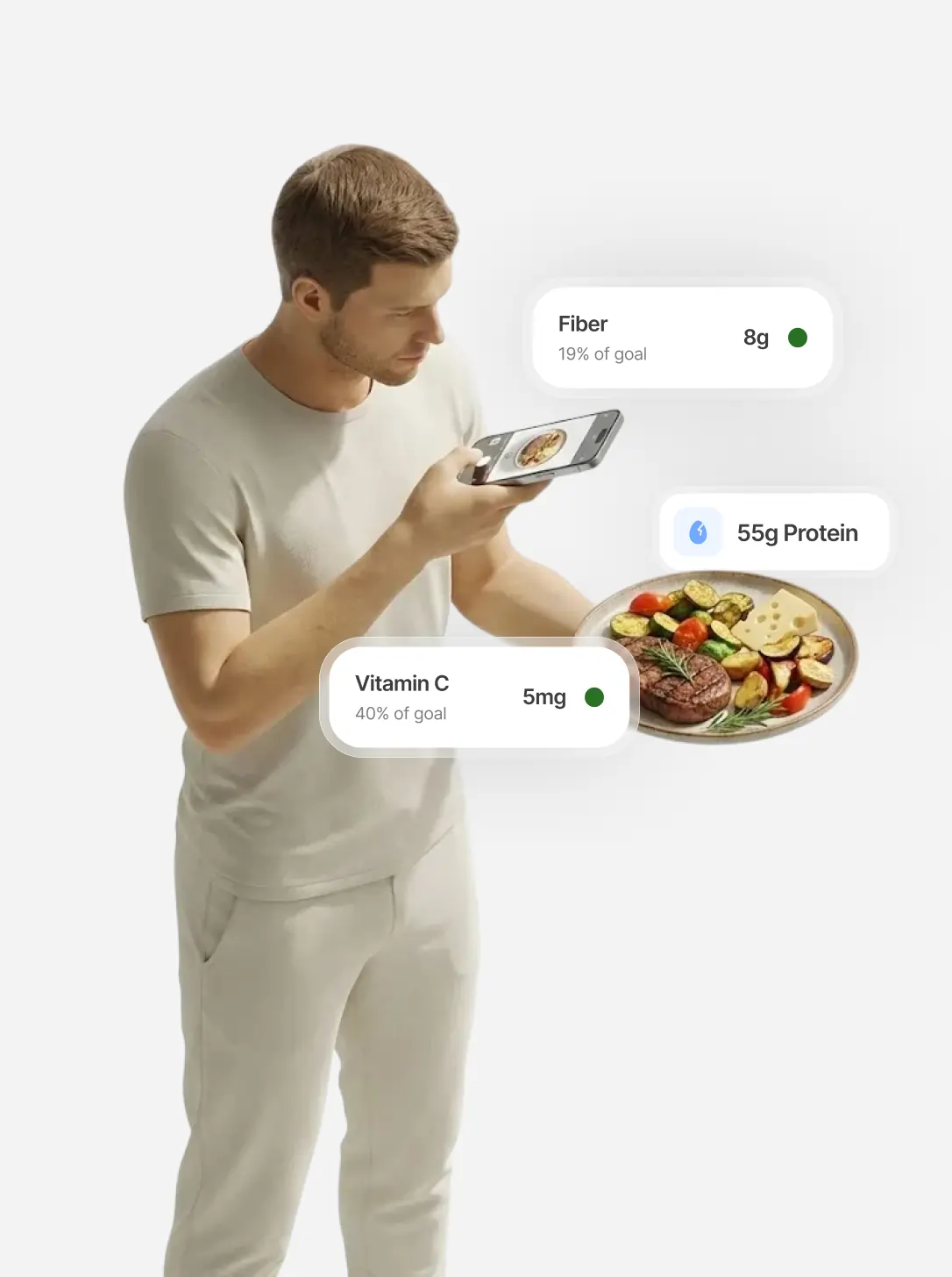
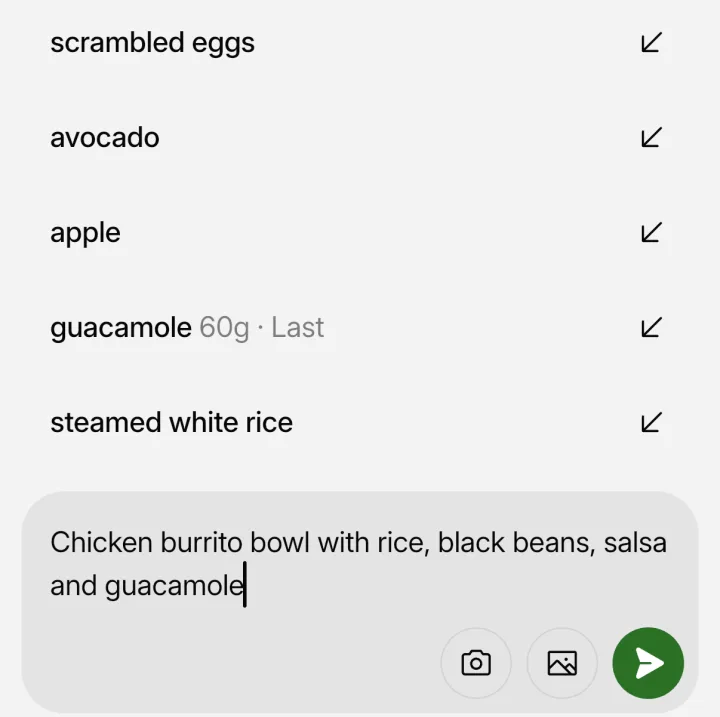
An app helps mainly by removing friction. IntakeAI is an iPhone and Android nutrition app designed to help you reduce cravings. It estimates calories, macros and 50+ nutrients from a photo, barcode, nutrition label or typed description, and lets you re-log recent meals. It shows daily progress bars against your targets, charts over time, daily streaks and an optional daily reminder. Its photo estimates can misjudge portions or hidden oil, so you can edit any portion. An app can make logging faster; it can't supply the reason you're tracking, so set that first.
For the full comparison of tracking methods, start with the easiest way to track calories, macros and nutrients.
Frequently asked questions
Why do most people quit calorie apps after a week?
Use drops fastest in the first weeks because logging takes effort, real meals are hard to enter and early motivation fades. In a trial of a calorie-counting app, 97% of users logged in during month 1 but only 55% in month 2. Exact figures for a single week are not well documented.
What percentage of people stop using food tracking apps?
It depends on the group. In a study of 189,770 people who downloaded a free photo food-logging app, only 2.58% used it actively. In a 6-month trial, the share of users logging in fell from 97% in month 1 to 35% in month 6.
How many days a week do I need to track calories?
You don't have to track every day. In a year-long study of 220 women, consistency was defined as at least three days of food records in a week, and those who were consistent in at least half of the weeks maintained their weight better than those who were not.
Is it OK to stop calorie tracking once I have learned my portions?
Yes. The most common reason past food journalers gave for stopping was that it felt less valuable over time, often because a habit had formed or a goal had been reached. Many people move to occasional check-in weeks instead of daily logging.
Can calorie tracking be harmful?
For some people, yes. In a study of 105 people with eating disorders, 73% of calorie-app users felt the app contributed to their disorder. If you have a history of disordered eating, talk to your doctor or clinician before tracking, and stop if it makes you anxious about food.
Related guides

The Easiest Way to Track Calories, Macros and Nutrients
Compare tracking methods and pick the one you will actually keep using.
READ MORE
How to Track Calories Without Logging Everything Manually
Repeat meals, photos, barcodes and a 30-second routine that cuts the typing.
READ MORE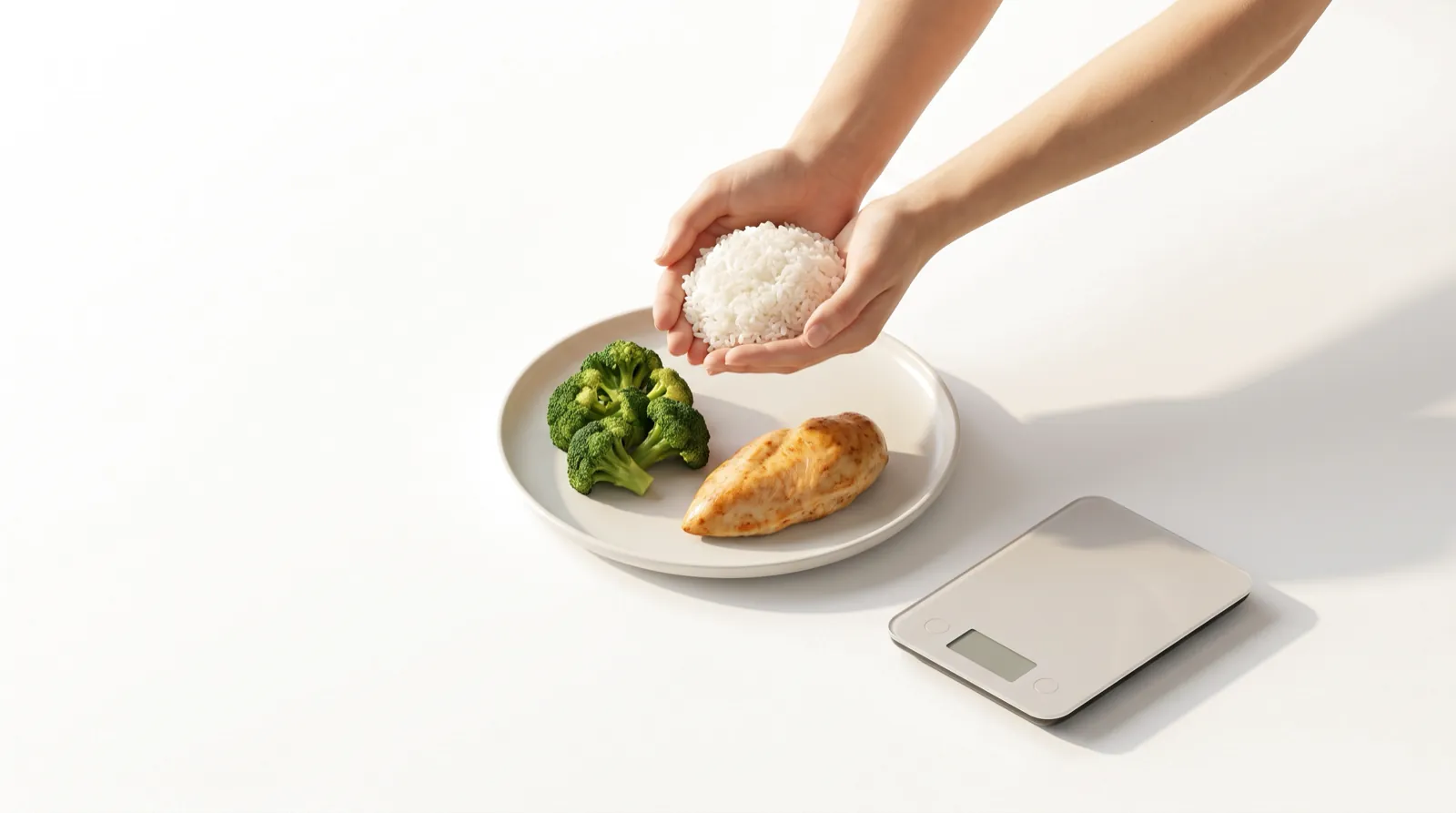
How to Track Calories Without Weighing Food
Practical ways to estimate portions when you have no scale.
READ MOREMake tracking small enough to keep doing
Log meals in seconds with a photo, barcode or quick text description, re-log your regular meals, and see your daily progress, streaks and trends in IntakeAI.
Sources
- Helander E, Kaipainen K, Korhonen I, Wansink B (2014). Factors related to sustained use of a free mobile app for dietary self-monitoring with photography and peer feedback: retrospective cohort study. Journal of Medical Internet Research. PubMed
- Laing BY, Mangione CM, Tseng CH, et al. (2014). Effectiveness of a smartphone application for weight loss compared with usual care in overweight primary care patients: a randomized, controlled trial. Annals of Internal Medicine. PubMed
- Krukowski RA, Harvey-Berino J, Bursac Z, Ashikaga T, West DS (2013). Patterns of success: online self-monitoring in a web-based behavioral weight control program. Health Psychology. PubMed
- Harvey J, Krukowski R, Priest J, West D (2019). Log often, lose more: electronic dietary self-monitoring for weight loss. Obesity. PubMed
- Cordeiro F, Bales E, Cherry E, Fogarty J (2015). Rethinking the mobile food journal: exploring opportunities for lightweight photo-based capture. Proceedings of CHI 2015. PDF
- Peterson ND, Middleton KR, Nackers LM, et al. (2014). Dietary self-monitoring and long-term success with weight management. Obesity. PubMed
- Levinson CA, Fewell L, Brosof LC (2017). My Fitness Pal calorie tracker usage in the eating disorders. Eating Behaviors. PubMed
- Simpson CC, Mazzeo SE (2017). Calorie counting and fitness tracking technology: associations with eating disorder symptomatology. Eating Behaviors. PubMed
This article is for general education and is not medical advice. If you have a medical condition, an eating disorder, are pregnant, or take medication, speak to a doctor or registered dietitian before changing your diet. IntakeAI's nutrition figures and scores are estimates to guide your choices.