How to Track Calories When Eating Out

How do you track calories when eating out?
To track calories when eating out, use the posted calories at US chains with 20 or more locations, and for other restaurants log the closest database match, then add 100–300 kcal for the oil, butter and sauce you can't see. Lab tests back that padding up: independent restaurant meals averaged about 1,200–1,300 kcal, and some dishes at chains held hundreds more calories than their stated values.
You don't need to be exact. You need a consistent, slightly cautious estimate that you log every time, including the meals that feel too awkward to record.
Key takeaways
- Since May 2018, US restaurant chains with 20 or more locations must list calories on menus and provide fuller nutrition information on request.
- Stated restaurant calories were accurate on average in a 269-item lab study, but 19% of items contained at least 100 kcal more than listed.
- Meals from independent restaurants averaged 1,205 kcal across three US cities, and 92% exceeded typical calorie needs for a single meal.
- One tablespoon of cooking oil is about 119 kcal. Adding one to three tablespoons to cooked restaurant dishes is a reasonable correction.
- Diners underestimate restaurant meals, and the gap grows as the meal gets bigger.
What US menu calorie labels tell you (and what they don't)
Under the FDA menu labeling rule, restaurants and similar food businesses that are part of a chain with 20 or more locations, operate under the same name and serve substantially the same menu must show calories for standard menu items on menus and menu boards. Compliance has been required since May 7, 2018. The same businesses must also provide written nutrition information on request, covering total fat, saturated fat, trans fat, cholesterol, sodium, carbohydrates, sugars, fiber and protein, and they must display a statement that 2,000 calories a day is used for general nutrition advice.
That makes chains the easiest restaurant meals to track, as long as you remember three gaps:
- Independent restaurants are exempt. Non-chain restaurants make up roughly half of US restaurant locations and usually publish nothing.
- Customizations are not counted. Extra cheese, a side swap, a second refill of chips or a larger pour of dressing changes the total.
- The number describes a standard recipe. The plate you get depends on who cooked it and how heavy their hand was with oil and portions.
How accurate are restaurant calorie counts?
Researchers at Tufts University have tested this directly using bomb calorimetry, which measures the energy in food by burning it.
- Posted calories are right on average, but not for every dish. A 2011 JAMA study analyzed 269 foods from 42 quick-serve and sit-down restaurants. Overall, stated calories were close to measured values (an average difference of 10 kcal per portion). But 50 items (19%) contained at least 100 kcal more than stated, and the worst 10% averaged 289 kcal more when first tested and 258 kcal more when re-bought and retested. Lower-calorie items were the ones most likely to be understated.
- Independent restaurants serve big meals. A 2013 study of 157 meals from independent and small-chain restaurants around Boston found an average of 1,327 kcal per meal, about two-thirds of a typical day's needs. Those meals contained 19% more energy than national food-database values for equivalent items.
- The pattern held in other cities. A 2016 multisite study of 364 frequently ordered meals in San Francisco, Boston and Little Rock measured an average of 1,205 kcal per meal, with no significant difference from equivalent chain meals. Ninety-two percent exceeded typical energy needs for a single eating occasion.
People also guess low. In a BMJ study of 1,877 adult diners at US fast-food chains, adults underestimated their meal by 175 kcal on average, and the underestimate grew as the meal's true calorie content increased.
Typical calories by cuisine
The 2016 study reported measured averages for nine popular cuisines. Use these as a reality check when a sit-down meal has no posted calories. The range column is the average plus or minus one standard deviation, which covers roughly two-thirds of the meals tested.
| Cuisine (non-chain restaurants) | Average measured calories per meal | Typical range (±1 SD) |
|---|---|---|
| Italian | 1,556 kcal | about 1,060–2,050 kcal |
| Chinese | 1,478 kcal | about 950–2,000 kcal |
| American | 1,451 kcal | about 1,050–1,850 kcal |
| Indian | 1,250 kcal | about 930–1,570 kcal |
| Thai | 1,163 kcal | about 820–1,500 kcal |
| Mexican | 1,110 kcal | about 740–1,480 kcal |
| Vietnamese | 984 kcal | about 640–1,330 kcal |
| Japanese | 945 kcal | about 570–1,320 kcal |
| Greek | 904 kcal | about 490–1,320 kcal |
| All 364 meals | 1,205 kcal | about 740–1,670 kcal |
Source: Urban et al. 2016, Table 2 (bomb-calorimetry measurements of the most frequently ordered meals; individual meals ranged from 113 to 3,008 kcal). If your quick estimate for a pasta dinner comes out at 650 kcal, these numbers suggest checking it again.
Track calories & nutrients fast


Where are the hidden calories in restaurant food?
Most of the gap between what a dish looks like and what it contains comes from fat added during cooking and from sides and sauces people forget to log. Restaurant kitchens cook for flavor, and fat is the cheapest way to get it. These are per-portion values calculated from USDA FoodData Central:
| Hidden extra | Typical restaurant amount | Approx. calories |
|---|---|---|
| Olive or vegetable oil (sautéing, grilling, dressing) | 1 tablespoon (13.5 g) | 119 kcal |
| Butter (finishing steaks, vegetables, toast, rice) | 1 tablespoon (14 g) | 100 kcal |
| Ranch dressing | 2 tablespoons (30 g) | 129 kcal |
| Mayonnaise or aioli | 1 tablespoon (14 g) | 95 kcal |
| Cheddar cheese | 1 oz (28 g) | 113 kcal |
| Side of french fries | 150 g | 468 kcal |
Two tablespoons of oil on a stir-fry, a pat of butter on the steak and a ramekin of dressing on the side salad add up to roughly 470 kcal before you count the food itself. That's why a "grilled chicken with vegetables" entry from a database often undercounts the restaurant version.
How to quickly estimate calories at a restaurant
This takes about a minute once you've done it a few times:
- Look for a posted number first. At a chain, use the menu or the restaurant's nutrition page, then adjust for any changes you made.
- Break the plate into components. Protein, starch, vegetables, sauce, sides, bread and drinks each get their own line.
- Size each one with your hand. A palm of meat or fish, a fist of rice or pasta, a thumb of butter or dressing. Our guide to tracking calories without weighing food has a full hand-portion chart with grams.
- Add the cooking fat. Sautéed, fried, roasted or "glazed" usually means at least one tablespoon of oil or butter per portion. Add one to three, depending on how glossy the dish looks.
- Count drinks and extras. Bread baskets, chips and salsa, cocktails and dessert are often larger than the main meal's sides.
- Log it before or right after you eat. Waiting until the evening means relying on memory, which is when most items get forgotten.
- When torn between two numbers, choose the higher one. Given the research above, rounding up is usually closer to the truth.
Ordering habits that make tracking easier
- Ask for dressings and sauces on the side, so you control and can count the amount.
- Choose dishes with visible components (steak, potato, vegetables) over mixed dishes such as casseroles or creamy pastas, which are harder to estimate.
- Box half of a large plate at the start of the meal and log only what you ate.
- Pick one or two regular orders at places you visit often, and save them so you can log them again in seconds.
Logging restaurant meals with a photo
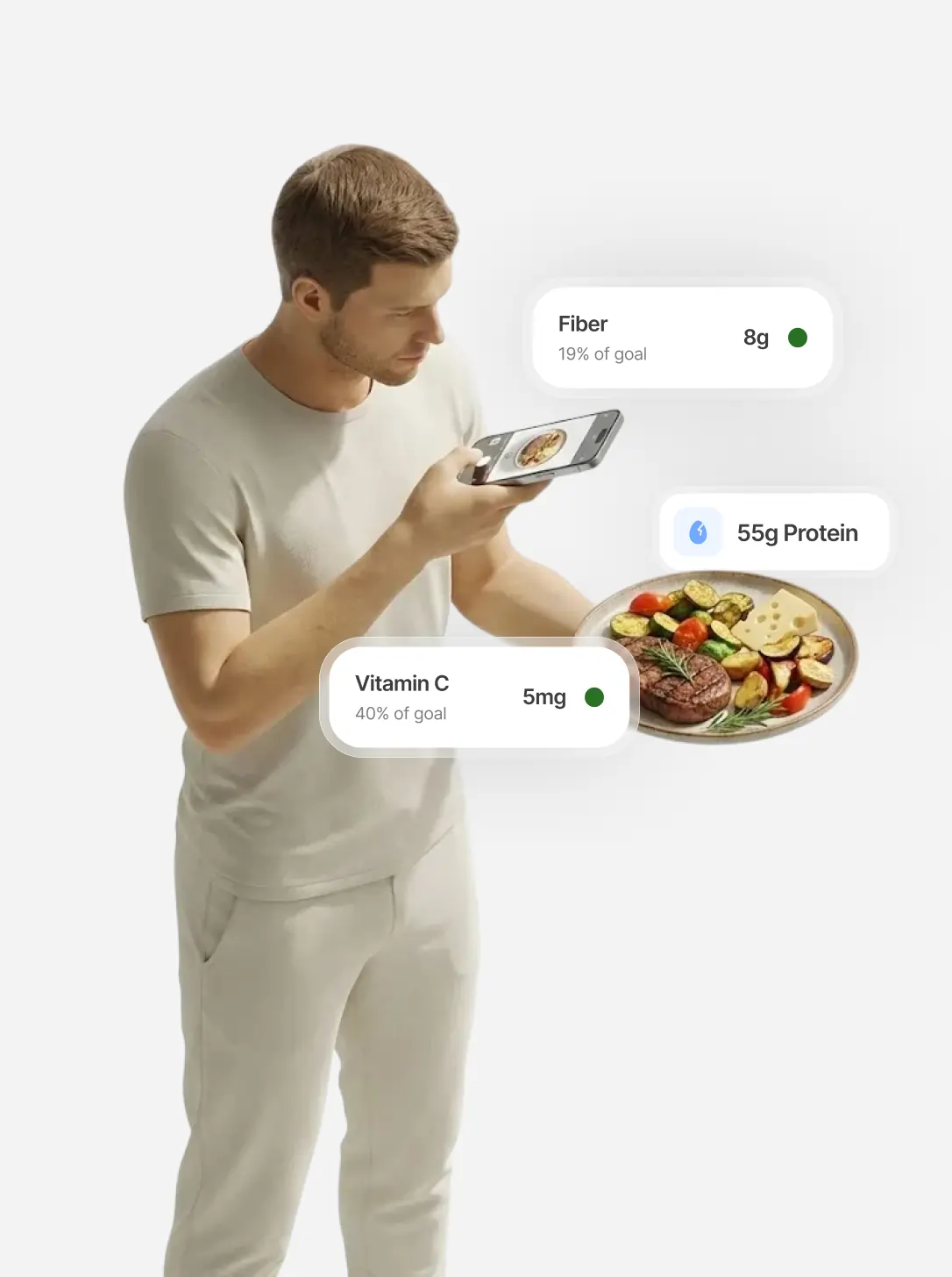
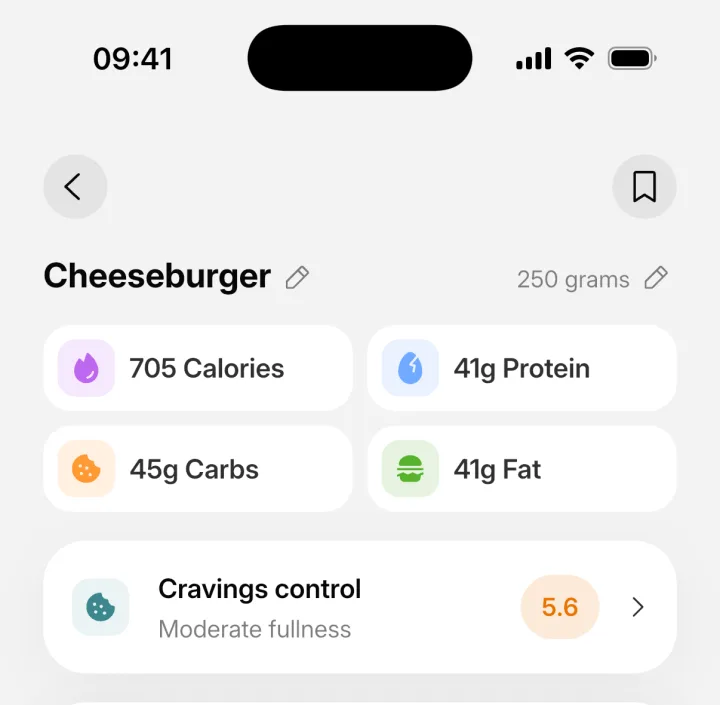
The manual method above works, but at a busy table it's easier to snap the plate and sort out the details later. IntakeAI is an iPhone and Android nutrition app designed to help you reduce cravings. It can estimate calories, macros and over 50 nutrients from a meal photo, a barcode, a nutrition-label scan or a typed description. For restaurant meals, the photo is the quickest starting point, and you can take it at the table or pick it from your gallery afterward.
A photo can't see what's inside the food, so two steps matter. First, add a short details note with the photo, for example "pan-fried in butter, ate half the fries, dressing on the side." Second, review the result and edit the portions: change the grams, delete a side you didn't eat, or add the bread you forgot to photograph. AI photo estimates can be off on portion size and hidden oil, so this quick check is what makes the log useful.
For a closer look at what the AI does with your picture and where it struggles, see how AI photo calorie tracking works. To compare restaurant logging with every other method, read our guide to the easiest way to track calories, macros and nutrients.
Don't let one restaurant meal derail the week
A 1,500 kcal dinner out is a single data point, not a failure. Log it honestly, eat normally at your next meal, and look at your weekly average rather than one day. Skipping meals to "make up" for a big dinner can leave you overly hungry at the next one. If eating out regularly turns into weekend overeating, our guide on staying in a calorie deficit without bingeing has practical strategies. If you take medication that affects appetite, such as a GLP-1 drug, or you have a history of disordered eating, check your targets with a clinician.
Frequently asked questions
How do I estimate calories at a restaurant without nutrition information?
Break the plate into protein, starch, vegetables, sauce and sides, size each with your hand, log the closest database entries, and add one to three tablespoons of oil or butter (about 100 to 120 kcal each) for cooking fat. When unsure, choose the higher estimate.
Are restaurant calorie counts accurate?
On average, yes, but not for every dish. A 2011 JAMA study of 269 restaurant foods found stated calories were close to measured values overall, yet 19% of items contained at least 100 kcal more than listed.
Which restaurants have to show calories in the US?
Under FDA rules, restaurants and similar food businesses in chains with 20 or more locations that share a name and offer substantially the same menu must post calories for standard menu items and provide more nutrition information on request.
How many calories are in a typical restaurant meal?
A 2016 study that measured 364 popular meals from independent restaurants in three US cities found an average of 1,205 kcal per meal. Italian, Chinese and American dishes averaged around 1,450 to 1,560 kcal.
Should I log a restaurant meal if I am not sure of the calories?
Yes. A rough, slightly generous estimate is far more useful than a blank entry, because skipped meals make your weekly average look lower than it is. You can edit the entry later if you find better information.
Related guides
The Easiest Way to Track Calories, Macros and Nutrients
Compare every tracking method and find the one you will actually stick with.
READ MORE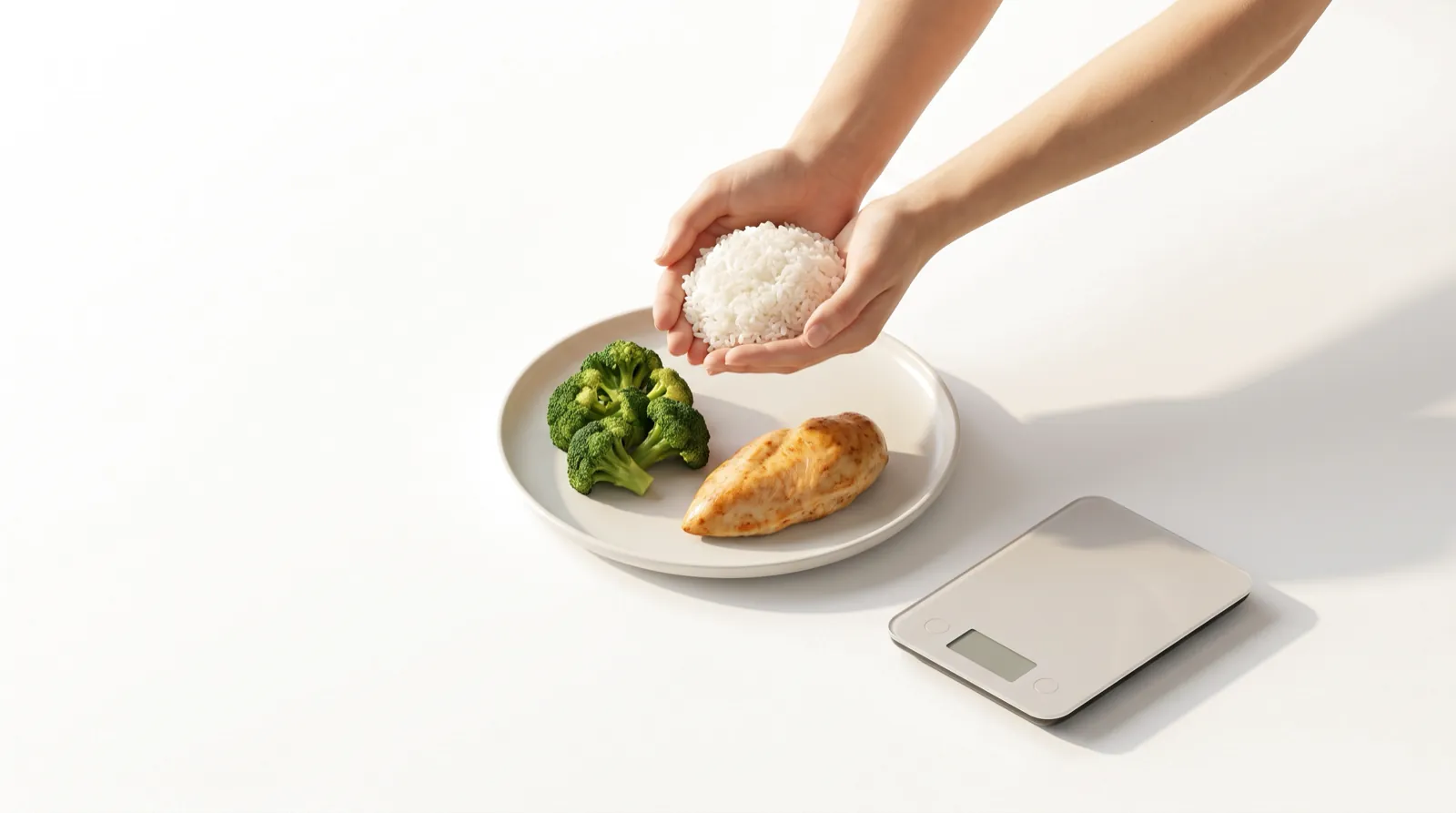
Best Way to Track Calories Without Weighing Food
A hand-portion chart with grams and calories, plus when a scale is still worth it.
READ MORE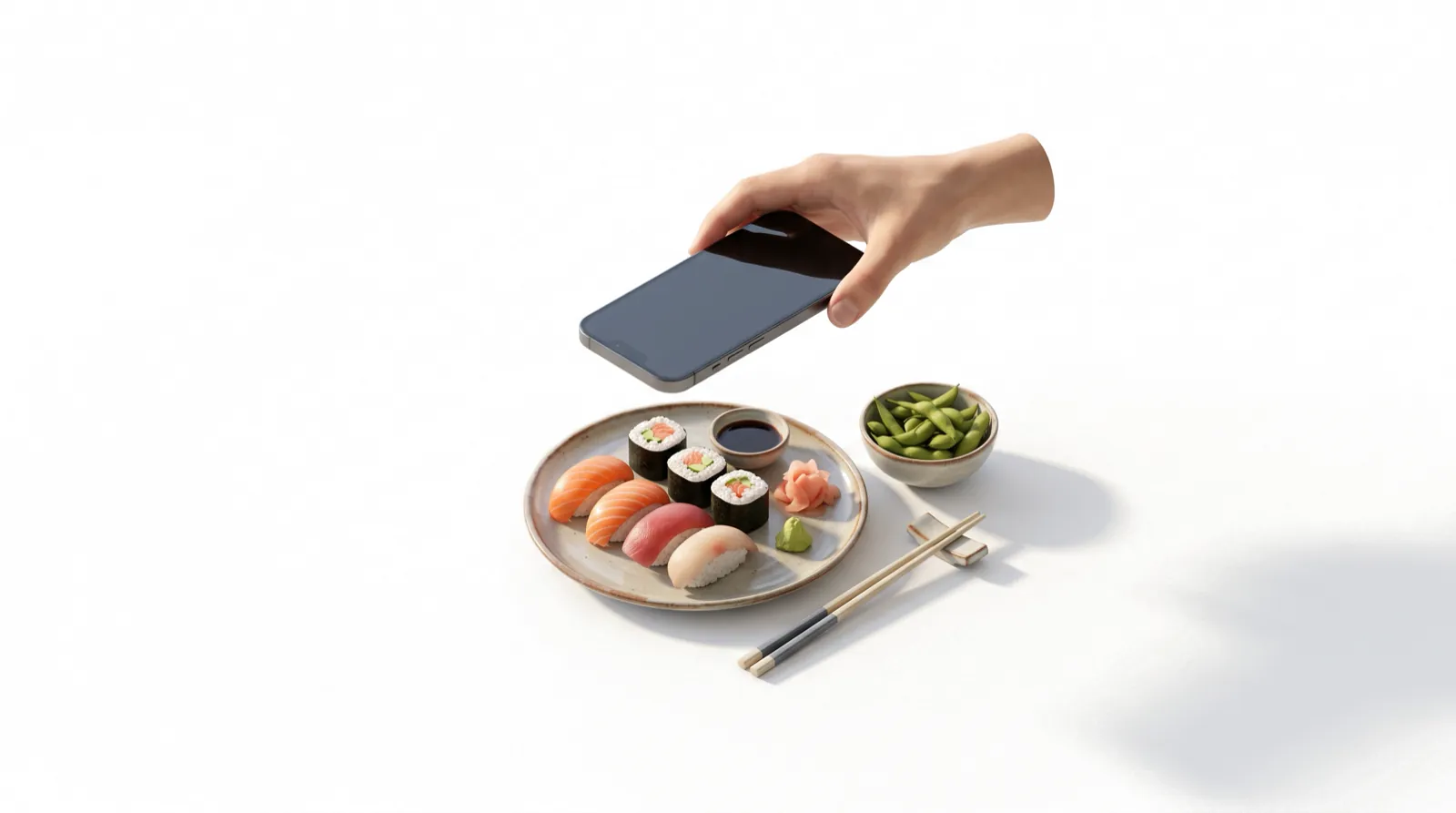
Track Calories From a Photo: How AI Food Tracking Works
What photo calorie counters do well, where they struggle and how to get better results.
READ MORELog restaurant meals from a photo
Snap your plate, add a note about oils or sauces, and adjust the portions. IntakeAI estimates calories, macros and 50+ nutrients for iPhone and Android.
Sources
- U.S. Food and Drug Administration. Menu Labeling Requirements. fda.gov
- Urban LE et al. (2011). Accuracy of stated energy contents of restaurant foods. JAMA. PubMed
- Urban LE et al. (2013). The energy content of restaurant foods without stated calorie information. JAMA Intern Med. PubMed
- Urban LE et al. (2016). Energy contents of frequently ordered restaurant meals and comparison with human energy requirements and U.S. Department of Agriculture database information: a multisite randomized study. J Acad Nutr Diet. PubMed / full text (PMC)
- Block JP et al. (2013). Consumers' estimation of calorie content at fast food restaurants: cross sectional observational study. BMJ. PubMed
- U.S. Department of Agriculture, Agricultural Research Service. FoodData Central (SR Legacy entries for olive oil, salted butter, regular ranch dressing, regular mayonnaise, cheddar cheese, fast-food french fries). fdc.nal.usda.gov
This article is for general education and is not medical advice. If you have a medical condition, an eating disorder, are pregnant, or take medication, speak to a doctor or registered dietitian before changing your diet. IntakeAI's nutrition figures and scores are estimates to guide your choices.