How to Stay in a Calorie Deficit Without Bingeing on Weekends

How do you stay in a calorie deficit without bingeing on weekends?
To stop weekend binges and still lose weight, budget calories by the week instead of the day, shift 200–400 kcal from weekdays into Saturday and Sunday, keep the weekday deficit moderate, and replace all-or-nothing food rules with flexible ones, which research links to fewer binges. A weekend binge is rarely about the weekend. It is usually the bill for an overly strict week. Below is the math showing why, a weekly budget you can copy, and the signs that it may be something that needs professional support.
Key takeaways
- Two weekend days 700–1,000 kcal over maintenance can cancel most of a 400 kcal/day weekday deficit.
- In a 1-year study of 48 adults, people on calorie restriction lost weight on weekdays but stopped losing on weekends, mainly because they ate more on Saturdays.
- Rigid dieting rules are associated with more frequent and severe binge episodes; flexible control is linked to fewer binges and more successful weight loss.
- A meta-analysis of 11 trials found intermittent and continuous calorie restriction produced similar weight loss, so you can choose the pattern you can stick with.
- Regular episodes of eating large amounts with a loss of control are a recognized eating disorder; a doctor can help.
Why weekend bingeing erases weekday progress
Take someone whose maintenance is 2,300 kcal a day, aiming for a 400 kcal daily deficit. Here is what three different weeks look like:
| Week pattern | Mon–Fri intake | Sat + Sun intake | Weekly intake | Weekly deficit (vs 16,100) |
|---|---|---|---|---|
| Strict week, weekend binge | 1,700/day (8,500) | 3,300 + 3,000 (6,300) | 14,800 | 1,300 kcal |
| Same every day | 1,900/day (9,500) | 1,900 + 1,900 (3,800) | 13,300 | 2,800 kcal |
| Weekly budget, higher weekend | 1,750/day (8,750) | 2,275 + 2,275 (4,550) | 13,300 | 2,800 kcal |
The strict week has the biggest weekday deficit (600 kcal a day, 3,000 total), but the weekend surplus of 1,700 kcal leaves less than half the deficit of the steadier weeks. And because it felt harder, it is also the week most likely to end in another binge. The third row reaches the same deficit as eating 1,900 every day, but leaves room for a meal out and a relaxed Sunday.
This is not just theory. In a 1-year study at Washington University, 48 adults aged 50–60 weighed themselves every morning. At baseline they gained weight on weekends. During the intervention, the calorie-restriction group lost weight on weekdays but stopped losing on weekends, mainly because they ate more on Saturdays. The researchers concluded this helps explain why weight loss is often slower than expected.
What is the restrict-binge cycle?
Psychologists Janet Polivy and Peter Herman argued in a 1985 review that dieting can itself be a cause of binge eating, not just a response to it. The pattern usually runs like this:
- Restrict: A low calorie target and a list of banned foods from Monday.
- Build-up: Hunger, tiredness and thoughts about "forbidden" foods grow through the week.
- Trigger: Friday drinks, a takeaway or a stressful day breaks one rule.
- "Blown it" thinking: One slip feels like failure, so the rest of the weekend becomes a write-off.
- Compensate: Guilt on Monday leads to an even stricter plan, and the cycle restarts.
Step 4 is the most important to break. A 400 kcal unplanned meal is a small event in a 13,000 kcal week. Treating it as a reason to abandon the weekend turns it into a 3,000 kcal one.
Rigid vs flexible restraint: what the research shows
Joachim Westenhoefer and colleagues split "dietary restraint" into two styles. Rigid control is all-or-nothing: strict rules, banned foods, skipped meals, no flexibility. Flexible control is graded: eating a little less of a treat, balancing a big meal with lighter ones, keeping portions in mind without banning anything.
In their 1999 validation study, which drew on questionnaire data from 54,517 participants in a weight reduction program and a random sample of 1,838 people from the West German population, rigid control was associated with higher BMI and more frequent and more severe binge eating episodes. Flexible control was associated with lower BMI, fewer and less severe binges, and a higher chance of successful weight loss over the 1-year program. A later study of 106 women maintaining weight loss found the same direction: flexible restraint predicted more weight lost and better maintenance, while rigid restraint was tied to preoccupation with food. These are correlational studies, so they show a strong association rather than proof that flexibility causes success, but they match what many dieters experience.
Track calories & nutrients fast



How to set up a weekly calorie budget
Calorie cycling here simply means eating a little less on some days and a little more on others while keeping the weekly total the same. It isn't magic. A 2018 meta-analysis of 11 trials lasting 8–24 weeks found that intermittent and continuous calorie restriction led to similar weight loss. That is useful news: you can pick the pattern that fits your social life without losing results.
- Find your weekly target. Multiply your daily target by 7. At 1,900 kcal a day, that is 13,300 kcal a week.
- Decide your weekend allowance. Add 300–500 kcal to each weekend day, for example 2,275 kcal on Saturday and Sunday.
- Spread the difference over weekdays. Two days at +375 is 750 kcal; take 150 kcal off each of the five weekdays (1,750 kcal). Small trims are easier than one hard cut.
- Protect weekday fullness. Keep weekday meals high in protein and fiber so the lower days don't build hunger. Our plan for losing weight with fewer cravings covers the targets.
- Plan the weekend meal, don't save up for it. Decide in advance what you'll eat out or which treat you'll have. Don't skip breakfast and lunch to "bank" calories; arriving starving makes overeating more likely.
- Log the weekend too. Even rough estimates keep the weekly total honest. If one day goes over, absorb it across the next few days with small trims, not a crash day.
Weekend habits that help
- Eat a protein-rich breakfast on Saturday and Sunday; unstructured mornings often lead to grazing.
- Set a drinks plan before you go out. Alcohol adds calories and loosens food decisions at the same time.
- Keep one structured activity on the weekend, such as a walk, a class or a sports session.
- Don't keep binge-trigger foods in bulk at home; buy single portions when you want them.
Tracking the week, by hand or with an app
On paper, write your weekly budget at the top of a page and subtract each day's total. A running balance shows how much room is left for Sunday and stops a single heavy day from feeling like a disaster. The hard part is logging restaurant meals and drinks, which is exactly when people stop.
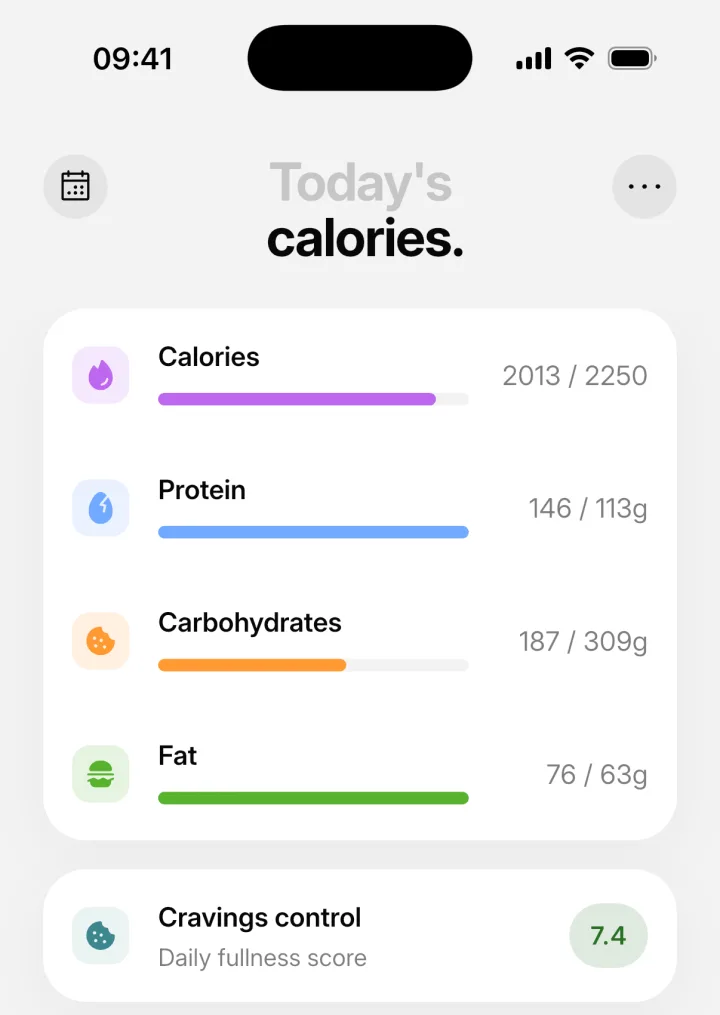
IntakeAI is an iPhone and Android nutrition app designed to help you reduce cravings. It estimates calories, protein, fiber and 50+ nutrients from a photo, barcode or typed description, which makes it quicker to log a restaurant plate or a takeaway. Its calorie target is set from your BMR, activity level and chosen weekly pace, with the deficit capped at 25% of your energy needs, so it won't push you into the aggressive weekday cuts that drive the cycle. AI photo estimates can misjudge hidden oils and portions, so edit the weight when the result looks low.
Is it overeating or binge eating disorder?
Eating more than planned at a Saturday dinner is normal. Binge eating disorder is a recognized medical condition. The NIDDK and the NHS list signs that include:
- Eating a large amount of food in a short time (for example within 2 hours)
- Feeling unable to stop or control what or how much you eat
- Eating much faster than usual, or until uncomfortably full
- Eating large amounts when not physically hungry
- Eating alone or in secret because of embarrassment
- Feeling guilty, disgusted, ashamed or low afterwards
If this sounds familiar and happens regularly, speak to a doctor. Binge eating disorder is treatable, and the weekly-budget tactics above are not a substitute for treatment. In the UK, the eating disorder charity Beat runs a confidential adult helpline (0808 801 0677), as listed by the NHS. If you have a history of an eating disorder, get professional advice before starting any calorie deficit, including tracking calories.
For more on why strict diets tend to collapse, see why diets fail because of cravings, and for the foundations of hunger-free dieting, the pillar guide on losing weight without feeling hungry.
Frequently asked questions
Can one weekend ruin a week in a calorie deficit?
It can cancel most of it. With a 400 kcal daily deficit, eating 700–1,000 kcal over maintenance on both Saturday and Sunday wipes out most or all of the week's deficit. It won't undo weeks of progress, so the fix is to return to your normal plan, not to restrict harder.
Is calorie cycling good for weight loss?
It works about as well as eating the same every day, as long as the weekly total is the same. A meta-analysis of 11 trials found similar weight loss with intermittent and continuous calorie restriction, so choose the pattern you can sustain.
Should I save calories for the weekend?
Shifting 150–200 kcal a day from weekdays is fine. Skipping meals on Saturday to save up for a big dinner usually backfires, because arriving very hungry makes overeating more likely.
What is flexible restraint?
Flexible restraint means managing intake with graded choices, such as smaller portions or balancing a big meal with lighter ones, instead of strict bans. Studies associate it with fewer binge episodes and more successful weight loss than rigid, all-or-nothing rules.
How do I know if I have binge eating disorder?
Signs include regularly eating large amounts in a short time, feeling unable to stop, eating when not hungry or in secret, and feeling guilt or shame afterwards. If this happens regularly, speak to a doctor; it is a treatable condition.
Related guides

How to Lose Weight Without Feeling Hungry
The pillar guide to satiety, protein, fiber and why strict diets backfire.
READ MORE
Why Diets Fail Because of Cravings
What the research says about cravings, restriction and dropping out of diets.
READ MORE
How to Lose Weight With Fewer Cravings
A 6-week plan covering deficit size, protein, fiber, meal timing and sleep.
READ MORELog the weekend without the hassle
Snap, scan or describe meals in IntakeAI to keep an honest tally of calories and protein, including the restaurant meals that are hardest to track by hand.
Sources
- Racette SB, et al. (2008). Influence of weekend lifestyle patterns on body weight. Obesity. PubMed
- Polivy J, Herman CP (1985). Dieting and binging: a causal analysis. Am Psychol. PubMed
- Westenhoefer J, Stunkard AJ, Pudel V (1999). Validation of the flexible and rigid control dimensions of dietary restraint. Int J Eat Disord. PubMed
- Westenhoefer J, et al. (2013). Cognitive and weight-related correlates of flexible and rigid restrained eating behaviour. Eat Behav. PubMed
- Cioffi I, et al. (2018). Intermittent versus continuous energy restriction on weight loss and cardiometabolic outcomes: a systematic review and meta-analysis. J Transl Med. PubMed
- National Institute of Diabetes and Digestive and Kidney Diseases. Symptoms & Causes of Binge Eating Disorder. NIDDK
- NHS. Binge eating disorder: overview. NHS
This article is for general education and is not medical advice. If you have a medical condition, an eating disorder, are pregnant, or take medication, speak to a doctor or registered dietitian before changing your diet. IntakeAI's nutrition figures and scores are estimates to guide your choices.