How to Lose Weight With Fewer Cravings

How do you lose weight with fewer cravings?
To lose weight with fewer cravings, keep your calorie deficit moderate (about 15–25% below maintenance), eat 1.2–1.6 g of protein per kg of body weight, aim for 25–30 g of fiber a day, eat regular protein-anchored meals, and sleep at least 7 hours. Cravings tend to spike when a deficit is too steep, meals are low in protein and fiber, and sleep is short. Fixing those four levers one at a time, a week at a time, is easier than overhauling everything on day one. This guide gives you the numbers and a six-week order to apply them in.
Key takeaways
- A moderate deficit (roughly 300–600 kcal a day for most adults) keeps you at or below the CDC's suggested gradual pace of about 1–2 lb a week.
- A review of protein research in weight loss points to 1.2–1.6 g of protein per kg per day, with about 25–30 g per meal.
- In a 6-month trial of 345 dieters, fiber intake was the strongest dietary predictor of weight loss and of sticking to the diet.
- Eating 3 meals instead of 6 did not increase hunger in a 12-week weight loss study; protein mattered more than frequency.
- In a small lab study, cutting sleep to 5.5 hours during a diet more than halved the share of weight lost as fat.
What targets should you set?
Before the plan, get four numbers. You only need a calculator and your body weight in kilograms (pounds divided by 2.2).
1. Deficit size: 15–25% below maintenance
Estimate your maintenance calories (the calories at which your weight stays flat), then subtract 15–25%. For someone maintaining at 2,400 kcal, that is roughly 1,800–2,050 kcal a day. The CDC notes that people who lose weight gradually, at about 1–2 lb a week, are more likely to keep it off. A gentler deficit also leaves room for the fact that losing weight itself turns up hunger signals. In a 2011 NEJM study of 50 adults who lost about 13.5 kg on a very-low-energy diet, ghrelin and subjective hunger were still elevated a year later.
2. Protein: 1.2–1.6 g per kg of body weight
An expert review in the American Journal of Clinical Nutrition concluded that higher-protein diets of 1.2–1.6 g/kg/day, with at least about 25–30 g per meal, can improve appetite and weight management. The same review is candid that long-term trials are mixed, largely because people stop following the diet.
3. Fiber: 25–30 g a day
A 2019 Lancet meta-analysis found the biggest health benefits at 25–29 g of fiber per day, and the trials it included showed lower body weight with higher fiber intakes. Most people eat far less, so this usually means adding food, not removing it.
4. Sleep: 7+ hours
Sleep is a craving lever most diet plans skip. Pick a fixed wake time and count back.
| Body weight | Protein per day (1.2–1.6 g/kg) | Protein per meal (3 meals) | Fiber per day |
|---|---|---|---|
| 60 kg (132 lb) | 72–96 g | 24–32 g | 25–30 g |
| 70 kg (154 lb) | 84–112 g | 28–37 g | 25–30 g |
| 80 kg (176 lb) | 96–128 g | 32–43 g | 25–30 g |
| 90 kg (198 lb) | 108–144 g | 36–48 g | 25–30 g |
| 100 kg (220 lb) | 120–160 g | 40–53 g | 25–30 g |
If you carry a lot of excess weight, using your current weight can give a very high protein number. A dietitian can help you set a target based on a goal or adjusted body weight instead. If you have kidney disease, check with your doctor before raising protein.
The 6-week plan for fewer cravings
The order matters. Each week adds one change on top of the last, so by week six all four levers are in place and none of them arrived as a shock.
- Week 1: Measure, don't change. Eat as you normally do and log everything, including drinks and bites. Weigh yourself on 3–4 mornings. Write down when cravings hit (time of day, what you wanted, how long since you last ate). This week gives you your real maintenance estimate and your craving pattern, and both are needed to set sensible targets.
- Week 2: Set the deficit and the protein floor. Drop calories 15–25% from your week-one average. At the same time, build every meal around a protein source that delivers about 25–40 g (see the table). Doing both at once is deliberate: the protein cushions the hunger that the new deficit creates.
- Week 3: Raise fiber to 25–30 g. Add one high-fiber food to each meal: beans or lentils, berries, oats, or two fist-sized portions of vegetables. Increase gradually and drink more water to avoid bloating. This is also the week to swap one ultra-processed snack a day for a whole-food option.
- Week 4: Fix meal timing. Settle into three meals and, if you want one, a single planned snack. Use your week-one notes: if cravings peak at 4 p.m., put the snack at 3:30. Stop grazing between meals. Make dinner protein-rich, since that is where late-night snacking usually starts.
- Week 5: Protect sleep. Set a fixed wake time, count back 7.5–8 hours for bedtime, and move screens out of the last 30 minutes. Notice whether next-day cravings change.
- Week 6: Review and adjust. Compare your average weight for weeks 5–6 against weeks 1–2. If the trend is flat and you have been consistent, trim 100–200 kcal or add activity. If cravings are still strong, look at which meals preceded them and raise their protein or fiber first.
After week six, the plan becomes maintenance of the habits rather than new changes. When weight loss stalls later (it usually does), use the approach in our guide to adjusting calories when you plateau rather than cutting harder.
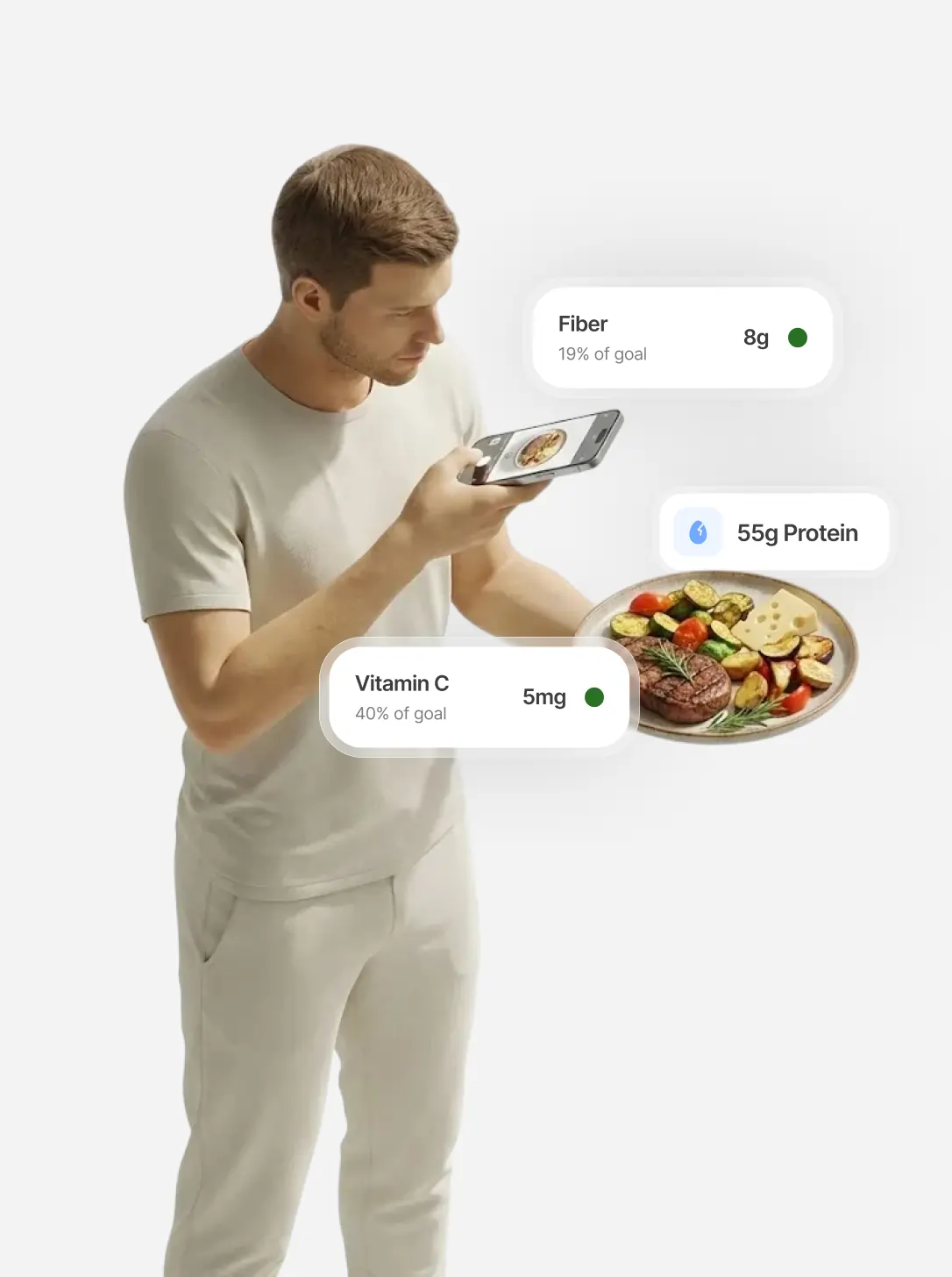
Track calories & nutrients fast


Why these four levers reduce cravings
Protein: more fullness per calorie
In a 2005 University of Washington study, 19 adults who raised protein from 15% to 30% of calories (keeping carbs constant) spontaneously ate about 441 kcal a day less and lost about 4.9 kg over 12 weeks of eating freely. It was a small study without a control group, but the direction is consistent with other work.
A 2011 randomized trial of 27 overweight men on a 750 kcal/day deficit is more specific about cravings. Daily hunger was similar on 25% vs 14% protein, but the higher-protein group reported greater fullness through the day and less late-night desire to eat and preoccupation with thoughts of food. That is the craving pattern many dieters struggle with most.
Fiber: the most consistent predictor of adherence
In the POUNDS Lost analysis of 345 adults on calorie-restricted diets for six months, fiber intake was the most influential predictor of weight loss and was strongly linked to sticking with the diet, independent of which macronutrient plan people were on. This is observational data within a trial, so it shows association rather than proof that fiber caused the difference.
Meal timing: fewer, better meals beat grazing
The same 2011 Leidy trial tested three meals a day against six. Eating more often did not reduce hunger or desire to eat, and in the higher-protein group three meals produced greater evening and late-night fullness. The practical lesson: you don't need to "keep your metabolism going" with constant snacks. Regular, substantial meals work at least as well.
Sleep: short nights push appetite up
In a 2004 crossover study of 12 young men, two nights of restricted sleep lowered leptin by 18%, raised ghrelin by 28%, and increased appetite for calorie-dense, high-carbohydrate foods by 33–45%. In a 2010 trial of 10 dieting adults, 5.5 hours of sleep instead of 8.5 cut fat loss from 1.4 kg to 0.6 kg over 14 days and increased hunger. Both studies are tiny and short, but they point the same way.
Processing: easy-to-overeat foods
In an NIH inpatient trial, 20 adults ate about 500 kcal a day more on an ultra-processed diet than on an unprocessed one matched for calories, sugar, fat and fiber on offer. You don't need to cut every packaged food, but swapping your most frequent ultra-processed snack is a high-return change. For the craving side of this, see how to reduce food cravings and food noise.
How to track the plan without a spreadsheet
The manual version works: a notebook, a kitchen scale, and food labels or the USDA database. Each day, total your calories, protein and fiber, and note any strong cravings with the time. At the end of each week, average the numbers. The weak point is consistency. Looking up fiber for every mixed meal is slow. In a 24-week online program of 142 adults, people who lost 5% or more opened their food journal more often each day, while time spent logging was not linked to results and fell from about 23 to 15 minutes a day.
An app does the adding up for you. IntakeAI is an iPhone and Android nutrition app designed to help you reduce cravings. It estimates calories, protein, fiber and 50+ nutrients from a photo, barcode, nutrition label or typed description. It sets a calorie target from your BMR, activity level and chosen pace, with the deficit capped at 25% of your daily energy needs, which matches the moderate range in this plan. Photo estimates can miss hidden oils or misjudge portion size, so check the result and edit the portion when it looks off.
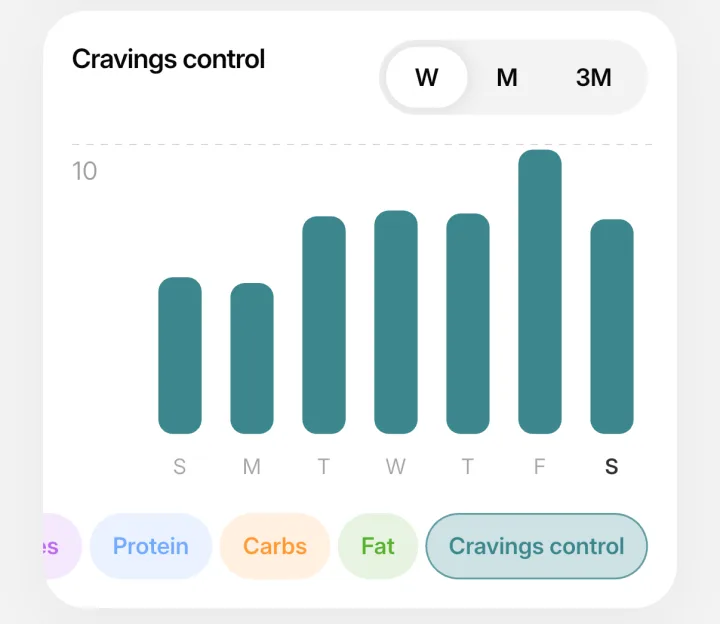
IntakeAI also gives each meal a "Cravings control" score from 0 to 10, based on protein, fiber, calorie density, processing and a few other factors. Treat it as a guide to which meals are likely to hold you, not a guarantee. If you're building those meals from scratch, our high protein, high fiber meal ideas have approximate numbers for each. And if your week falls apart every Saturday, read how to stay in a deficit without weekend bingeing. For the bigger picture on satiety, start with the pillar guide on losing weight without feeling hungry.
Frequently asked questions
How big should my calorie deficit be to avoid cravings?
For most adults, 15–25% below maintenance calories, which is often about 300–600 kcal a day. That keeps weight loss at or below the CDC's suggested gradual pace of about 1–2 lb a week, which is easier to sustain than a crash diet.
How much protein do I need to lose weight with fewer cravings?
Research reviews suggest 1.2–1.6 g of protein per kg of body weight per day, with about 25–30 g at each meal. For a 70 kg person that is about 84–112 g a day.
Does eating more often stop cravings?
Not according to a 12-week trial in overweight men: six meals a day did not reduce hunger or desire to eat compared with three. Protein content made a bigger difference than meal frequency.
Can poor sleep make cravings worse when dieting?
Yes, in small studies. Two nights of short sleep raised ghrelin by 28% and appetite for calorie-dense foods by 33–45% in 12 young men, and 5.5 hours of sleep during a two-week diet reduced fat loss compared with 8.5 hours.
How long until cravings go down?
It varies from person to person and no study gives a reliable timeline. Many people notice a difference within a couple of weeks of raising protein and fiber, but if cravings stay intense or feel out of control, speak to a doctor or dietitian.
Related guides
How to Lose Weight Without Feeling Hungry
The pillar guide to satiety per calorie: protein, fiber, energy density and processing.
READ MORE
High Protein and High Fiber Meals for Fat Loss
14 meal ideas with approximate calories, protein and fiber, plus a build-a-meal formula.
READ MORE
How to Stay in a Calorie Deficit Without Bingeing on Weekends
Weekly calorie budgeting and flexible rules that break the restrict-binge cycle.
READ MOREFollow the plan without the spreadsheet
Log meals by photo, barcode or text in IntakeAI and see calories, protein and fiber against your daily targets, plus a Cravings control score for each meal.
Sources
- Centers for Disease Control and Prevention. Losing Weight. CDC
- Leidy HJ, et al. (2015). The role of protein in weight loss and maintenance. Am J Clin Nutr. PubMed
- Leidy HJ, et al. (2011). The effects of consuming frequent, higher protein meals on appetite and satiety during weight loss in overweight/obese men. Obesity. PubMed
- Weigle DS, et al. (2005). A high-protein diet induces sustained reductions in appetite, ad libitum caloric intake, and body weight. Am J Clin Nutr. PubMed
- Reynolds A, et al. (2019). Carbohydrate quality and human health: a series of systematic reviews and meta-analyses. Lancet. PubMed
- Miketinas DC, et al. (2019). Fiber intake predicts weight loss and dietary adherence in adults consuming calorie-restricted diets: the POUNDS Lost study. J Nutr. PubMed
- Spiegel K, et al. (2004). Sleep curtailment in healthy young men is associated with decreased leptin levels, elevated ghrelin levels, and increased hunger and appetite. Ann Intern Med. PubMed
- Nedeltcheva AV, et al. (2010). Insufficient sleep undermines dietary efforts to reduce adiposity. Ann Intern Med. PubMed
- Hall KD, et al. (2019). Ultra-processed diets cause excess calorie intake and weight gain. Cell Metab. PubMed
- Harvey J, et al. (2019). Log often, lose more: electronic dietary self-monitoring for weight loss. Obesity. PubMed
- Sumithran P, et al. (2011). Long-term persistence of hormonal adaptations to weight loss. N Engl J Med. PubMed
This article is for general education and is not medical advice. If you have a medical condition, an eating disorder, are pregnant, or take medication, speak to a doctor or registered dietitian before changing your diet. IntakeAI's nutrition figures and scores are estimates to guide your choices.