High Protein and High Fiber Meals for Fat Loss
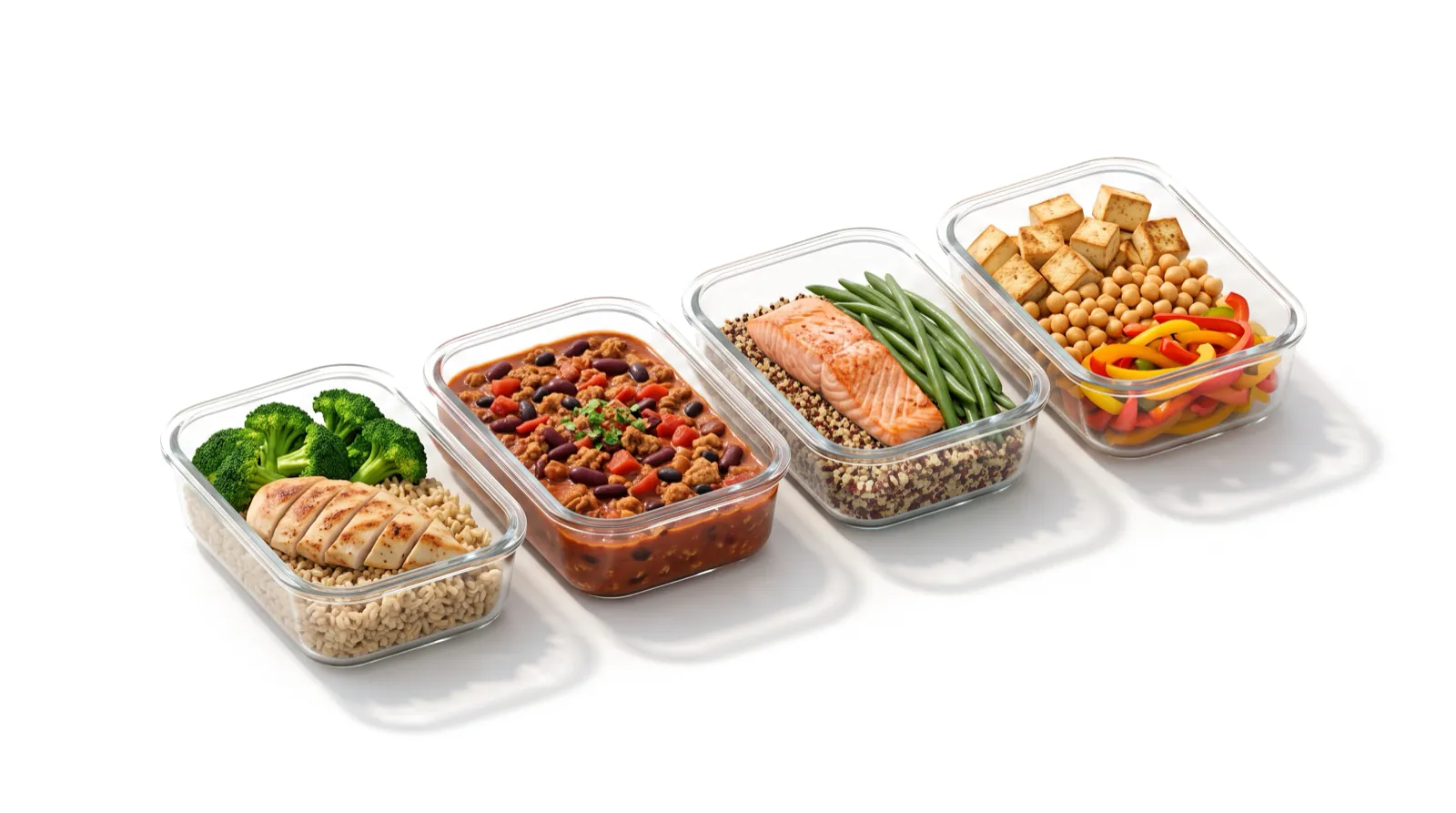
What are good high protein, high fiber meals for fat loss?
Good high protein, high fiber meals for fat loss pair 25–40 g of lean protein with at least 8–10 g of fiber in roughly 350–550 kcal, such as a chicken and lentil bowl (about 455 kcal, 52 g protein, 16 g fiber) or berry overnight oats with Greek yogurt (about 370 kcal, 29 g protein, 14 g fiber). Below are 14 meals with approximate numbers, a formula for building your own, and the research on why protein and fiber together make a calorie deficit easier.
Key takeaways
- Aim for about 25–40 g protein and 8–10+ g fiber per main meal; three such meals cover most of a 25–30 g daily fiber target.
- Beans and lentils are the shortcut: about 7–9 g of fiber and 9 g of protein per 100 g cooked.
- A meta-analysis of 24 trials found higher-protein calorie-restricted diets led to slightly more fat loss (about 0.9 kg) and less lean-mass loss than standard-protein diets.
- In a 6-month trial of 345 dieters, fiber intake was the strongest dietary predictor of weight loss and adherence.
14 high protein, high fiber meal ideas (with numbers)
Calories, protein and fiber below are approximate. We calculated them from USDA FoodData Central (SR Legacy) values for each ingredient at the weights listed, rounded to whole numbers. Weights are cooked or ready-to-eat unless stated (oats are dry). Salt, herbs, spices and zero-calorie seasonings are not included. Brands vary, so check labels for packaged items.
| Meal | Ingredients | kcal | Protein | Fiber |
|---|---|---|---|---|
| 1. Berry overnight oats | 40 g oats, 200 g nonfat Greek yogurt, 10 g chia seeds, 100 g raspberries | 370 | 29 g | 14 g |
| 2. Egg white & black bean breakfast burrito | 45 g whole-wheat tortilla, 150 g egg whites, 1 egg, 80 g black beans, 40 g salsa, 40 g spinach | 418 | 35 g | 13 g |
| 3. Chicken & lentil power bowl | 120 g chicken breast, 120 g cooked lentils, 150 g broccoli, 80 g red pepper, 1 tsp olive oil | 455 | 52 g | 16 g |
| 4. Salmon, sweet potato & broccoli | 120 g salmon, 150 g baked sweet potato, 150 g broccoli | 435 | 33 g | 10 g |
| 5. Beef & kidney bean chili | 100 g cooked 90% lean ground beef, 150 g kidney beans, 150 g tomatoes, 50 g onion, 80 g pepper | 488 | 44 g | 15 g |
| 6. Tuna & chickpea salad | 120 g tuna in water, 120 g chickpeas, 100 g romaine, 100 g tomato, 50 g cucumber, 1 tsp olive oil | 393 | 42 g | 11 g |
| 7. Tofu & edamame stir-fry | 150 g firm tofu, 100 g edamame, 150 g broccoli, 100 g cooked brown rice, 1 tsp oil | 557 | 44 g | 15 g |
| 8. Cottage cheese & raspberry bowl | 250 g 2% cottage cheese, 150 g raspberries, 10 g chia seeds | 329 | 29 g | 13 g |
| 9. Shrimp burrito bowl | 150 g shrimp, 120 g black beans, 100 g cooked brown rice, 80 g romaine, 50 g salsa, 40 g avocado | 522 | 52 g | 17 g |
| 10. Cod with potatoes & peas | 150 g cod, 200 g boiled potatoes, 150 g peas, 1 tsp olive oil | 493 | 46 g | 10 g |
| 11. Beef & lentil whole-grain bolognese | 150 g cooked whole-grain pasta, 80 g cooked lean beef, 100 g lentils, 150 g tomatoes, 100 g mushrooms | 588 | 45 g | 18 g |
| 12. Chicken & hummus wrap | 45 g whole-wheat tortilla, 100 g chicken breast, 30 g hummus, 40 g spinach, 80 g pepper, 60 g carrot | 430 | 40 g | 10 g |
| 13. Quinoa, chickpea & chicken kale salad | 150 g cooked quinoa, 100 g chickpeas, 90 g chicken breast, 60 g kale, 60 g pepper, 1 tsp olive oil | 548 | 44 g | 14 g |
| 14. Snack: Greek yogurt, pear & chia | 200 g nonfat Greek yogurt, 1 medium pear (180 g), 10 g chia seeds | 269 | 23 g | 9 g |
Notes on the meals
- Breakfasts (1, 2, 8): Greek yogurt and cottage cheese supply 10 g of protein per 100 g; chia and raspberries supply most of the fiber. Overnight oats can be made five jars at a time.
- Batch-cook options (5, 11): Chili and bolognese use legumes to stretch the meat. Swapping half the beef for lentils raises fiber and lowers calories without losing much protein.
- Lower-fiber options (4, 10): Fish meals depend on the sides for fiber. Add a second vegetable or 80 g of beans if you want to reach 12 g or more.
- Plant-based (7): The meal gives about 44 g of protein, mostly from the tofu and edamame. Use this as a template for a fully plant-based week.
Track calories & nutrients fast


The build-a-meal formula
You don't need recipes once you know the parts. Every meal in the table follows the same structure:
- Pick a protein (25–40 g protein). 100–150 g cooked chicken breast, fish, shrimp or lean beef; 150 g firm tofu; 200–250 g Greek yogurt or cottage cheese; or 150 g egg whites plus one egg. Chicken breast gives 31 g protein per 100 g; cod about 23 g.
- Add a fiber anchor (6–10 g fiber). 100–150 g cooked lentils or beans (about 7–9 g fiber per 100 g), 100–150 g raspberries (6.5 g per 100 g), 10 g chia seeds (about 3.4 g), or a whole-wheat tortilla.
- Fill half the plate with vegetables (2–5 g fiber). Broccoli, peppers, spinach, kale, tomatoes, mushrooms or salad leaves add volume for very few calories.
- Add a measured fat (40–80 kcal). One teaspoon of olive oil (about 44 kcal), 40 g avocado (64 kcal) or 30 g hummus (71 kcal). Measure it; oil is the easiest place for calories to hide.
- Optional starch (100–200 kcal). 100–150 g brown rice, quinoa, potatoes or whole-grain pasta if your calorie target allows. Skip it if the fiber anchor is already beans or lentils and you want a lighter meal.
Three meals built this way typically land at 1,200–1,600 kcal, 100–150 g protein and 30–45 g fiber, which leaves room for a snack within most fat-loss targets. If you are new to this much fiber, increase over a week or two and drink more water. For a fuller, step-by-step version that also covers eating out, see how to build a weight loss meal that controls cravings. If you want to know which individual foods are most filling, see our list of the best foods to eat in a calorie deficit.
Why protein and fiber help with fat loss
Protein: fuller, and more of the loss comes from fat
A 2012 meta-analysis of 24 trials (1,063 people, around 12 weeks on average) compared higher-protein and standard-protein diets with the same calories and fat. Higher protein produced modestly greater losses of weight (0.79 kg) and fat mass (0.87 kg), preserved more lean mass (0.43 kg), and reduced the drop in resting energy expenditure. Three of the five studies that measured satiety reported greater fullness.
Appetite is the other half. In a 2005 study of 19 adults, raising protein from 15% to 30% of calories cut spontaneous intake by about 441 kcal a day. A 2015 expert review summarised the evidence as support for 1.2–1.6 g of protein per kg per day, with at least about 25–30 g per meal, which is where the formula's protein range comes from. The same review notes long-term trials are less consistent, mostly because people drift back to their old diet.
Fiber: a simple goal that predicts success
In a secondary analysis of the POUNDS Lost trial, 345 adults on calorie-restricted diets lost an average of 7.3 kg in six months, and fiber intake was the most influential dietary predictor of weight loss, independent of calories and macronutrients. It was also strongly linked to sticking with the diet.
Fiber can even work as a single goal. In a 12-month randomized trial of 240 adults with metabolic syndrome, a group told only to eat at least 30 g of fiber a day lost 2.1 kg, compared with 2.7 kg on the more complex American Heart Association diet. The difference was not statistically significant, and the authors suggest the single fiber goal may suit people who struggle with complicated plans. A 2019 Lancet meta-analysis found the largest health benefits at 25–29 g of fiber a day, with lower body weight in the trials it reviewed.
Why combine them
Protein-rich foods like chicken and fish contain no fiber, and many high-fiber foods like fruit and vegetables contain little protein. Legumes, soy, and dairy paired with fruit or seeds are the overlap. That's why beans, lentils, edamame and Greek yogurt with berries appear in so many of the meals above. For the broader strategy, the pillar guide on how to lose weight without feeling hungry explains how protein, fiber and energy density work together.
How to check your meals hit the targets
The manual method is what we used for the table: weigh each ingredient, look it up in USDA FoodData Central, multiply by the weight, and add the totals. It's accurate, but it takes a few minutes per new meal, and fiber is the number most calorie counters skip.
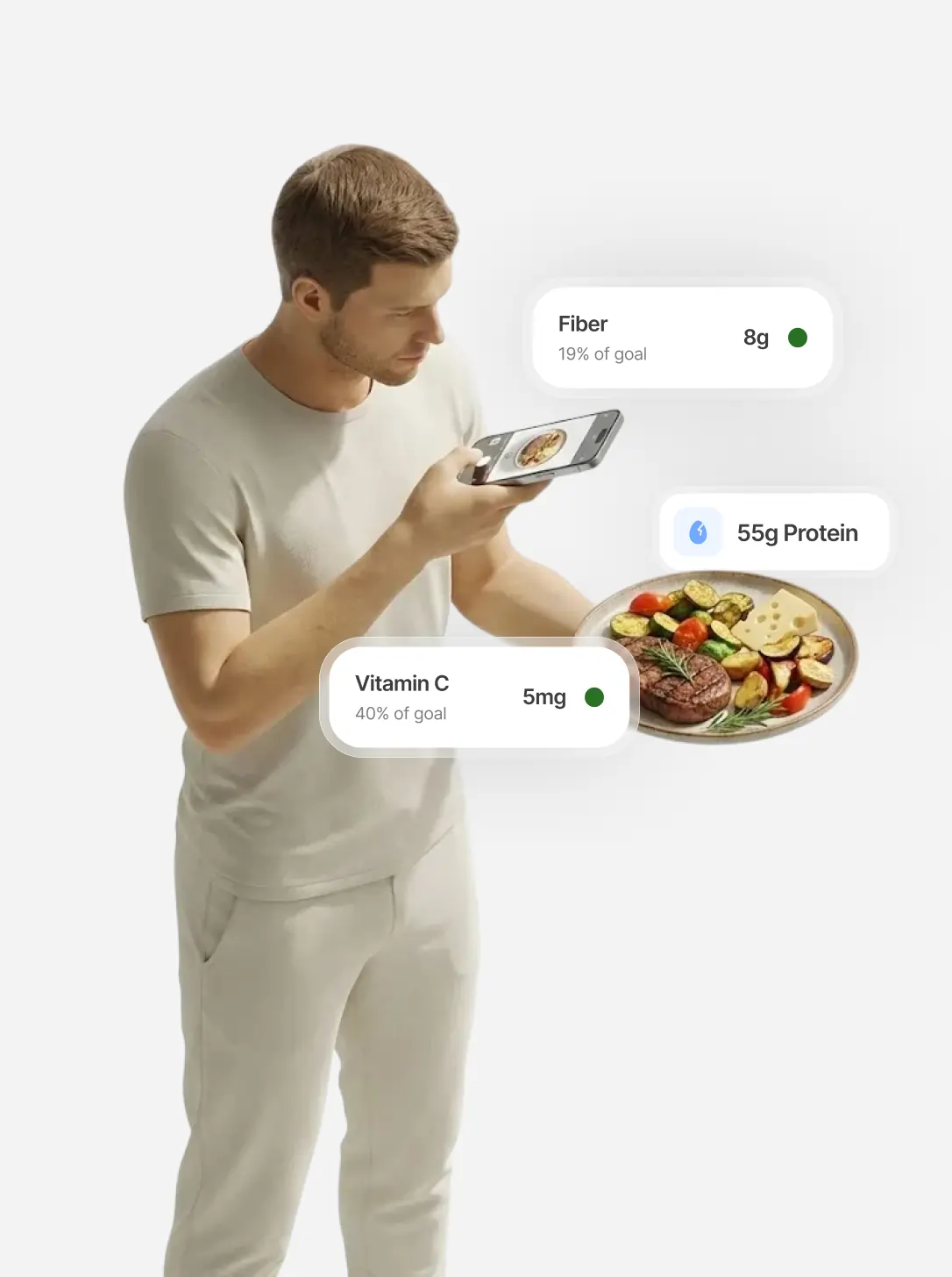
IntakeAI is an iPhone and Android nutrition app designed to help you reduce cravings. It estimates calories, protein, carbs, fat, fiber and 50+ nutrients from a meal photo, barcode, nutrition label or typed description, with food search backed by USDA FoodData Central. You can edit the portion, swap or remove foods in the AI result, and re-log meals you eat often, which suits a rotation like the one above. Photo estimates can be off for portion size and hidden oils, so check them against what you actually served.
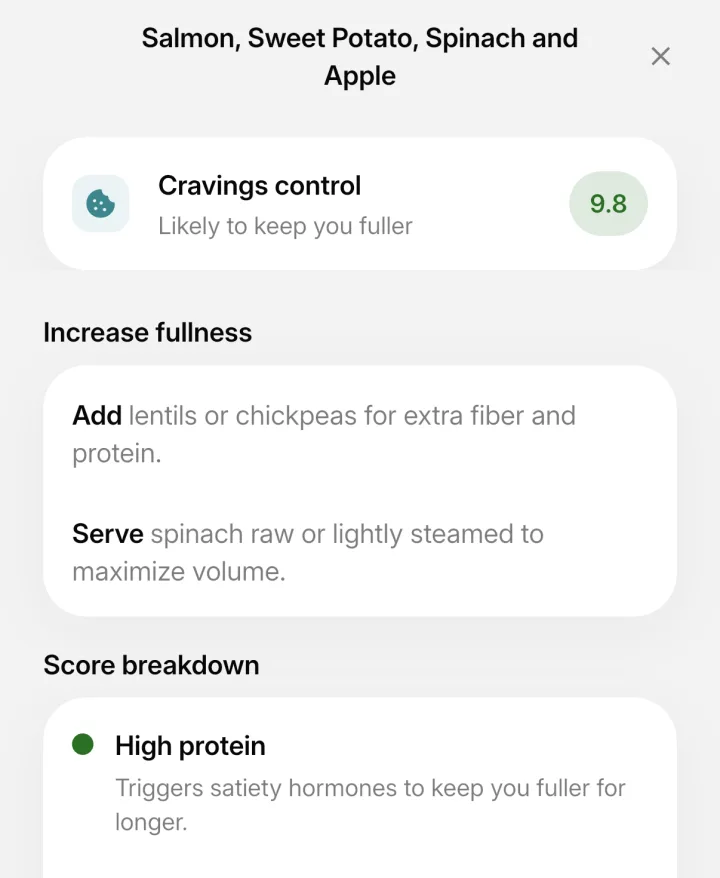
Each logged meal also gets a Cravings control score from 0 to 10. Protein is its most heavily weighted factor (full marks at 25 g+) and fiber is another (full marks at 10 g+), so it lines up with the formula above. It is an estimate to guide your choices, not a promise about how hungry you'll feel.
Frequently asked questions
How much protein and fiber should a fat-loss meal have?
A practical target is 25–40 g of protein and at least 8–10 g of fiber per main meal. Research reviews support about 25–30 g of protein per meal, and three meals with 8–10 g fiber each reach the 25–30 g daily range linked to better health.
What foods are high in both protein and fiber?
Lentils, black beans, kidney beans, chickpeas and edamame are the main ones, with about 7–12 g of protein and 5–9 g of fiber per 100 g cooked. Chia seeds are also high in both but are calorie-dense, so use small amounts.
What is a good high protein, high fiber breakfast?
Overnight oats made with 40 g oats, 200 g nonfat Greek yogurt, 10 g chia seeds and 100 g raspberries provide roughly 370 kcal, 29 g protein and 14 g fiber, based on USDA values.
Can too much fiber cause problems?
Increasing fiber quickly can cause bloating and gas. Raise it gradually over a week or two and drink more water. If you have a digestive condition such as IBS or IBD, ask a doctor or dietitian what suits you.
Are these meal calories exact?
No. They are approximate values calculated from USDA FoodData Central for the listed ingredient weights. Brands, cooking methods and portion sizes change the real numbers, so weigh or log your own versions.
Related guides
How to Lose Weight Without Feeling Hungry
The pillar guide to satiety per calorie: protein, fiber, energy density and processing.
READ MORE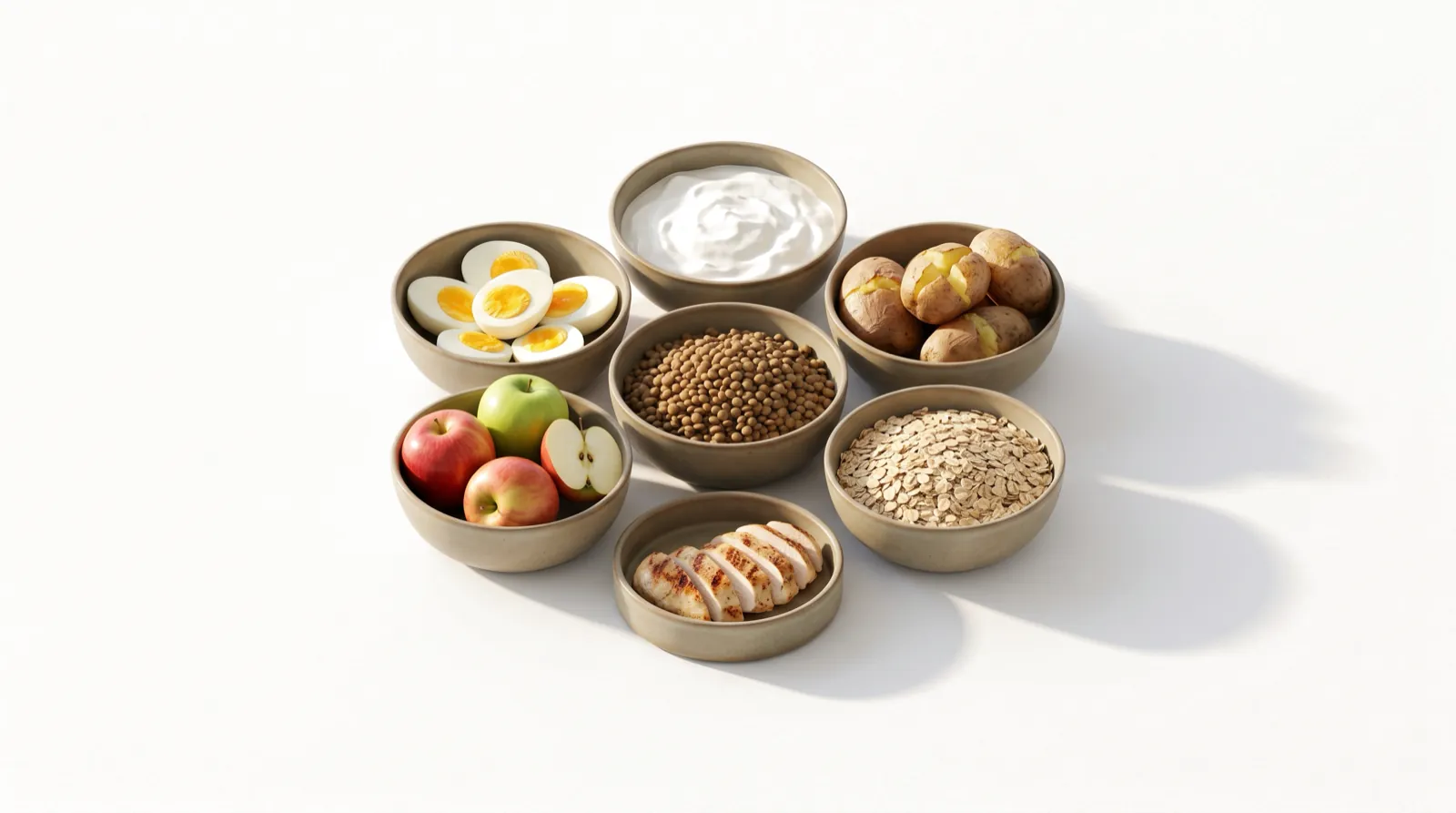
Best Foods to Eat in a Calorie Deficit (That Actually Keep You Full)
Foods ranked by satiety index and calories per gram, with USDA values.
READ MORE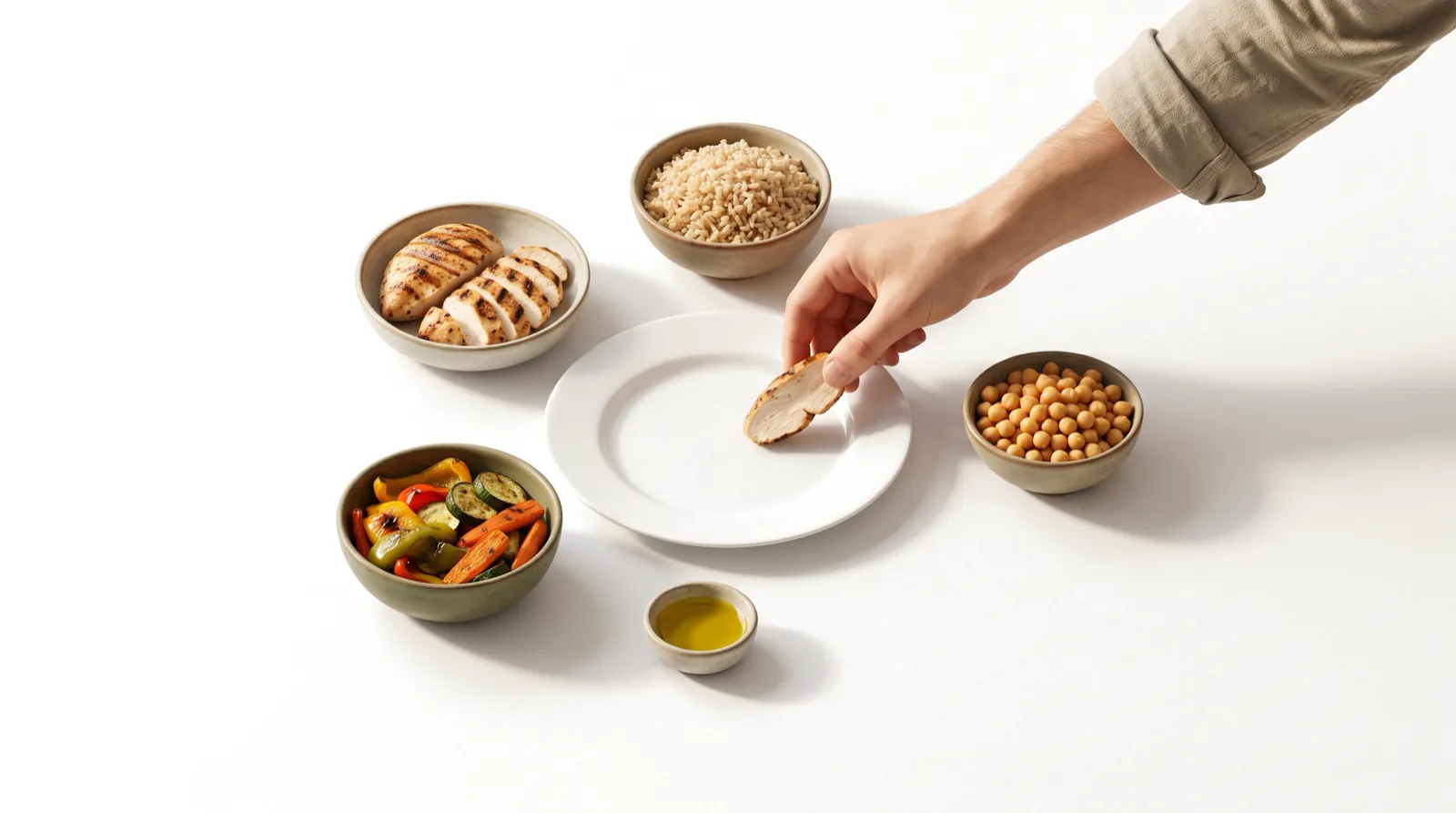
How to Build a Weight Loss Meal That Controls Cravings
A step-by-step framework for constructing meals that keep cravings down.
READ MORECheck the protein and fiber in your own meals
Snap, scan or describe a meal in IntakeAI to see its estimated calories, protein and fiber, and track them against your daily targets.
Sources
- U.S. Department of Agriculture, Agricultural Research Service. FoodData Central (SR Legacy). USDA
- Wycherley TP, et al. (2012). Effects of energy-restricted high-protein, low-fat compared with standard-protein, low-fat diets: a meta-analysis of randomized controlled trials. Am J Clin Nutr. PubMed
- Weigle DS, et al. (2005). A high-protein diet induces sustained reductions in appetite, ad libitum caloric intake, and body weight. Am J Clin Nutr. PubMed
- Leidy HJ, et al. (2015). The role of protein in weight loss and maintenance. Am J Clin Nutr. PubMed
- Miketinas DC, et al. (2019). Fiber intake predicts weight loss and dietary adherence in adults consuming calorie-restricted diets: the POUNDS Lost study. J Nutr. PubMed
- Ma Y, et al. (2015). Single-component versus multicomponent dietary goals for the metabolic syndrome: a randomized trial. Ann Intern Med. PubMed
- Reynolds A, et al. (2019). Carbohydrate quality and human health: a series of systematic reviews and meta-analyses. Lancet. PubMed
This article is for general education and is not medical advice. If you have a medical condition, an eating disorder, are pregnant, or take medication, speak to a doctor or registered dietitian before changing your diet. IntakeAI's nutrition figures and scores are estimates to guide your choices.