Best Foods to Eat in a Calorie Deficit (That Actually Keep You Full)
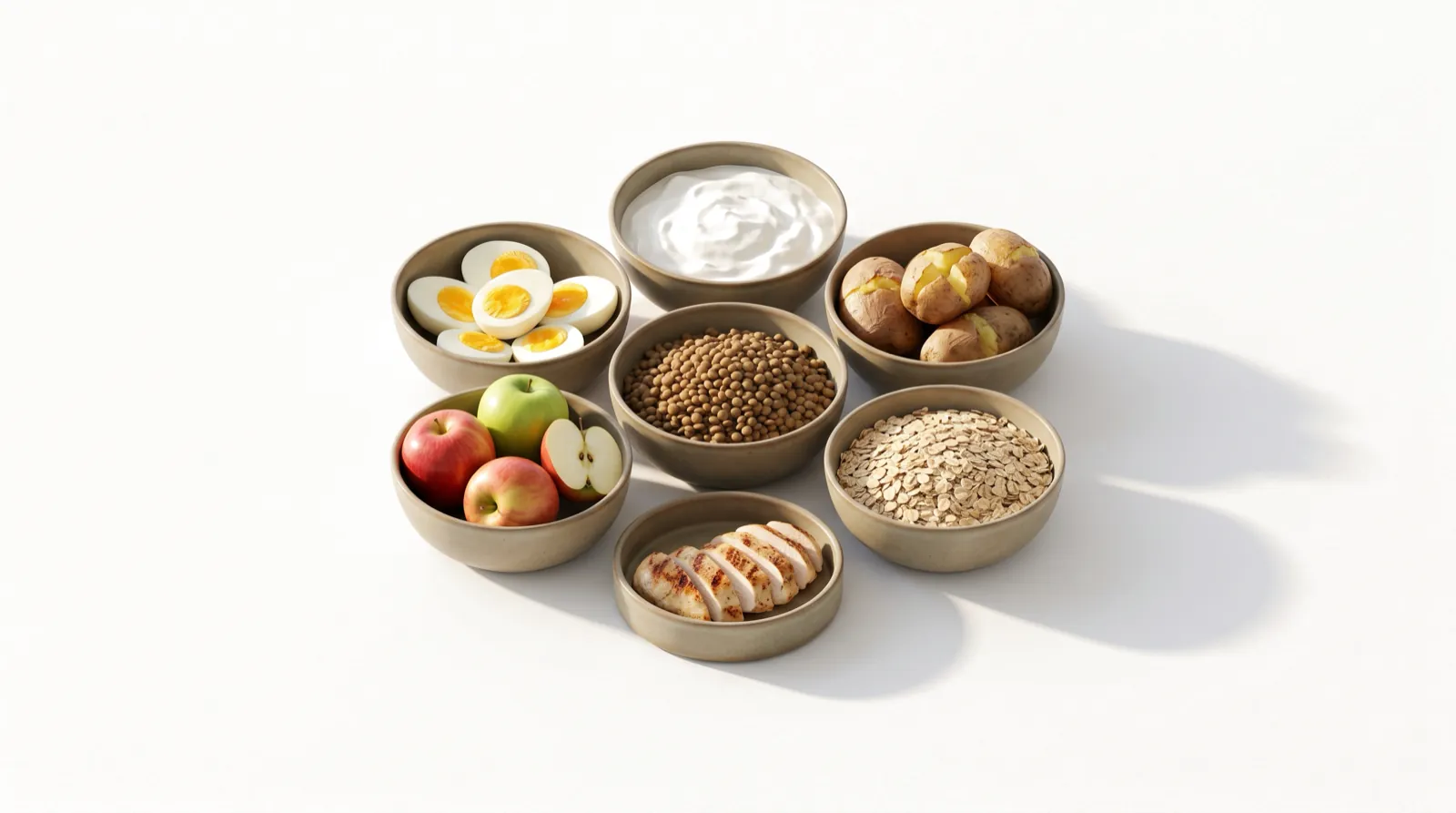
What are the best foods to eat in a calorie deficit to stay full?
The most filling foods for a calorie deficit are those with few calories per gram plus protein, fiber or water: boiled potatoes, white fish, oatmeal, oranges, apples, beans, lean meat and eggs topped a classic satiety study, and boiled potatoes scored nearly seven times higher than croissants. Fullness per calorie, not "clean" versus "junk", is what helps you stop snacking. Below are the study results, the calorie-per-gram math behind them, and a ranked list using USDA data.
Key takeaways
- In the 1995 satiety index study, 240 kcal of boiled potatoes scored 323% (white bread = 100%), while croissants scored 47%.
- The foods that scored highest were heavy for their calories: serving weight, water, fiber and protein all correlated with fullness, while fat and palatability went the other way.
- Most foods that keep you full in a deficit contain under about 1.7 kcal per gram; croissants and peanuts are over 4 kcal per gram.
- For hunger, protein per 100 kcal matters as much as volume: cod, chicken breast and nonfat Greek yogurt give 17–22 g per 100 kcal.
What did the satiety index study find?
In Holt and colleagues' 1995 study at the University of Sydney, groups of 11–13 people ate 240 kcal (1,000 kJ) portions of 38 common foods after an overnight fast. They rated their fullness every 15 minutes for two hours, then could eat freely from a buffet. Each food's score was expressed relative to white bread, set at 100%.
The table pairs selected scores with energy density from USDA FoodData Central (SR Legacy entries for the closest matching food). The last column shows how much of each food you get for the same 240 kcal used in the study.
| Food | Satiety index (white bread = 100) | kcal per 100 g (USDA) | Weight of a 240 kcal portion |
|---|---|---|---|
| Boiled potatoes | 323 | 87 | 276 g |
| White fish (ling in study; cod shown) | 225 | 105 | 229 g |
| Oatmeal (porridge) | 209 | 71 | 338 g |
| Oranges | 202 | 49 | 490 g |
| Apples | 197 | 52 | 462 g |
| Beef steak (lean sirloin shown) | 176 | 183 | 131 g |
| Baked beans | 168 | 94 | 255 g |
| Eggs | 150 | 155 | 155 g |
| Cheddar cheese | 146 | 403 | 60 g |
| White bread | 100 | 266 | 90 g |
| Peanuts | 84 | 587 | 41 g |
| Chocolate cake | 65 | 389 | 62 g |
| Croissant | 47 | 406 | 59 g |
The pattern is clear. Satiety scores rose with portion weight (r = 0.66), water content (r = 0.64), fiber (r = 0.46) and protein (r = 0.37), and fell with fat content (r = −0.43) and how tasty people rated the food (r = −0.64). In plain terms: foods that give you a big, not-too-exciting plate for 240 kcal kept people fuller than small, rich, very tasty portions.
What the study can't tell you
It measured two hours of fullness after a single food eaten alone, in small groups, using Australian products from the early 1990s. The potatoes were plain; butter or frying changes everything (french fries scored 116, close to white bread). Treat the index as a guide to types of food, not a precise ranking of meals.
Why calories per gram predicts fullness
Energy density is the number of calories in a gram of food. Water adds weight with zero calories and fat adds 9 kcal per gram, so those two components drive most of the difference. Barbara Rolls' lab at Penn State has shown repeatedly that people tend to eat a fairly consistent weight of food, so when the foods on offer are less energy-dense, they take in fewer calories without feeling they ate less.
Two studies show how this plays out:
- In a year-long trial of 97 women with obesity, those told to cut fat and eat more water-rich fruit and vegetables lost 7.9 kg versus 6.4 kg for fat reduction alone, ate a greater weight of food, and reported less hunger. Neither group had a calorie target.
- In a lab study of 60 adults, eating a low-energy-dense vegetable soup before lunch cut total meal intake by 20% (about 134 kcal), whether the soup was chunky, pureed or served as broth and vegetables separately.
Track calories & nutrients fast


Best foods for a calorie deficit, ranked by calories per gram
This list combines both ideas: low energy density for volume, and enough protein or fiber to last until the next meal. Values are per 100 g from USDA FoodData Central, rounded. "Protein per 100 kcal" is a quick way to compare how much protein each calorie buys.
| Food | kcal / 100 g | Protein / 100 g | Fiber / 100 g | Protein per 100 kcal |
|---|---|---|---|---|
| Romaine lettuce | 17 | 1.2 g | 2.1 g | 7.2 g |
| Strawberries | 32 | 0.7 g | 2.0 g | 2.1 g |
| Broccoli, boiled | 35 | 2.4 g | 3.3 g | 6.8 g |
| Oranges | 49 | 0.9 g | 2.2 g | 1.9 g |
| Raspberries | 52 | 1.2 g | 6.5 g | 2.3 g |
| Apples, with skin | 52 | 0.3 g | 2.4 g | 0.5 g |
| Greek yogurt, plain nonfat | 59 | 10.2 g | 0 g | 17.3 g |
| Oatmeal, cooked with water | 71 | 2.5 g | 1.7 g | 3.6 g |
| Cottage cheese, 2% | 81 | 10.4 g | 0 g | 12.8 g |
| Potatoes, boiled | 87 | 1.9 g | 1.8 g | 2.1 g |
| Baked beans, canned | 94 | 4.8 g | 4.1 g | 5.1 g |
| Cod, cooked | 105 | 22.8 g | 0 g | 21.7 g |
| Lentils, boiled | 116 | 9.0 g | 7.9 g | 7.8 g |
| Black beans, boiled | 132 | 8.9 g | 8.7 g | 6.7 g |
| Eggs, hard-boiled | 155 | 12.6 g | 0 g | 8.1 g |
| Chicken breast, roasted | 165 | 31.0 g | 0 g | 18.8 g |
How to read the list
- Top rows (under 0.6 kcal/g) are your volume foods. They fill the plate and the stomach, but most have little protein, so they won't carry you to the next meal alone.
- Middle rows (0.6–1.2 kcal/g) are the workhorses: potatoes, oats, beans, lentils, Greek yogurt and white fish combine reasonable volume with protein or fiber.
- Lean proteins (1.0–1.7 kcal/g) are denser, but their protein per calorie is the highest on the list. In a small crossover study of 30 women, an egg breakfast led to lower calorie intake at lunch and over the next 36 hours than a bagel breakfast with the same calories and weight.
The best meals mix all three. For worked examples, see our high protein, high fiber meals for fat loss and low calorie, high volume meals.
Foods that make a deficit harder
At the bottom of the satiety index sit croissants, cake, doughnuts, chocolate bars and peanuts, all around or above 4 kcal per gram. Peanuts and cheese are nutritious; they just deliver a lot of energy in a small, easy-to-eat volume, so portion them deliberately rather than eating from the bag. Heavily processed foods are a second risk: in an NIH inpatient trial of 20 adults, people ate about 500 kcal a day more on an ultra-processed diet than on an unprocessed one, even though the meals offered were matched for calories, sugar, fat and fiber.
How to use these foods to stop snacking
Knowing which foods are filling only helps if they end up on your plate at the moments you usually snack. Try this sequence for two weeks:
- Find your snack window. Note when you reach for snacks most (often mid-afternoon or after dinner) and what the meal before it was.
- Upgrade the meal before it. Add a protein from the bottom of the ranked list and a volume food from the top. A lunch of 120 g chicken breast with a big salad and 200 g of boiled potatoes is about 400 kcal of mostly low-density food.
- Start dinner with soup or salad. A broth-based vegetable soup or a large salad with a light dressing uses the preload effect from the Rolls soup study.
- Swap, don't just remove. Replace a 240 kcal croissant (about 59 g) with roughly 460 g of apples or a bowl of Greek yogurt and raspberries. Same calories, several times the volume.
- Keep dense foods for planned portions. Pre-portion nuts and cheese rather than eating them straight from the pack.
If snacking is driven by stress or habit rather than hunger, food swaps alone may not be enough. The pillar guide on losing weight without feeling hungry covers the wider picture, and building a weight loss meal that controls cravings walks through plate construction step by step.
Checking calorie density without doing the math
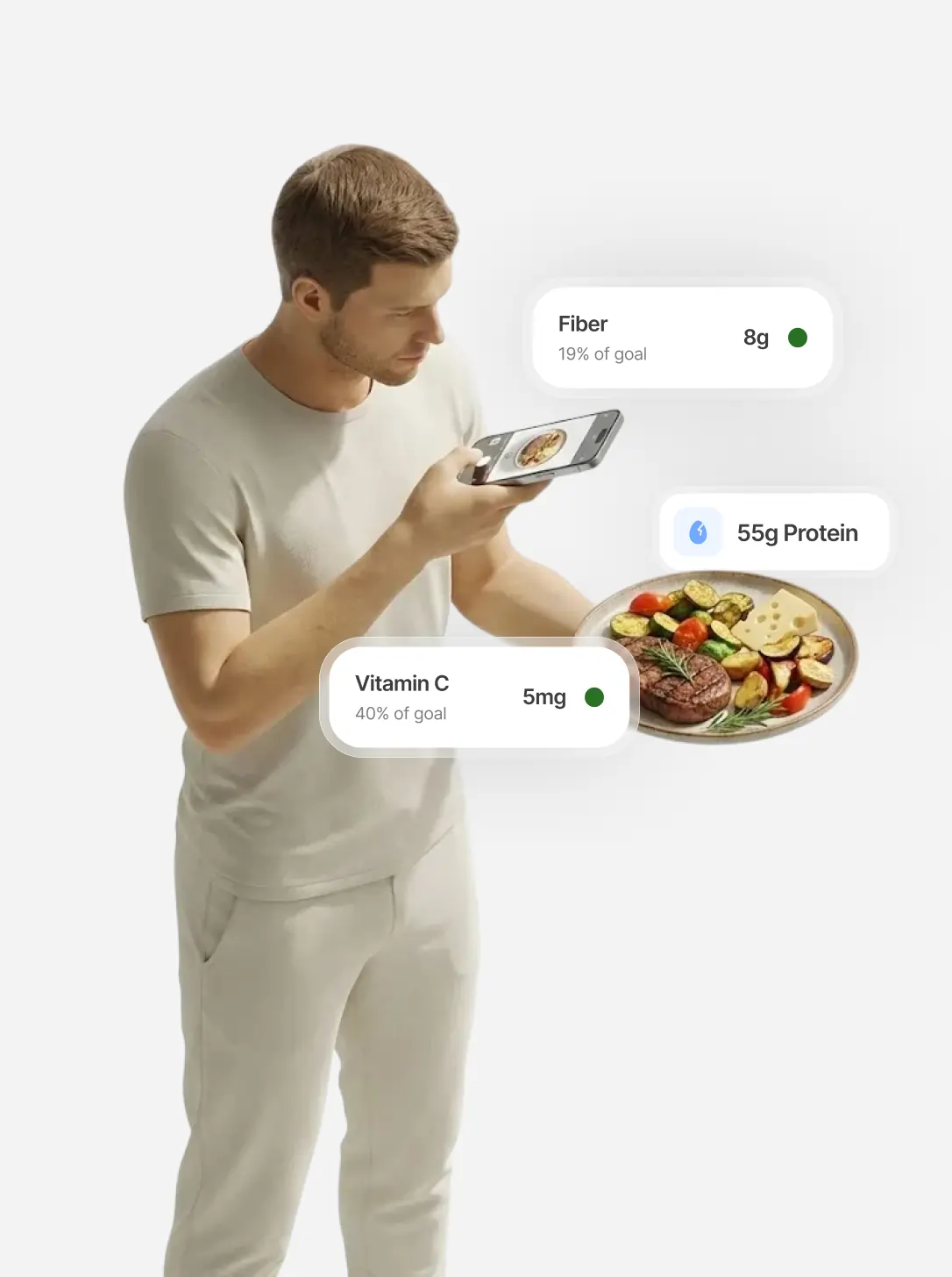
Manually, you can divide calories by grams on any food label or USDA entry: under about 1.5 is low, over 4 is high. That works for single foods but gets slow for mixed meals. IntakeAI is a food tracking app for iPhone and Android that estimates calories, macros, fiber and 50+ nutrients from a photo, barcode, label scan or text description, and its food search draws on USDA FoodData Central. Each meal's Cravings control score (0–10) includes calorie density as a factor, rating meals under 0.6 kcal/g best and over 4 kcal/g worst, alongside protein, fiber and processing. It is an estimate to guide choices, and photo-based portions can be off, so adjust the weight if it looks wrong.
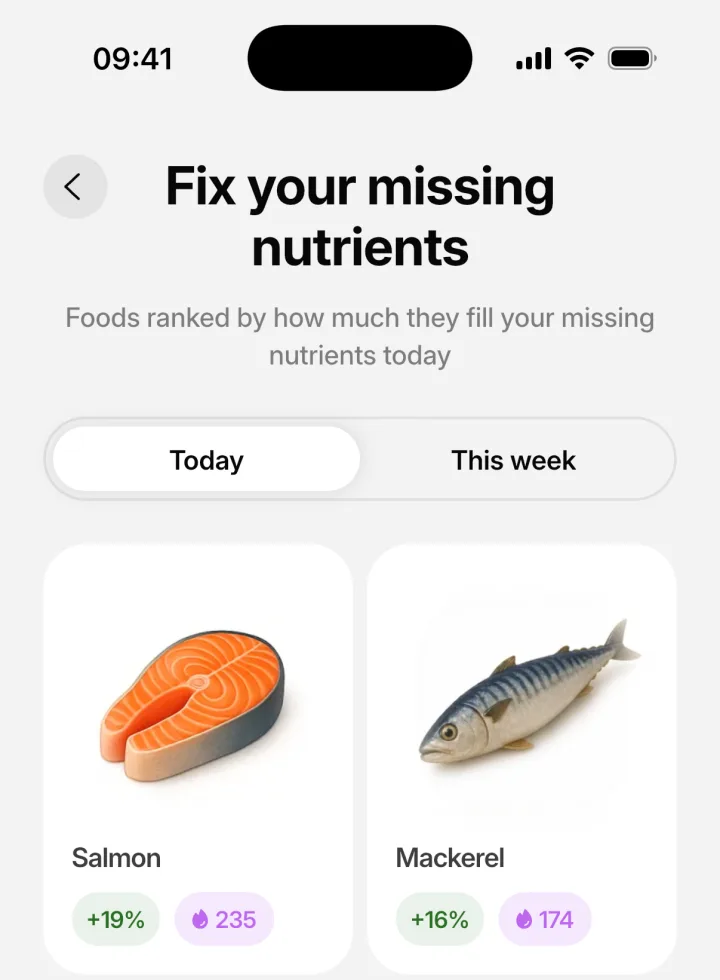
IntakeAI also suggests foods that fill the nutrient gaps in what you've eaten today or this week, which helps when a calorie deficit leaves less room for variety.
Frequently asked questions
What is the most filling food per calorie?
In the 1995 satiety index study, boiled potatoes were the most filling of 38 foods tested, scoring 323% compared with white bread at 100%. White fish (225%), oatmeal (209%), oranges (202%) and apples (197%) came next.
What should I eat to avoid snacking when dieting?
Eat meals that combine a lean protein (such as fish, chicken, eggs or Greek yogurt) with low-calorie-density foods (vegetables, fruit, potatoes, oats or beans), and put the most filling meal right before the time you usually snack.
Are potatoes good for weight loss?
Plain boiled potatoes are about 87 kcal per 100 g and were the most filling food in the satiety index study. Fried potatoes are different: french fries scored 116%, close to white bread, because frying adds fat and calories.
What is energy density?
Energy density is calories per gram of food. Water lowers it and fat raises it. Foods under about 1.5 kcal/g, such as vegetables, fruit, oats, beans and lean fish, let you eat larger portions for fewer calories.
Are nuts bad in a calorie deficit?
No, but they are energy-dense: peanuts are about 587 kcal per 100 g and scored 84% on the satiety index. Pre-portion a small serving instead of eating from the bag.
Related guides
How to Lose Weight Without Feeling Hungry
The pillar guide to satiety per calorie and why some diets leave you starving.
READ MORE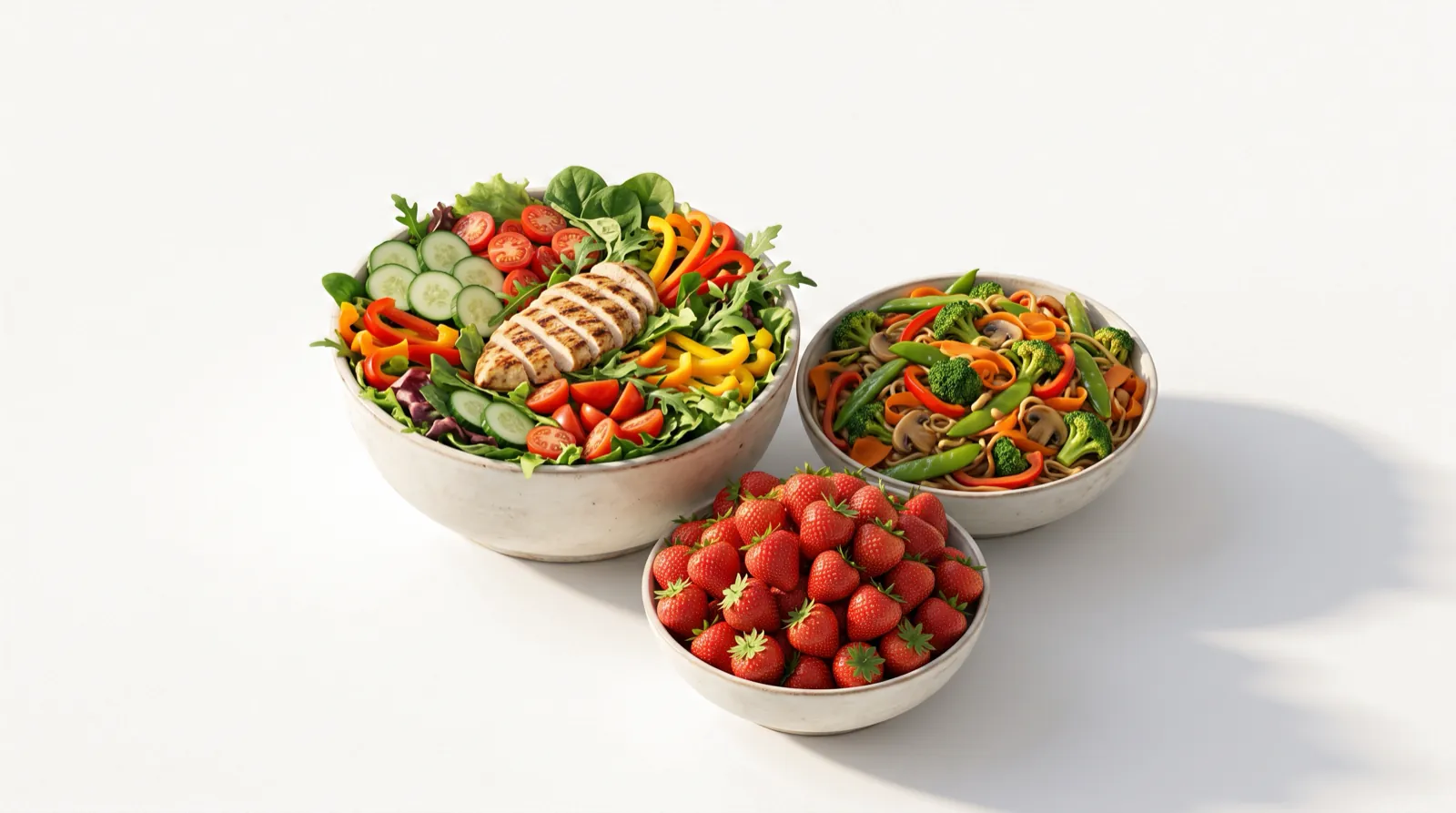
Low Calorie High Volume Meals That Keep You Satisfied
How to build big plates for few calories using water-rich foods.
READ MORE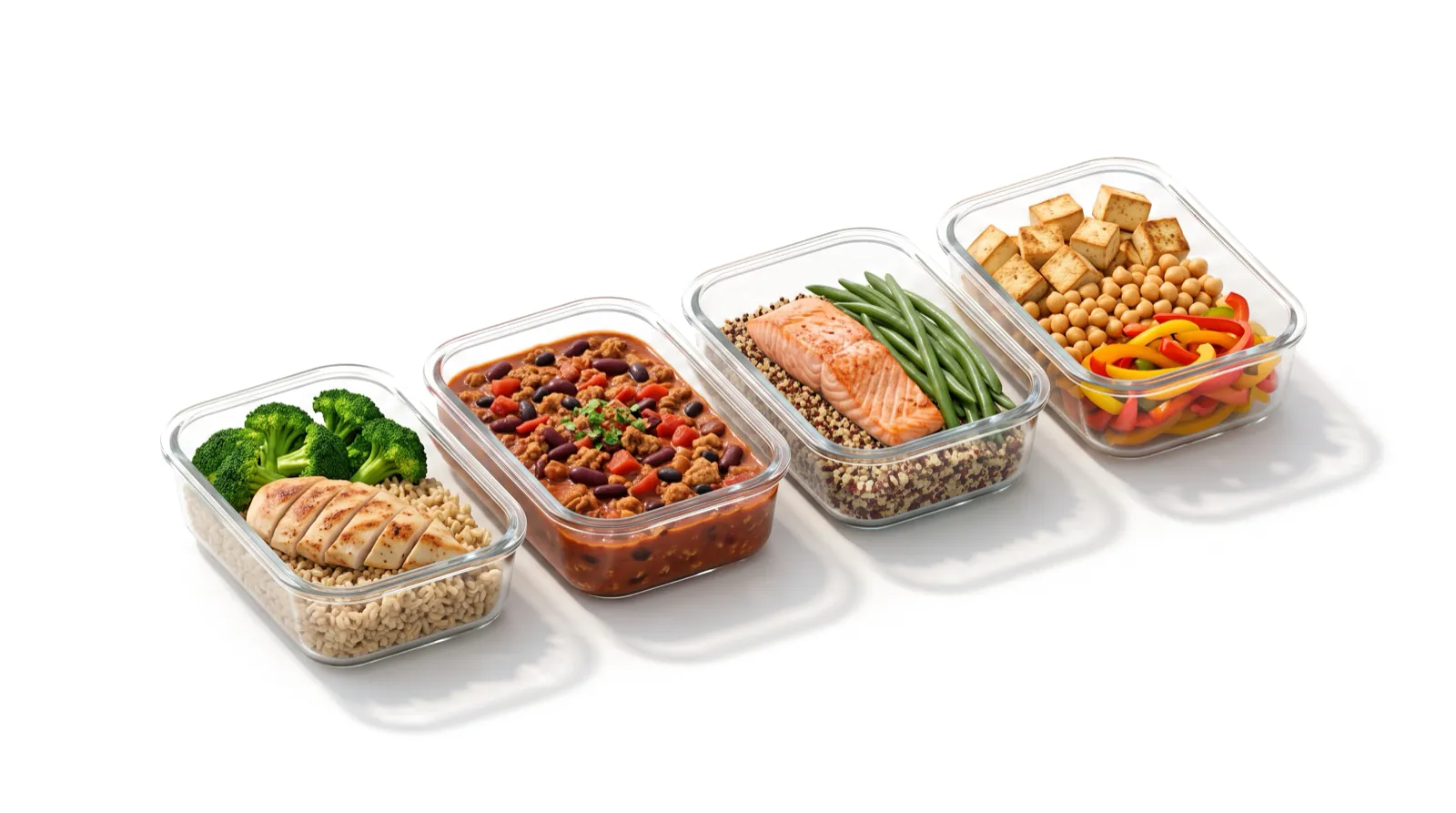
High Protein and High Fiber Meals for Fat Loss
14 meal ideas with approximate calories, protein and fiber for each.
READ MORESee which of your meals keep you full
Snap, scan or describe a meal in IntakeAI to see its calories, protein and fiber, and a Cravings control score that factors in calorie density.
Sources
- Holt SH, et al. (1995). A satiety index of common foods. Eur J Clin Nutr. PubMed
- U.S. Department of Agriculture, Agricultural Research Service. FoodData Central (SR Legacy). USDA
- Rolls BJ (2009). The relationship between dietary energy density and energy intake. Physiol Behav. PubMed
- Rolls BJ (2017). Dietary energy density: applying behavioural science to weight management. Nutr Bull. PubMed
- Ello-Martin JA, et al. (2007). Dietary energy density in the treatment of obesity: a year-long trial comparing 2 weight-loss diets. Am J Clin Nutr. PubMed
- Flood JE, Rolls BJ (2007). Soup preloads in a variety of forms reduce meal energy intake. Appetite. PubMed
- Vander Wal JS, et al. (2005). Short-term effect of eggs on satiety in overweight and obese subjects. J Am Coll Nutr. PubMed
- Hall KD, et al. (2019). Ultra-processed diets cause excess calorie intake and weight gain. Cell Metab. PubMed
This article is for general education and is not medical advice. If you have a medical condition, an eating disorder, are pregnant, or take medication, speak to a doctor or registered dietitian before changing your diet. IntakeAI's nutrition figures and scores are estimates to guide your choices.