Low Calorie High Volume Meals That Keep You Satisfied
What are low calorie high volume meals for weight loss?
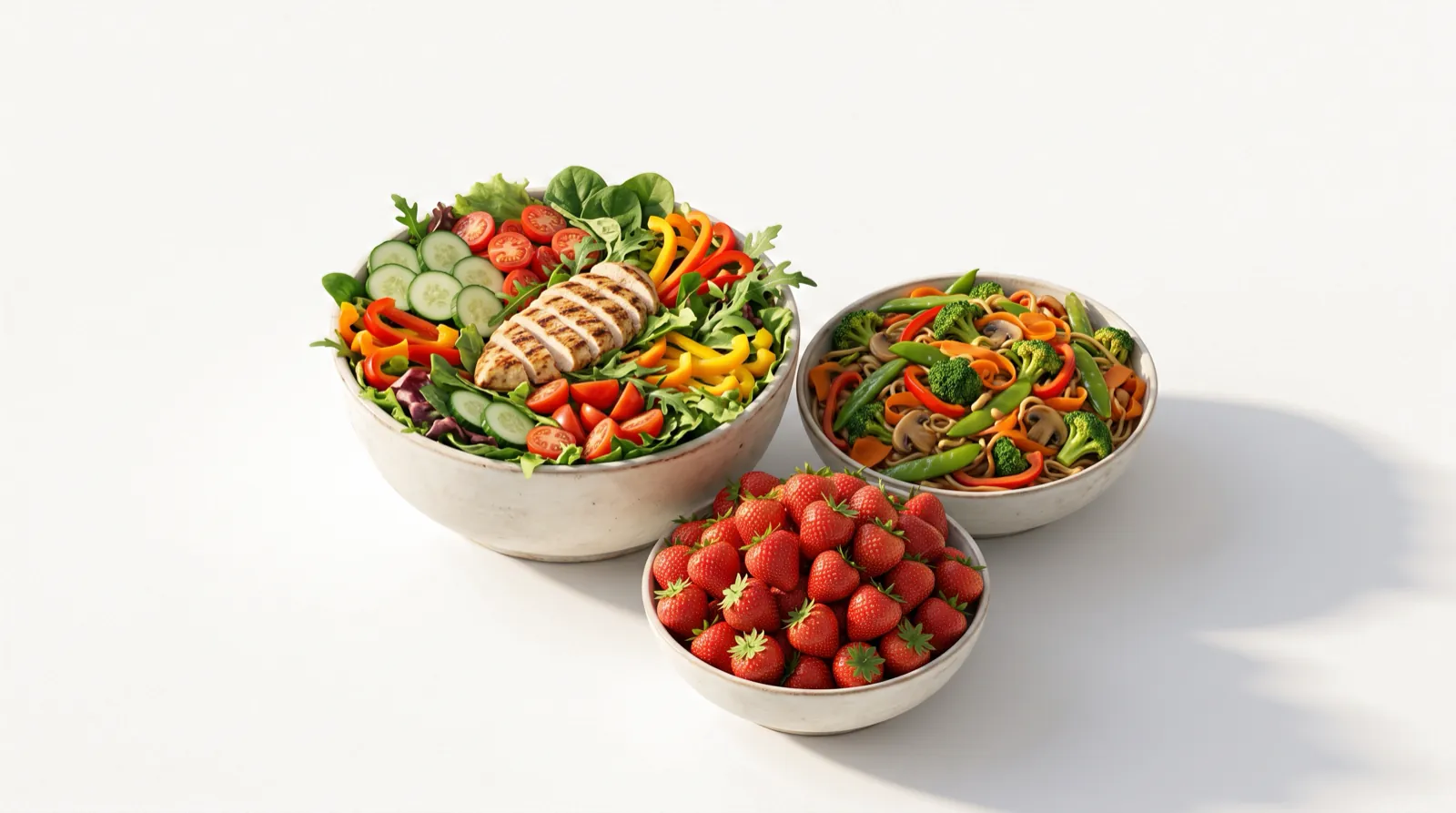
Low calorie high volume meals are plates built mostly from foods under about 1.5 calories per gram, such as vegetables, fruit, broth soups, lean protein and legumes, so you can eat a large, filling portion for roughly 300–500 calories. The idea comes from decades of energy density research by Barbara Rolls at Penn State, popularised as "Volumetrics." People tend to eat a fairly consistent weight of food from meal to meal, so lowering the calories in each bite lowers intake without shrinking the plate.
This guide covers what the studies actually found, a table of common foods by calories per gram, ten concrete meals with approximate calories, and a simple method for making any recipe higher-volume.
Key takeaways
- Energy density is calories per gram. Water adds weight with 0 kcal/g, fat adds about 9 kcal/g, so watery, fiber-rich foods give the most volume per calorie.
- In a lab study of 42 women, a large low-energy-dense salad before pasta cut total lunch calories by 12%; a high-energy-dense salad of the same size raised them by 17%.
- A year-long trial in 97 women found that adding water-rich fruit and vegetables to a reduced-fat diet led to more weight loss (7.9 vs 6.4 kg) and less reported hunger.
- Water inside food (soup) reduced later intake; the same water drunk alongside the food did not.
- Volume is not the only lever: pair it with 25–40 g of protein per meal, and measure the small, dense extras like oil, cheese and dressing.
What does the energy density research show?
Energy density simply divides a food's calories by its weight. In her 2017 review in Nutrition Bulletin, Rolls explains that water has the largest influence on the energy density of everyday foods because it adds weight without calories, while fat has the largest influence per gram. That is why 100 g of strawberries has about 32 kcal and 100 g of chocolate has more than 500.
Salad and soup "preloads"
The best-known experiments test what happens when people eat a low-energy-dense first course. In the 2004 salad study, 42 women ate lunch in the lab once a week for seven weeks. Before a pasta main course they had to finish one of six salads (or no salad). A large 300 g salad at 0.33 kcal/g reduced total meal intake by 12% compared with no salad. The same 300 g salad made dense with extra dressing and cheese (1.33 kcal/g) increased intake by 17%. "Have a salad first" only works if the salad itself is light.
Soup behaves similarly. In a 2007 study of 60 adults, eating a low-energy-dense vegetable soup before lunch reduced total meal intake by 20% (about 134 kcal), and it did not matter whether the soup was chunky or pureed.
Water in the food, not beside it
A common shortcut is to drink a large glass of water with meals. A 1999 study of 24 lean women compared three equal-calorie starters: a chicken rice casserole, the same casserole with a glass of water, and the same ingredients made into soup. Only the soup increased fullness and reduced lunch intake; the water on the side did nothing measurable, and participants did not make up the difference at dinner. These were short lab studies in small, mostly normal-weight groups, so they show a mechanism rather than long-term results.
Does it translate into weight loss?
The strongest long-term test is a year-long randomized trial of 97 women with obesity. Both groups were counseled to cut fat, and one was also told to eat more water-rich foods, especially fruit and vegetables. Neither group got a calorie target. Completers in the fruit-and-vegetable group lost 7.9 kg versus 6.4 kg, ate a greater weight of food, and reported less hunger. The difference between groups was modest, but the hunger result is the point: the same kind of deficit felt easier.
Which foods have the lowest energy density?
The four bands below follow the categories in Rolls' 2017 review. Example values are approximate figures per 100 g from standard food databases and will vary by brand and recipe.
| Energy density band | kcal per gram | Example foods (approx. kcal/g) | How to use them |
|---|---|---|---|
| Very low | under 0.6 | Cucumber (0.15), lettuce (0.15), broccoli (0.35), strawberries (0.32), watermelon (0.30), broth-based vegetable soup (~0.3), apple (0.52), nonfat Greek yogurt (0.59) | Fill half the plate; generous portions |
| Low | 0.6–1.5 | Oatmeal made with water (~0.7), boiled potatoes (0.87), banana (0.89), cooked cod (~1.05), cooked lentils (1.16), cooked brown rice (~1.2), eggs (~1.45) | Reasonable portions; the base of most meals |
| Medium | 1.6–3.9 | Cooked chicken breast (~1.65), lean beef (~2.5), whole-wheat bread (~2.5), bagel (~2.6), pizza (~2.7) | Measure portions; balance with very-low foods |
| High | 4.0–9.0 | Cookies (~4.8), potato chips (~5.4), chocolate (~5.4), almonds (~5.8), peanut butter (~5.9), butter (~7.2), olive oil (~8.8) | Small, deliberate amounts |
Two things stand out. Lean protein such as chicken breast sits in the medium band by weight, yet it is very filling per calorie because protein is the most satiating macronutrient, so do not cut it to chase volume. And boiled potatoes, often avoided on diets, scored highest of 38 foods in the 1995 satiety index study, about seven times higher than a croissant at the same 240 kcal.
10 low calorie high volume meal ideas
Calories are approximate and assume the portions listed. Swap ingredients freely; the structure is what matters.
- Big chicken and chickpea salad (~430 kcal): 3 cups mixed greens, 120 g grilled chicken breast, 100 g cherry tomatoes, 100 g cucumber, ½ cup chickpeas, 2 tbsp light vinaigrette.
- Loaded veggie omelet (~320 kcal): 2 whole eggs plus 100 g egg whites, 150 g spinach, peppers and mushrooms, 1 slice whole-grain toast.
- Lentil and vegetable soup (~300 kcal per 500 g bowl): lentils, carrots, celery, tomatoes and stock. Make a pot; it is the classic soup preload as a whole meal.
- Shrimp and vegetable stir-fry (~410 kcal): 150 g shrimp, 250 g zucchini, broccoli and peppers, 1 tsp sesame oil, 100 g cooked rice, soy-ginger sauce.
- Greek yogurt berry bowl (~260 kcal): 250 g nonfat Greek yogurt, 150 g mixed berries, 15 g oats, cinnamon.
- Turkey and bean chili (~380 kcal for a 1½-cup bowl): lean ground turkey, kidney beans, crushed tomatoes and a double portion of peppers and onions.
- Sheet-pan cod with potatoes (~400 kcal): 150 g cod, 150 g boiled or roasted potatoes, 300 g roasted vegetables tossed in 1 tsp oil.
- Cauliflower-rice burrito bowl (~380 kcal): 100 g 95%-lean beef, 150 g cauliflower rice, ½ cup black beans, lettuce, salsa, 2 tbsp light sour cream.
- Half-and-half pasta (~500 kcal): 60 g dry pasta, 250 g roasted vegetables, 100 g chicken, tomato sauce. Same bowl size as a standard plate of pasta, far fewer calories.
- Afternoon snack plate (~190 kcal): 1 large apple and 3 cups air-popped popcorn.
If you want more recipes built around specific foods, our guide to the best foods for a calorie deficit ranks individual ingredients by fullness per calorie.
Track calories & nutrients fast


How do you turn any meal into a high-volume meal?
You do not need special recipes. Most favorite meals can be made lower in energy density with a few swaps, and a 2011 study of 41 adults found that covertly blending pureed vegetables into entrées cut daily intake by 202–357 kcal while hunger, fullness and taste ratings stayed similar.
- Start with water-rich vegetables. Aim for at least half the plate (roughly 200–300 g) from the very-low band.
- Add a palm-to-hand-sized protein. 25–40 g of protein per meal keeps the plate satisfying beyond the first hour. Our high-protein, high-fiber meal guide covers this in detail.
- Swap part of the starch, not all of it. Replace half the rice or pasta with vegetables, or choose potatoes, oats and legumes over dense breads and crackers.
- Measure the dense extras. One tablespoon of olive oil is about 120 kcal; the salad study showed dressing and cheese can turn a "light" starter into a calorie-dense one.
- Prefer soups and stews to dry dishes. Cooking water into food raised fullness; drinking water alongside it did not.
- Eat the low-density part first. Starting with salad or soup is the preload effect in action.
Where volume eating goes wrong
- All volume, no protein. A huge bowl of greens with no protein can leave you hungry again within a couple of hours.
- "Healthy" dense foods in free-pour amounts. Nuts, granola, avocado and oil are nutritious but sit in the medium-to-high bands.
- Swapping food for drinks. Smoothies and juices remove much of the chewing and volume that make whole fruit filling.
High-volume eating is one of several strategies covered in our main guide to losing weight without feeling hungry.
How to check a meal's energy density without a spreadsheet
The manual way: weigh the whole plate, look up each ingredient's calories, add them up and divide by the total grams. A plate weighing 600 g with 450 kcal is 0.75 kcal/g, comfortably in the low band. It is accurate, and doing it for a week teaches you a lot, but few people keep it up for every meal.
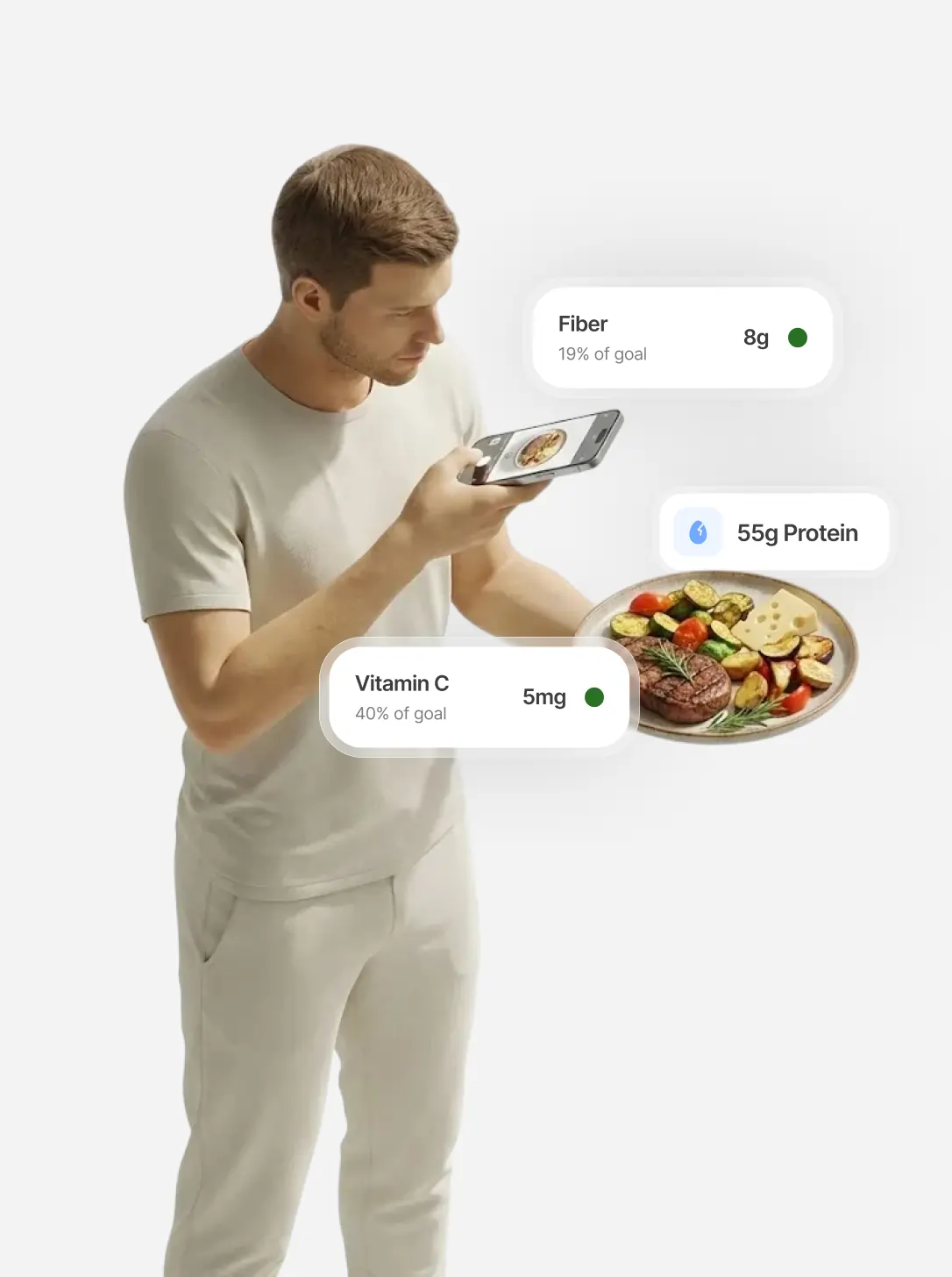
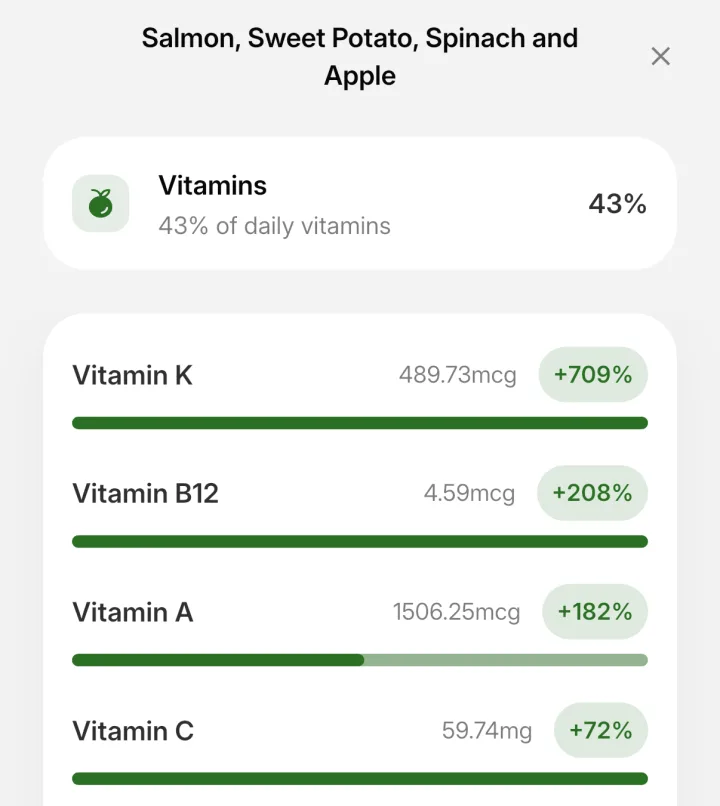
The faster way: IntakeAI is an iPhone and Android nutrition app designed to help you reduce cravings. It estimates calories, macros and 50+ nutrients from a photo, barcode, nutrition label or a typed description. Calorie density is one of the six factors in its per-meal Cravings control score (0–10), which treats meals under 0.6 kcal/g as best and over 4 kcal/g as worst, alongside protein, fiber, processing and other factors. It is an estimate to guide choices, not a guarantee that a meal will stop hunger.
Photo estimates can miss hidden oil or misjudge a portion, so it is worth checking the result and editing the weight of any food that looks off. Vegetable-heavy meals also tend to bring potassium, magnesium and other minerals, which IntakeAI shows per meal.
Frequently asked questions
What is a high-volume, low-calorie meal?
It is a meal built mostly from foods with a low energy density, meaning few calories per gram, such as vegetables, fruit, broth-based soups, lean proteins and legumes. Because these foods contain a lot of water and fiber, you can eat a large, filling portion for roughly 300 to 500 calories.
What energy density should I aim for?
Barbara Rolls' Volumetrics approach groups foods as very low (under 0.6 kcal per gram), low (0.6 to 1.5), medium (1.6 to 3.9) and high (4.0 to 9.0). Building most of a meal from the first two groups and using medium and high foods in measured amounts is a practical target.
Does drinking water with a meal have the same effect as eating soup?
Not in the research so far. In a Penn State study of 24 women, chicken rice soup reduced lunch intake compared with the same casserole served with a glass of water, while the water served alongside the food did not change satiety. Water that is part of the food seems to matter more.
Can I lose weight just by eating high-volume foods?
Lowering energy density helped in a year-long trial of 97 women, but weight loss still depends on an overall calorie deficit. High-volume meals make a deficit easier to tolerate; they do not guarantee results, and large portions of dense add-ons like oil, cheese or dressing can cancel the benefit.
Is volume eating safe for everyone?
Most adults can safely add more vegetables, fruit and broth-based soups. People with a history of eating disorders, digestive conditions that limit fiber, or those using GLP-1 medications that reduce stomach capacity should get personalised advice from a doctor or registered dietitian first.
Related guides
How to Lose Weight Without Feeling Hungry All the Time
The hub guide: why diets drive hunger and the satiety principles that make a calorie deficit sustainable.
READ MORE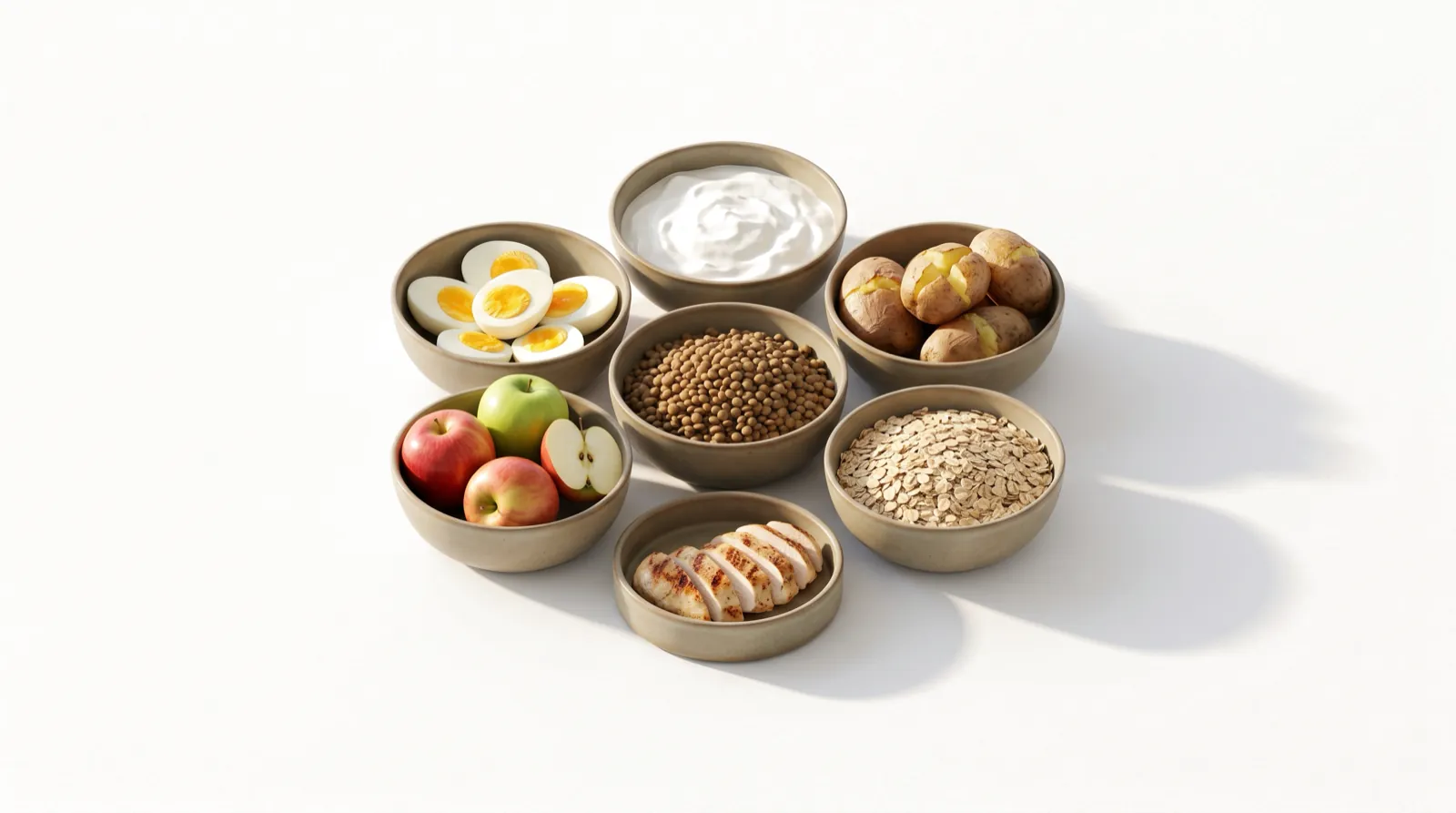
Best Foods to Eat in a Calorie Deficit (That Actually Keep You Full)
Individual foods ranked by how much fullness they deliver per calorie, from potatoes to Greek yogurt.
READ MORE
High Protein and High Fiber Meals for Fat Loss
Meals that hit both protein and fiber targets, the two levers that pair best with high-volume eating.
READ MOREEat bigger plates without guessing the calories
Log a meal by photo, barcode or a quick text description and IntakeAI estimates its calories, protein, fiber and 50+ nutrients, plus a Cravings control score that rewards low calorie density. Edit any portion the AI gets wrong.
Sources
- Rolls BJ (2017). Dietary energy density: applying behavioural science to weight management. Nutrition Bulletin, 42(3), 246–253. PubMed
- Rolls BJ, Roe LS, Meengs JS (2004). Salad and satiety: energy density and portion size of a first-course salad affect energy intake at lunch. Journal of the American Dietetic Association, 104(10), 1570–1576. PubMed
- Flood JE, Rolls BJ (2007). Soup preloads in a variety of forms reduce meal energy intake. Appetite, 49(3), 626–634. PubMed
- Rolls BJ, Bell EA, Thorwart ML (1999). Water incorporated into a food but not served with a food decreases energy intake in lean women. American Journal of Clinical Nutrition, 70(4), 448–455. PubMed
- Ello-Martin JA, Roe LS, Ledikwe JH, Beach AM, Rolls BJ (2007). Dietary energy density in the treatment of obesity: a year-long trial comparing 2 weight-loss diets. American Journal of Clinical Nutrition, 85(6), 1465–1477. PubMed
- Blatt AD, Roe LS, Rolls BJ (2011). Hidden vegetables: an effective strategy to reduce energy intake and increase vegetable intake in adults. American Journal of Clinical Nutrition, 93(4), 756–763. PubMed
- Holt SH, Miller JC, Petocz P, Farmakalidis E (1995). A satiety index of common foods. European Journal of Clinical Nutrition, 49(9), 675–690. PubMed
This article is for general education and is not medical advice. If you have a medical condition, an eating disorder, are pregnant, or take medication, speak to a doctor or registered dietitian before changing your diet. IntakeAI's nutrition figures and scores are estimates to guide your choices.