How to Adjust Calories When You Plateau
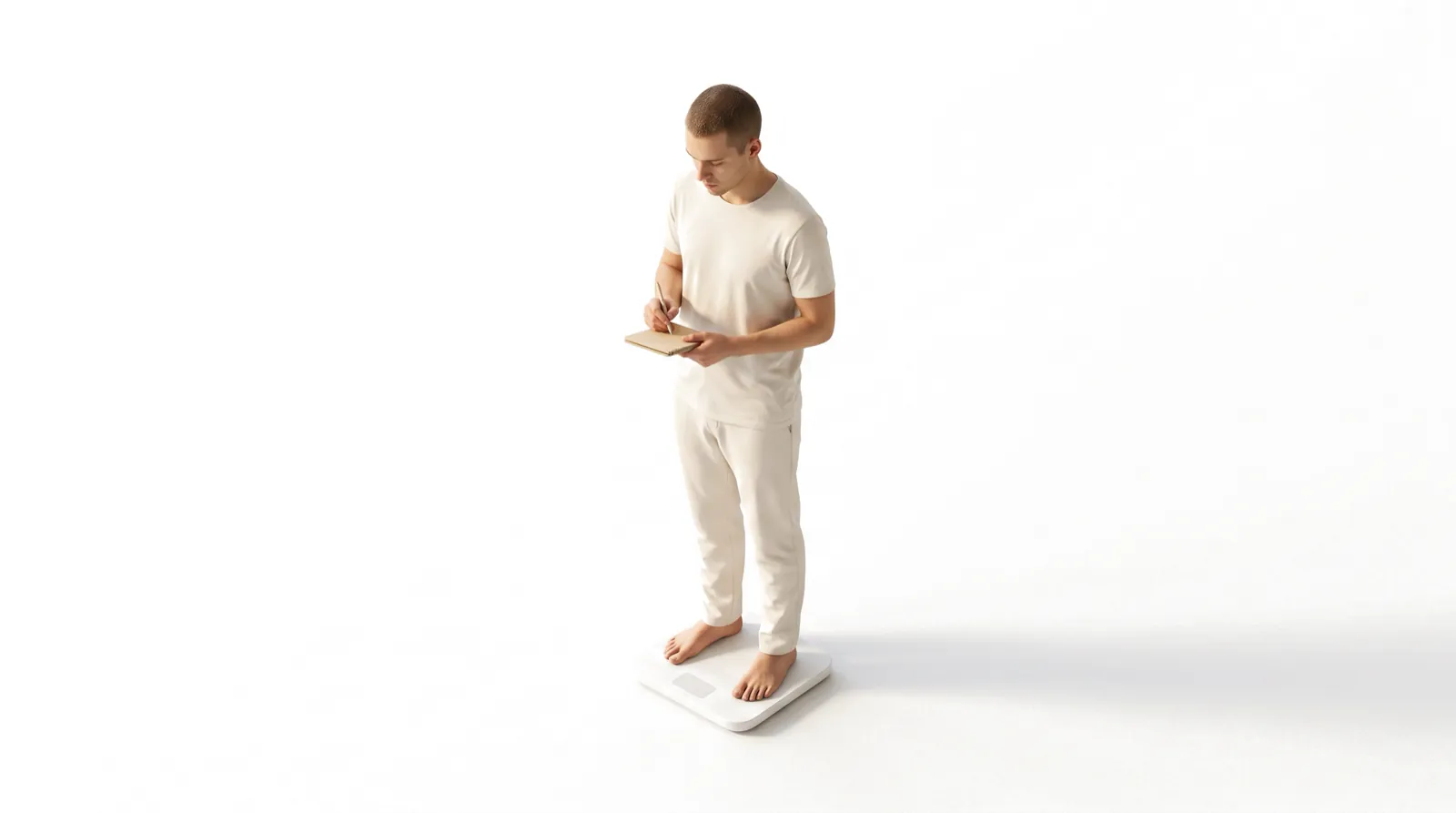
How do you adjust calories when you plateau?
When your weekly average weight has not moved for 3–4 weeks, check your tracking accuracy first, then recalculate your maintenance calories for your new weight and reduce intake by about 100–200 kcal a day or add a similar amount of daily activity, holding the change for 2–4 weeks before judging it. Most plateaus come from a combination of a smaller body burning less, gradual portion creep and water shifts that hide fat loss, not from a broken metabolism. Small, deliberate adjustments work better than slashing calories.
The checklist below walks through each step in order, including a worked Mifflin-St Jeor recalculation and what the research says about diet breaks.
Key takeaways
- Judge progress on 2–4 weeks of weekly averages, not single weigh-ins; glycogen is stored with about 3–4 parts water, so daily weight can swing.
- Intake is easy to underestimate: in one small study of "diet-resistant" adults, people underreported what they ate by an average of 47%.
- An 8 kg loss lowers estimated daily needs by roughly 110 kcal for a lightly active woman, quietly shrinking a 500 kcal deficit to about 390.
- Change one thing at a time: cut 100–200 kcal a day or add activity, and keep the deficit moderate.
- Diet breaks at maintenance showed mixed results: more fat loss in one trial, no fat loss difference but lower hunger in another.
How do you know it is a real plateau?
Weight loss is never a straight line. Body weight responds slowly to a change in intake: a 2011 modelling paper in The Lancet estimated that it takes roughly a year to get halfway to a new stable weight after a sustained change in calories, so the rate of loss naturally slows over time. For the same reason, researchers argue the popular "3,500 kcal per pound" rule overestimates long-term weight loss: it ignores the fact that your energy needs fall as you get lighter.
On top of that slow trend sits a lot of short-term noise. Glycogen, the carbohydrate stored in your liver and muscles, is held with about three to four parts water. A salty meal, a higher-carb day, a hard workout or hormonal changes can shift water weight enough to mask fat loss for days. A true plateau means the trend has stopped, not that the scale went up on Tuesday.
The step-by-step plateau checklist
- Confirm the trend. Weigh yourself under the same conditions (morning, after the bathroom, before eating) several times a week and compare weekly averages. If the average has not dropped for 3–4 weeks, continue. If it has been 1–2 weeks, wait.
- Audit your tracking for a week. In a 1992 NEJM study of 10 adults who said they could not lose weight on under 1,200 kcal a day, their metabolism was normal; they underreported intake by an average of 47% and overreported activity by 51%. It was a small, specific group, but the lesson applies widely. Common gaps are cooking oil, drinks, sauces, tastes while cooking, weekends and meals out. Weigh the foods you eat most often for a few days to recalibrate your eye. If restaurant meals are frequent, see our guide to tracking calories when eating out.
- Recalculate your needs at your current weight. Use the Mifflin-St Jeor equation with your new weight (worked example below). Your old target was set for a heavier body.
- Check your activity honestly. Daily movement often drifts down during a diet without people noticing, especially when energy is low. Compare your current daily steps with your first month if your phone or watch records them.
- Make one small change. Lower intake by 100–200 kcal a day, or add a similar amount of activity, such as an extra daily walk. Keep protein steady so the cut comes from fats and carbs, and keep the total deficit moderate; a common upper limit is around 25% below maintenance.
- Protect fullness. A slightly lower target is easier when meals are high in protein, fiber and volume. Our list of the best foods for a calorie deficit helps here.
- Hold for 2–4 weeks. Give the change time to show up in the weekly average before adjusting again.
- Consider a planned break. If hunger, fatigue or motivation are the real problem, a week or two at maintenance may help you continue (see the evidence below).
How do you recalculate TDEE with Mifflin-St Jeor?
The Mifflin-St Jeor equation was developed in 1990 from measurements of 498 healthy adults aged 19 to 78 and estimates resting energy expenditure (often called BMR):
- Men: 10 × weight (kg) + 6.25 × height (cm) − 5 × age (years) + 5
- Women: 10 × weight (kg) + 6.25 × height (cm) − 5 × age (years) − 161
Multiply the result by an activity factor to estimate total daily energy expenditure (TDEE). Commonly used multipliers are 1.2 (sedentary), 1.375 (lightly active), 1.55 (moderately active) and 1.725 (very active).
Example: a 35-year-old woman, 168 cm tall, lightly active, who started at 85 kg and set a target of 1,650 kcal a day. She is now 77 kg and has stalled.
| Step | At 85 kg (start) | At 77 kg (now) |
|---|---|---|
| BMR: 10 × kg + 6.25 × 168 − 5 × 35 − 161 | 850 + 1,050 − 175 − 161 = 1,564 kcal | 770 + 1,050 − 175 − 161 = 1,484 kcal |
| TDEE: BMR × 1.375 | ~2,151 kcal | ~2,041 kcal |
| Deficit at 1,650 kcal intake | ~501 kcal/day | ~391 kcal/day |
| Intake for a ~500 kcal deficit | 1,650 kcal | ~1,540 kcal |
Her estimated needs fell by about 110 kcal a day, so the same 1,650 kcal now produces a deficit roughly 22% smaller. A cut of about 110 kcal restores the original deficit, which is in line with the 100–200 kcal step in the checklist. Two caveats: the equation gives an estimate for a typical person, and it does not account for adaptive changes in metabolism or appetite beyond the weight change itself, which is one reason why real-world progress slows more than the formula predicts. If you want a model that accounts for these dynamics, the NIH's Body Weight Planner projects how weight changes over time for a given intake.
Plateaus are also where many diets unravel, often because of rising hunger rather than the numbers. Our article on why diets fail because of cravings explains the appetite side, and the hub guide covers how to lose weight without feeling hungry.
Track calories & nutrients fast



Do diet breaks help you get past a plateau?
A diet break means eating at estimated maintenance for one to two weeks before resuming the deficit. Two well-known trials point in somewhat different directions:
| Trial | Who | Design | Main finding |
|---|---|---|---|
| MATADOR (2018) | 51 men with obesity randomized (36 completed per protocol) | 16 weeks of dieting at 67% of maintenance, either continuous or as 2 weeks on / 2 weeks at maintenance (30 weeks total) | Intermittent group lost more weight (14.1 vs 9.1 kg) and more fat, with a smaller adaptive drop in resting energy expenditure |
| ICECAP (2021) | 61 resistance-trained adults (32 women) | 12 weeks of moderate dieting, continuous or as 3 weeks on / 1 week at maintenance | No difference in fat loss or muscle retention; the diet-break group reported lower hunger and greater satisfaction |
The fair reading is that breaks are unlikely to hurt and may make a long diet easier to stick with, especially when hunger is building. They do stretch the timeline, since break weeks are not deficit weeks, and the weight on the scale may rise slightly during a break as glycogen and water return. That is expected and not fat regain.
How to keep your calorie target up to date
Manually: every time your weekly average falls by 3–5 kg, rerun the Mifflin-St Jeor calculation above with your new weight, apply your activity factor and set your new target. A spreadsheet with your weight, BMR, TDEE and target makes this a two-minute job.
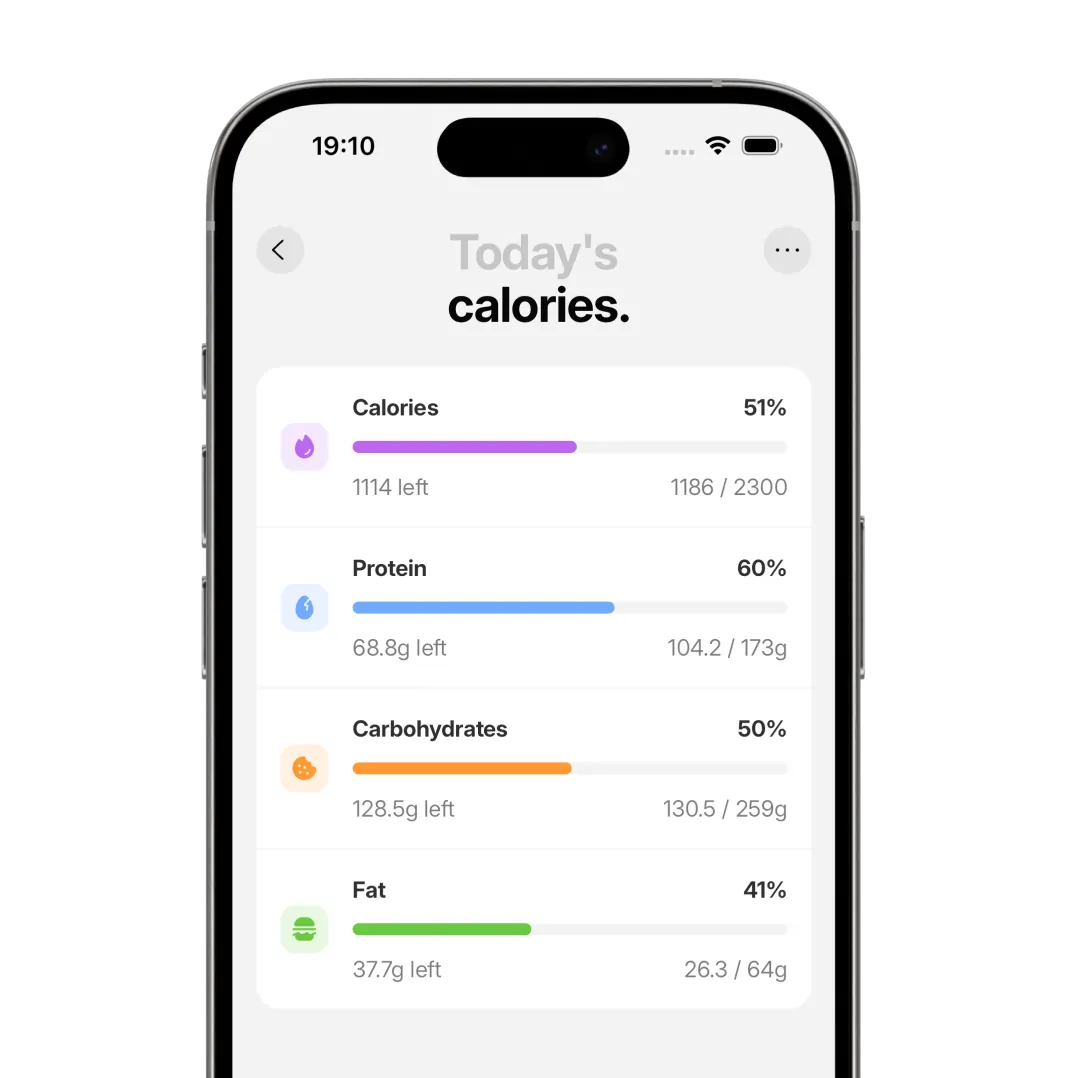
With IntakeAI: IntakeAI is an iPhone and Android nutrition app designed to help you reduce cravings. It estimates calories, macros and 50+ nutrients from a meal photo, barcode, nutrition label or text description. Your daily calorie target is calculated from Mifflin-St Jeor, your activity level and the weekly pace you choose (0.5–2 lb a week), with the deficit capped at 25% of your TDEE. When you update your weight and goal, the target is recalculated, and progress bars show how today's intake compares with it.
The tracking-accuracy step still applies: photo estimates can misjudge portion size or miss oil, so review each result and edit the portion or weight when it looks off. Accurate logs are what make a recalculated target meaningful.
A plateau that lasts for months despite carefully verified intake is worth discussing with a doctor or registered dietitian, particularly if you have symptoms such as unusual fatigue, take medications that affect weight, or use a GLP-1 medication.
Frequently asked questions
How long should weight be stuck before I call it a plateau?
Look for no downward trend in your weekly average weight for about 3 to 4 weeks while your intake and activity have stayed consistent. Day-to-day swings can come from water, salt, carbohydrate and glycogen changes, so single weigh-ins are not a reliable signal.
How much should I cut calories when I plateau?
Start small: reduce intake by about 100 to 200 calories a day, or add a similar amount of activity such as extra daily walking, then hold that change for 2 to 4 weeks before judging it. Keep the overall deficit moderate rather than slashing calories, which tends to increase hunger.
Do I need to recalculate my calories after losing weight?
Yes. A smaller body needs less energy, so the same intake creates a smaller deficit over time. Using the Mifflin-St Jeor equation, a 35-year-old woman who is 168 cm tall and drops from 85 to 77 kg sees her estimated daily needs fall by roughly 110 calories at a light activity level.
Do diet breaks help break a plateau?
They may help some people. In the MATADOR trial in men with obesity, alternating two weeks of dieting with two weeks at maintenance led to more fat loss than continuous dieting. In the ICECAP trial in resistance-trained adults, one-week breaks did not improve fat loss but were linked to lower hunger. Breaks mainly appear to help with adherence and appetite, and they make the overall timeline longer.
When should I see a doctor about a weight loss plateau?
See a doctor or registered dietitian if your weight has not changed for several months despite carefully verified intake, if you have symptoms such as unusual tiredness or feeling cold, if you take medications that affect weight, or if you are using a GLP-1 medication and want help setting calorie and protein targets.
Related guides
How to Lose Weight Without Feeling Hungry All the Time
The hub guide to keeping a calorie deficit sustainable without constant hunger.
READ MORE
Why Diets Fail Because of Cravings (Not a Lack of Discipline)
How appetite and metabolism adapt to weight loss, and what long-term maintainers do.
READ MORE
Best Foods to Eat in a Calorie Deficit (That Actually Keep You Full)
Foods that make a slightly lower calorie target easier to live with.
READ MOREKeep your calorie target in step with your weight
IntakeAI sets a personalised calorie target from the Mifflin-St Jeor equation, your activity level and your goal pace; update your weight and goal and the target is recalculated. Log meals by photo, barcode or text.
Sources
- Mifflin MD, St Jeor ST, Hill LA, Scott BJ, Daugherty SA, Koh YO (1990). A new predictive equation for resting energy expenditure in healthy individuals. American Journal of Clinical Nutrition, 51(2), 241–247. PubMed
- Kreitzman SN, Coxon AY, Szaz KF (1992). Glycogen storage: illusions of easy weight loss, excessive weight regain, and distortions in estimates of body composition. American Journal of Clinical Nutrition, 56(1 Suppl), 292S–293S. PubMed
- Lichtman SW, Pisarska K, Berman ER, et al. (1992). Discrepancy between self-reported and actual caloric intake and exercise in obese subjects. New England Journal of Medicine, 327(27), 1893–1898. PubMed
- Hall KD, Sacks G, Chandramohan D, et al. (2011). Quantification of the effect of energy imbalance on bodyweight. The Lancet, 378(9793), 826–837. PubMed
- Thomas DM, Martin CK, Lettieri S, et al. (2013). Can a weight loss of one pound a week be achieved with a 3500-kcal deficit? Commentary on a commonly accepted rule. International Journal of Obesity, 37(12), 1611–1613. PubMed
- Byrne NM, Sainsbury A, King NA, Hills AP, Wood RE (2018). Intermittent energy restriction improves weight loss efficiency in obese men: the MATADOR study. International Journal of Obesity, 42(2), 129–138. PubMed
- Peos JJ, Helms ER, Fournier PA, et al. (2021). Continuous versus intermittent dieting for fat loss and fat-free mass retention in resistance-trained adults: the ICECAP trial. Medicine & Science in Sports & Exercise, 53(8), 1685–1698. PubMed
- National Institute of Diabetes and Digestive and Kidney Diseases. Body Weight Planner. niddk.nih.gov/bwp
This article is for general education and is not medical advice. If you have a medical condition, an eating disorder, are pregnant, or take medication, speak to a doctor or registered dietitian before changing your diet. IntakeAI's nutrition figures and scores are estimates to guide your choices.