Foods That Reduce Cravings and Keep You Full Longer
What foods reduce cravings and keep you full?
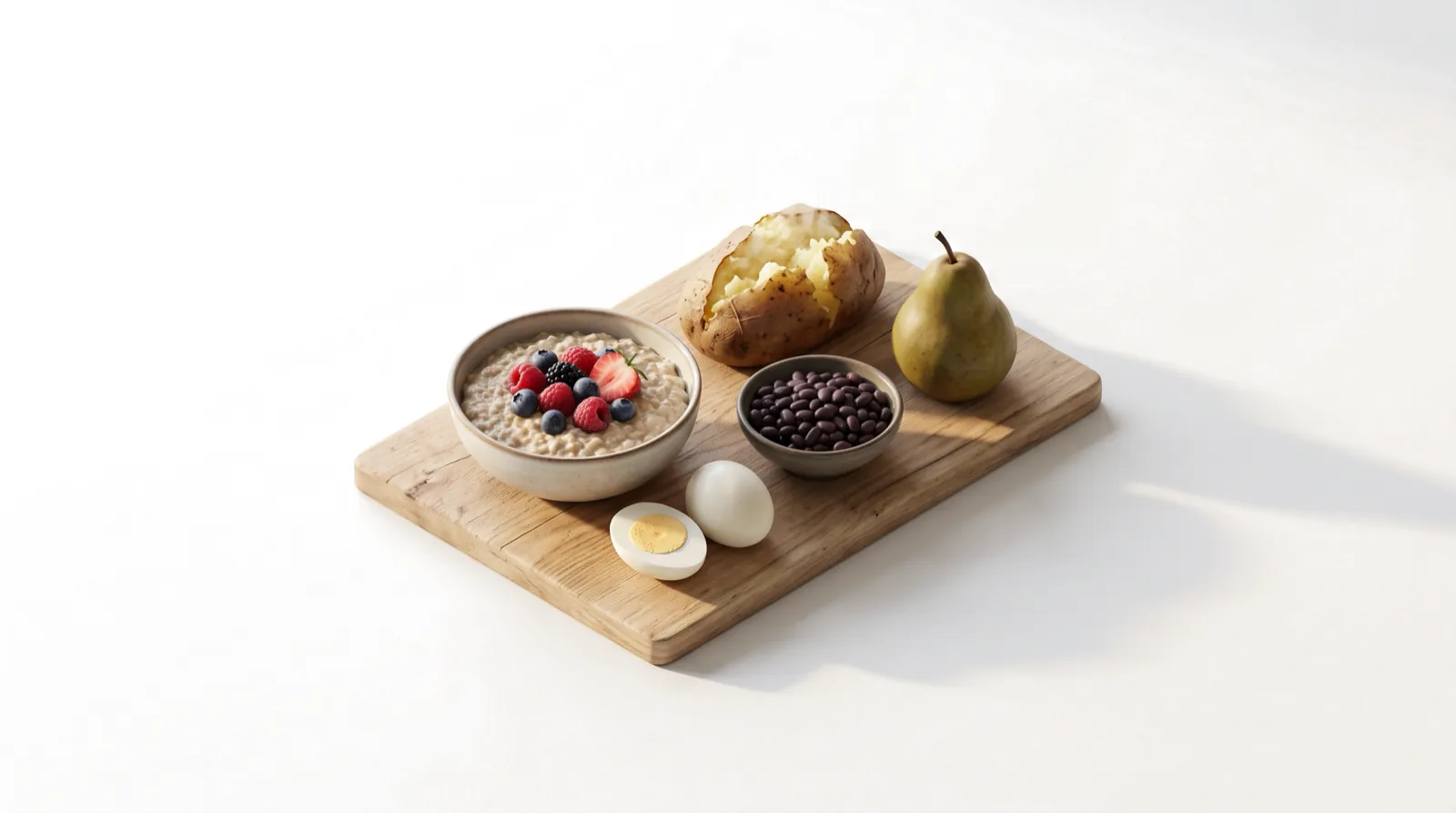
The foods that best reduce cravings and keep you full are high in protein, fiber or water and low in calories per bite: eggs, Greek yogurt, cottage cheese, fish, chicken, lentils, beans, potatoes, oats, berries and vegetable soup. In one satiety study, boiled potatoes were over three times as filling as white bread, calorie for calorie. No single food switches cravings off, but building meals from these foods makes it much less likely you will be hungry and hunting for snacks two hours later. Below is a table of typical servings with protein, fiber and calories from USDA data, plus sample meals.
Key takeaways
- In a satiety index of 38 foods, protein, fiber and water content predicted fullness; fat content and how tasty a food was predicted less fullness.
- A cup of cottage cheese gives 28 g of protein for 163 kcal; a cup of lentils gives about 18 g of protein and 16 g of fiber for 230 kcal (USDA).
- Women who ate an egg breakfast instead of a bagel breakfast with the same calories ate less at lunch and over the next 36 hours.
- Starting a meal with a low-calorie vegetable soup reduced total meal intake by 20% in a lab study.
- Pulses (beans, lentils, chickpeas, peas) increased fullness by 31% in a meta-analysis of nine short trials.
What makes a food filling?
The most quoted study here is the 1995 satiety index by Susanna Holt at the University of Sydney. Groups of 11–13 people ate 240 kcal portions of 38 common foods, rated their fullness every 15 minutes for two hours, then could eat freely. White bread was set at 100%. Boiled potatoes scored highest at 323%, while croissants scored lowest at 47%, a seven-fold difference for the same calories.
The pattern across all 38 foods is what matters most. Foods scored higher when they contained more protein, fiber and water and when the serving was larger by weight. They scored lower when they contained more fat, and, tellingly, when people rated them as more palatable. That last point explains a lot about cravings: the foods that are easiest to keep eating tend to be the least filling per calorie.
So when you are choosing foods to keep cravings down, look for at least one of these:
- Protein — the macronutrient most consistently linked to fullness.
- Fiber — adds bulk and slows eating, though its effect varies by type.
- Water and volume — large portions for few calories, like potatoes, soup, fruit and vegetables.
Protein, fiber and calories in filling foods
Values below are calculated from USDA FoodData Central (SR Legacy entries) for the serving shown, rounded. They are for plain foods without added oil, butter or sauces, which can easily add 100–200 kcal.
| Food | Typical serving | Calories (kcal) | Protein (g) | Fiber (g) |
|---|---|---|---|---|
| Chicken breast, roasted | 3 oz (85 g) | 140 | 26.4 | 0.0 |
| Tuna, light, canned in water | 3 oz (85 g) | 73 | 16.5 | 0.0 |
| Salmon, farmed, cooked | 3 oz (85 g) | 175 | 18.8 | 0.0 |
| Eggs, hard-boiled | 2 large (100 g) | 155 | 12.6 | 0.0 |
| Greek yogurt, plain, nonfat | 1 container (170 g) | 100 | 17.3 | 0.0 |
| Cottage cheese, 1% fat | 1 cup (226 g) | 163 | 28.0 | 0.0 |
| Tofu, firm | 1/2 cup (126 g) | 181 | 21.8 | 2.9 |
| Edamame, prepared | 1 cup (155 g) | 188 | 18.4 | 8.1 |
| Lentils, boiled | 1 cup (198 g) | 230 | 17.9 | 15.6 |
| Black beans, boiled | 1 cup (172 g) | 227 | 15.2 | 15.0 |
| Chickpeas, boiled | 1 cup (164 g) | 269 | 14.5 | 12.5 |
| Oats, dry (before cooking) | 1/2 cup (40 g) | 153 | 5.3 | 4.1 |
| Potato, boiled in skin | 1 medium (136 g) | 118 | 2.5 | 2.4 |
| Broccoli, boiled | 1 cup chopped (156 g) | 55 | 3.7 | 5.1 |
| Raspberries | 1 cup (123 g) | 64 | 1.5 | 8.0 |
| Pear | 1 medium (178 g) | 101 | 0.6 | 5.5 |
| Apple, with skin | 1 medium (182 g) | 95 | 0.5 | 4.4 |
| Popcorn, air-popped | 3 cups (24 g) | 93 | 3.1 | 3.5 |
| Chia seeds | 1 oz (28 g) | 138 | 4.7 | 9.8 |
| Almonds | 1 oz (28 g) | 164 | 6.0 | 3.5 |
Two things stand out. Animal proteins and dairy deliver a lot of protein for few calories but no fiber, while legumes are one of the few foods that give you substantial amounts of both. And nuts and seeds, while nutritious, are calorie-dense: a 1 oz handful of almonds has about as many calories as a cup of raspberries and a medium pear combined, so portion them if you are trying to lose weight.
High-protein foods that reduce cravings
Protein's effect on appetite shows up in longer studies too. In a study of 19 adults, doubling protein from 15% to 30% of calories led them to eat 441 kcal a day less when they could eat freely for 12 weeks.
Breakfast is a good place to start. In a crossover study of 30 women with overweight or obesity, an egg-based breakfast felt more filling than a bagel-based breakfast with the same calories and weight. After the eggs, they ate less at lunch, and their intake stayed lower for the rest of the day and the following 36 hours. It was a single, short study in women only, but it fits the wider protein evidence.
Good high-protein options from the table: cottage cheese (28 g per cup), chicken breast (26 g per 3 oz), tofu (22 g per half cup), salmon, edamame, Greek yogurt and tuna. If you eat mostly plants, combine tofu, edamame and legumes across the day.
High-fiber foods for weight loss and fullness
Legumes have the best direct evidence among high-fiber foods. A meta-analysis of nine acute trials found that meals with pulses produced 31% more fullness than comparison meals with the same calories. The authors were candid about limits: the trials were small, and pulses did not reduce how much people ate at the next meal.
For other fibers, keep expectations realistic. A systematic review of 107 fiber treatments found most did not reduce appetite or food intake in the short term. Oat beta-glucan, rye and mixed high-fiber diets had the most consistent support, which is one reason oats earn their place in the table. High-fiber foods still help in practical ways: they are bulky, take longer to eat, and usually come with water and nutrients. For full meal plans built around both nutrients, see our guide to high-protein, high-fiber meals for fat loss.
High-volume foods: soup, potatoes and popcorn
Low-energy-dense foods let you eat a satisfying amount for few calories. In a Penn State study of 60 adults, eating a low-calorie vegetable soup before lunch cut total meal intake (soup plus lunch) by 20%, about 134 kcal, compared with no soup. It did not matter whether the soup was chunky or blended.
Boiled potatoes, the top scorer in the satiety index, have just 0.87 kcal per gram. Air-popped popcorn is another high-volume option: in a study of 35 adults, 6 cups of popcorn (100 kcal) left people less hungry and more satisfied than 1 cup of potato chips (150 kcal). That study was short and run by a lifestyle institute, so treat it as supportive rather than definitive.
Track calories & nutrients fast


High-protein meals to reduce cravings: four examples
Here is how the table turns into meals. Totals are from the USDA values above and exclude cooking oil, dressings and seasonings.
- Breakfast: Greek yogurt (170 g) with 1 cup raspberries and 1 oz almonds, about 328 kcal, 25 g protein and 11.5 g fiber.
- Lunch: 1 cup lentils, 3 oz tuna and 1 cup broccoli as a warm salad, about 358 kcal, 38 g protein and 21 g fiber.
- Dinner: 3 oz roasted chicken breast, a medium boiled potato in its skin and 1 cup broccoli, about 313 kcal, 33 g protein and 7.5 g fiber before any oil.
- Afternoon snack: 1 cup cottage cheese with a sliced pear, about 264 kcal, 29 g protein and 5.5 g fiber.
Each of these hits at least 25 g of protein and several grams of fiber, which is a sensible target for a meal meant to keep you full. Adjust portions to your own calorie needs; a moderate deficit is easier to stick with than a large one. For more on how meal choices affect cravings, see our science-backed ways to reduce food cravings, and if certain snacks keep pulling you back, read why you always crave junk food. Our main guide to reducing food cravings and food noise ties it together, and losing weight without feeling hungry covers the weight-loss side.
How to check whether your meals are filling enough
The manual method: for a few typical days, write down each meal, look up protein and fiber in USDA FoodData Central or on the label, and add them up. Mark meals with under 20 g of protein or almost no fiber, then note whether you got snacky within a few hours. Swap in foods from the table for the weakest meals first.
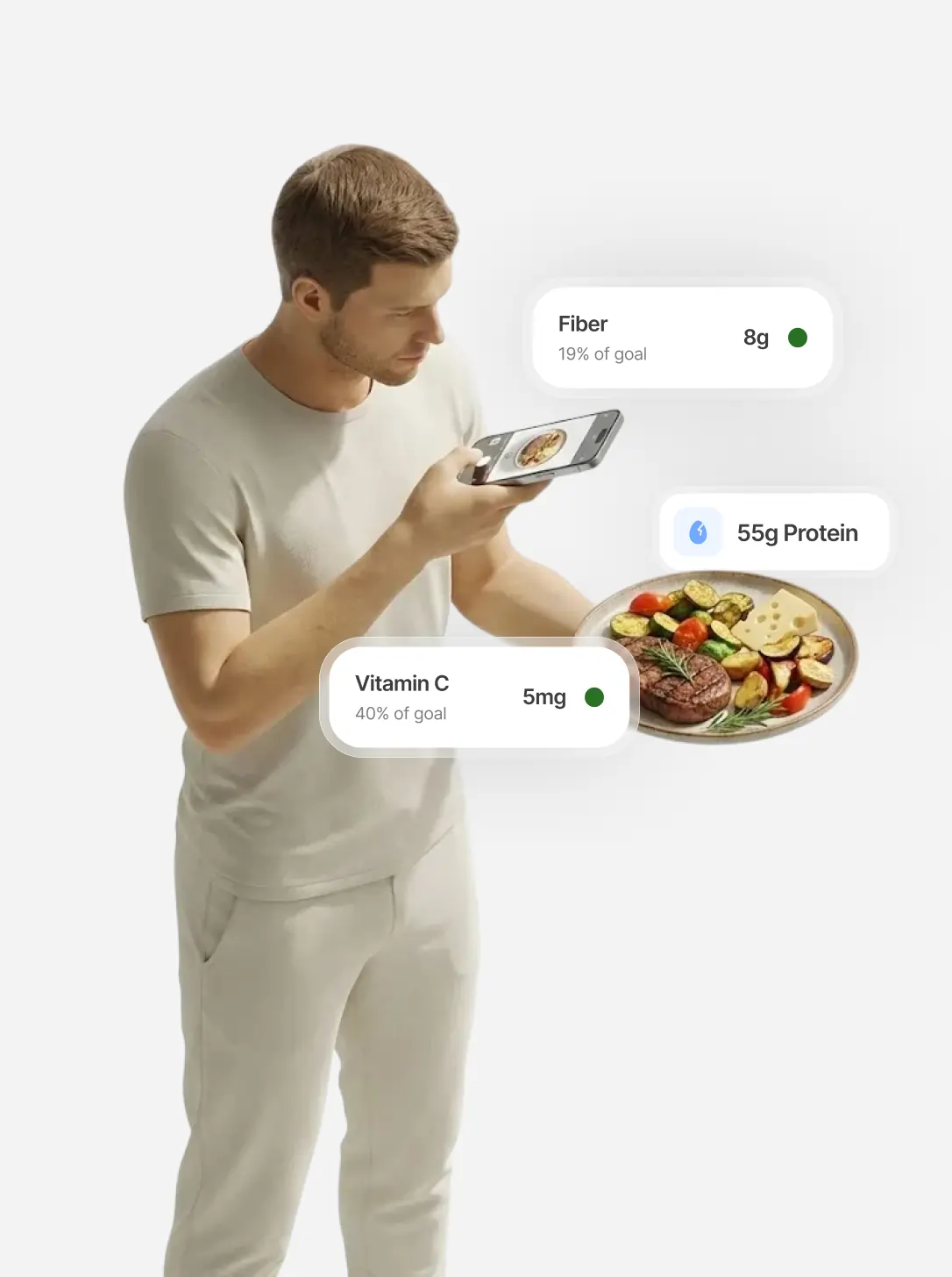
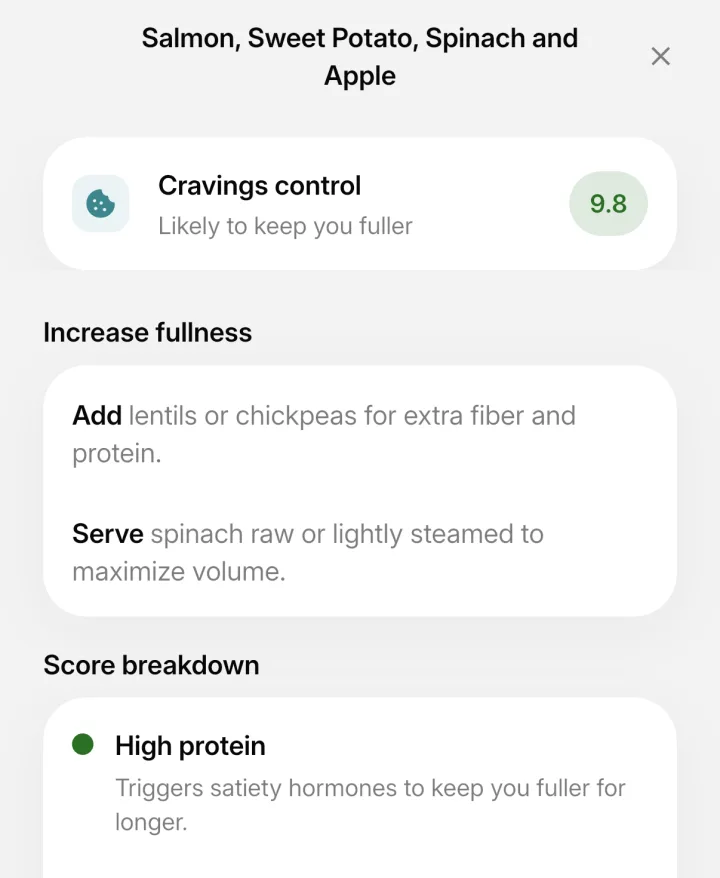
IntakeAI makes the lookup step quicker. It is a nutrition tracking app for iPhone and Android that estimates calories, protein, fiber and 50+ nutrients from a meal photo, barcode, label scan or typed description, with a food search backed by USDA FoodData Central. AI photo estimates can misjudge portion sizes or hidden oil, so check them and edit the weight when needed. Each meal also gets a 0–10 "Cravings control" score that weights protein (full marks at 25 g), fiber (full marks at 10 g), calorie density and processing level, among other factors. It is an estimate to help you compare meals, not a guarantee.
The app can also suggest foods that fill nutrient gaps for the day or week, which is a handy way to find new foods to rotate into meals.
Frequently asked questions
What food keeps you full the longest?
In the satiety index study, boiled potatoes were the most filling of 38 foods, at more than three times white bread for the same calories. Protein-rich foods such as eggs, fish, cottage cheese and Greek yogurt, and legumes such as lentils and beans, are also very filling.
What should I eat when I have cravings?
If you are actually hungry, choose a snack with protein or fiber, such as Greek yogurt with berries, cottage cheese with fruit, edamame or air-popped popcorn. If you ate recently, the craving may pass on its own or with a short walk.
Is protein or fiber better for reducing cravings?
Protein has more consistent evidence. Raising protein from 15% to 30% of calories reduced intake by 441 kcal a day in one study, while most fiber treatments in a systematic review did not reduce intake in the short term. Combining both, as legumes do, is a good approach.
How much protein should a meal have to keep me full?
Many people find that around 25 g of protein per meal helps. Examples include 1 cup of cottage cheese (28 g), 3 oz of chicken breast (26 g) or Greek yogurt with almonds (about 23 g). Your total needs depend on your body size and goals.
Related guides

How to Reduce Food Cravings and Food Noise
The main guide to why cravings happen and how your meals can quiet them.
READ MORE
Science-Backed Ways to Reduce Food Cravings
Nine strategies ranked by the strength of the research behind them.
READ MORE
How to Stop Thinking About Food All the Time
What drives constant food thoughts and eight steps to quiet them.
READ MOREFind out how filling your meals really are
Log a meal with a photo, barcode or description and IntakeAI estimates its protein, fiber, calories and 50+ nutrients, with a Cravings control score from 0 to 10.
Sources
- Holt SH et al. (1995). A satiety index of common foods. European Journal of Clinical Nutrition, 49(9):675–90. PubMed
- U.S. Department of Agriculture, Agricultural Research Service. FoodData Central, SR Legacy (FDC IDs 171477, 173709, 175168, 173424, 170894, 173417, 172475, 168411, 172421, 173735, 173757, 173904, 170438, 169967, 167755, 169118, 171688, 167959, 170554, 170567). USDA FoodData Central
- Weigle DS et al. (2005). A high-protein diet induces sustained reductions in appetite, ad libitum caloric intake, and body weight despite compensatory changes in diurnal plasma leptin and ghrelin concentrations. American Journal of Clinical Nutrition, 82(1):41–8. PubMed
- Vander Wal JS et al. (2005). Short-term effect of eggs on satiety in overweight and obese subjects. Journal of the American College of Nutrition, 24(6):510–5. PubMed
- Li SS et al. (2014). Dietary pulses, satiety and food intake: a systematic review and meta-analysis of acute feeding trials. Obesity, 22(8):1773–80. PubMed
- Clark MJ, Slavin JL (2013). The effect of fiber on satiety and food intake: a systematic review. Journal of the American College of Nutrition, 32(3):200–11. PubMed
- Flood JE, Rolls BJ (2007). Soup preloads in a variety of forms reduce meal energy intake. Appetite, 49(3):626–34. PubMed
- Nguyen V et al. (2012). Popcorn is more satiating than potato chips in normal-weight adults. Nutrition Journal, 11:71. PubMed
This article is for general education and is not medical advice. If you have a medical condition, an eating disorder, are pregnant, or take medication, speak to a doctor or registered dietitian before changing your diet. IntakeAI's nutrition figures and scores are estimates to guide your choices.