How to Stop Thinking About Food All the Time

How do you stop thinking about food all the time?
You quiet constant food thoughts by fixing what drives them: eat enough at regular meals, get roughly 25% of your calories from protein, sleep at least 7 hours, and reduce the food cues around you, instead of trying to push the thoughts away, which studies show can backfire. Food thoughts are normal. They become "food noise" when they are loud, frequent and hard to switch off, and that usually has identifiable causes: too little food, the wrong mix of food, too little sleep, or a brain trained to react to food cues. Sometimes it is a sign of something that needs professional support, which we cover below.
Key takeaways
- Researchers describe "food noise" as heightened food cue reactivity: internal cues (hunger, mood, hormones) and external cues (sights, smells, ads) trigger repeated thoughts about eating.
- Strict restriction reliably increases preoccupation with food; a moderate calorie deficit is easier on your head than a crash diet.
- In a 12-week trial of 27 men on a diet, those eating 25% of calories from protein reported less late-night preoccupation with food than those eating 14%.
- Trying to suppress food thoughts can make things worse: restrained eaters told to suppress thoughts of chocolate ate more of it afterwards.
- GLP-1 medicines such as semaglutide reduce cravings in trials, which is why people talk about them "turning down food noise", but they are prescription drugs, not a self-help strategy.
What is food noise, really?
"Food noise" started as a phrase patients used, not a medical term. It took off when people taking GLP-1 receptor agonists like semaglutide described the constant mental chatter about food going quiet. A 2023 narrative review in Nutrients by researchers at Penn State and Dartmouth tried to pin the idea down. They linked it to food cue reactivity: how strongly your brain and body respond to anything that signals food. Their model groups the drivers into cues (a bakery smell, a TikTok video, boredom, the time of day), influencers that turn the volume up or down (hunger, sleep, stress, past dieting, medication), and the reactions that follow (thoughts, cravings, eating).
That framing is useful because it tells you where to push. You cannot delete food from the world, but you can change several of the influencers, and you can reduce how many cues you meet each day.
Why GLP-1 medicines come up in this conversation
In a 12-week crossover trial of 30 adults with obesity, semaglutide cut the amount people chose to eat at self-serve test meals by 24% compared with placebo and was associated with less hunger, fewer food cravings and better control of eating. Several authors worked for the manufacturer. In the larger STEP 5 trial, a subgroup of 174 participants filled in a control-of-eating questionnaire, and craving-control scores stayed better than placebo across two years.
Two things follow. First, this is strong evidence that food noise has a biological component; it is not a character flaw. Second, these medicines are prescribed for specific medical criteria and have side effects, so if you think you might qualify, that is a conversation for your doctor rather than something to solve with an online purchase.
What makes food thoughts so loud?
Most people dealing with constant food thoughts have more than one of these going on at once. The table summarizes the main drivers with the best human evidence we found.
| Driver | What it feels like | What the research found |
|---|---|---|
| Eating too little / strict dieting | Planning meals hours ahead, thinking about "forbidden" foods | A review of starvation and dieting research linked restriction to food preoccupation, distractibility and later binges (Polivy, 1996) |
| Recent weight loss | Hungrier than before, even on the same meals | After losing about 13.5 kg, 50 adults still had higher ghrelin and hunger one year later (Sumithran, 2011) |
| Low-protein meals | Evening grazing, "I'm full but still want something" | 25% vs 14% protein lowered late-night desire to eat and food preoccupation in 27 dieting men (Leidy, 2011) |
| Short sleep | Snack-focused, especially for sweet and starchy foods | Two nights of restricted sleep raised hunger 24% and ghrelin 28% in 12 young men (Spiegel, 2004) |
| Fighting the thought | "Don't think about cake" on repeat | Restrained eaters who suppressed chocolate thoughts ate more chocolate afterwards (Erskine, 2010; 116 women) |
The weight-loss row matters for anyone who has dieted before. In the New England Journal of Medicine study, hormone changes that push appetite up had not returned to baseline a year after a very-low-calorie diet. If food is on your mind more since you lost weight, that is expected physiology, and it is a good reason to build meals that keep you full rather than to cut harder. Our guide to managing cravings while dieting goes deeper on that situation.
When constant food thoughts are a warning sign
Persistent, intrusive thoughts about food can be linked to restriction and to disordered eating. A review by psychologist Janet Polivy found that both starvation and self-imposed dieting produced preoccupation with food, low mood, distractibility and binges once food was available. Speak to a doctor, a registered dietitian or an eating disorder specialist if any of these apply:
- Food thoughts take up so much of your day that they affect work, study or relationships.
- You regularly eat a large amount in a short time and feel you cannot stop. The NIDDK describes binge eating disorder as binge eating at least once a week for three months alongside feeling out of control.
- You follow rigid food rules, skip meals to "make up" for eating, or feel intense guilt after eating.
- You are losing weight quickly or are underweight and still thinking about food constantly.
In those cases, the advice in this article (eat regularly, eat enough, stop fighting the thoughts) still points the right way, but it is not a substitute for treatment. Tracking numbers can also make some eating disorders worse, so skip the tracking section if that is you.
8 steps to reduce food noise in your head
These are ordered roughly by how much difference they tend to make. Start with the first three before worrying about the rest.
- Stop under-eating. If you are dieting, aim for a moderate deficit (losing around 0.5–1 lb a week) rather than the biggest cut you can tolerate. A brain that is short on fuel will keep putting food on the agenda.
- Eat at predictable times. In the Leidy trial, eating three meals versus six smaller ones made no difference to daily hunger or food preoccupation, and three meals gave more evening fullness in the higher-protein group. Pick a rhythm that suits you and keep it fairly consistent so your brain is not constantly asking "when's the next meal?"
- Put protein in every meal. The higher-protein group got about 25% of calories from protein. For many people that means a palm-sized portion of chicken, fish, tofu, eggs, Greek yogurt or legumes at each meal. Note the honest caveat: in that study, protein did not change daily hunger or food thoughts, only the late-night ones, which is when many people struggle most.
- Protect your sleep. The Spiegel trial was small and short, but it found that appetite for calorie-dense, high-carbohydrate foods rose 33–45% after two short nights. If your food thoughts spike on tired days, treat sleep as part of the plan.
- Turn down the cues. Keep tempting foods out of sight or out of the house, mute food accounts that make you hungry, and avoid scrolling recipe content when you are already hungry. Fewer cues means fewer prompts to think about food.
- Notice the thought instead of fighting it. In an analog study of 98 students who carried a box of chocolates for 48 hours, acceptance-based techniques (noticing the urge and letting it pass) helped most in those who were most sensitive to food around them. It is one small study, but it fits with the suppression research: arguing with the thought keeps it alive.
- Check whether it is hunger. If you last ate five hours ago, the answer is food, not mindfulness. Our guide on telling cravings from hunger gives a quick checklist.
- Drop the "forbidden food" list. Labeling foods as off limits tends to make them more interesting. Plan for them in normal portions instead.
If you want the bigger picture on what makes cravings stronger or weaker, start with our main guide to reducing food cravings and food noise, and see how to control cravings without relying on willpower for environment-based strategies.
Track calories & nutrients fast



How to see what is driving your food thoughts
The steps above work better when you know which ones apply to you. A simple manual method: for one week, write down what you ate, roughly how much protein each meal had, how you slept, and when food thoughts got loud (a 1–5 rating is enough). Look up protein on the package label or in the free USDA FoodData Central database. By the end of the week, most people see a pattern, for example noisy evenings after a low-protein lunch, or bad days after short nights.
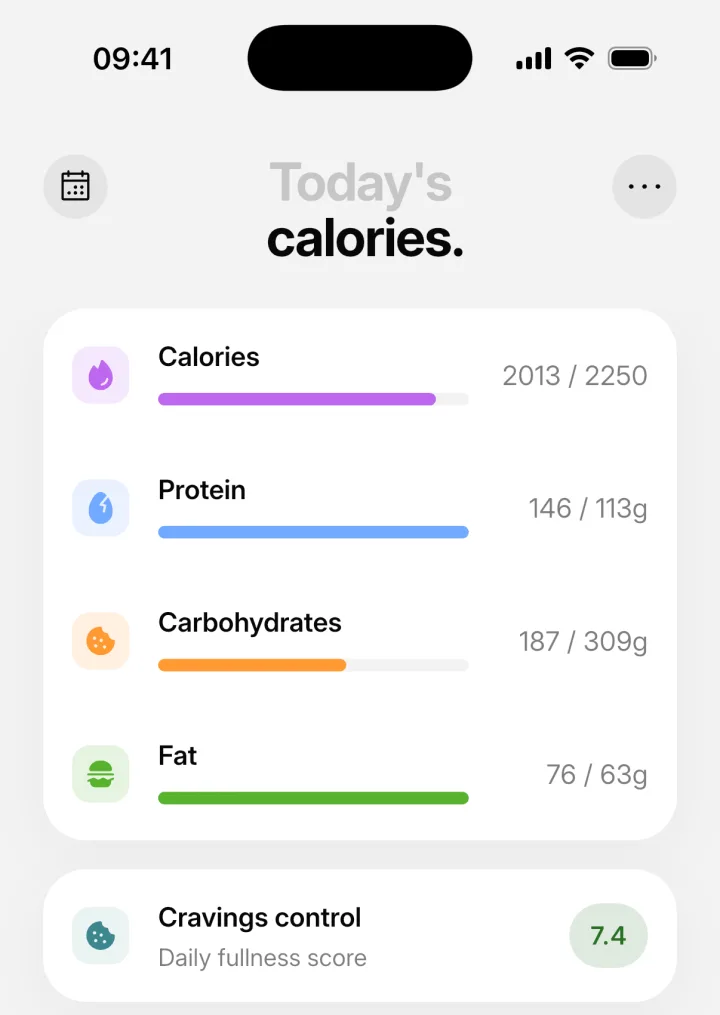
The manual version works, but the lookups are tedious, which is where an app is genuinely easier. IntakeAI is an iPhone and Android nutrition app designed to help you reduce cravings. It estimates calories, protein, carbs, fat and 50+ nutrients from a photo, a barcode or a typed description of your meal. You can see your protein for the day against a target as you go, rather than adding it up at night. Photo estimates can miss portion sizes or hidden oils, so check the result and edit the portion when it looks off.
IntakeAI also gives each meal a "Cravings control" score from 0 to 10, calculated from protein, fiber, calorie density, processing level and a few other factors. Treat it as a rough guide to how filling a meal is likely to be, not a promise that the thoughts will stop.
Frequently asked questions
Why do I think about food all the time?
The most common reasons are eating too little (including strict dieting), recent weight loss, meals low in protein, short sleep, and lots of food cues around you. Trying hard not to think about food can also make thoughts more frequent. If food thoughts are intrusive and affect daily life, speak to a doctor or registered dietitian.
Is food noise a real thing?
It is a popular term rather than a diagnosis. Researchers link it to food cue reactivity, meaning how strongly you respond to internal cues like hunger and external cues like the sight or smell of food. That response is influenced by biology, sleep, stress and dieting history.
Do GLP-1 medications reduce food noise?
Trials of semaglutide found less hunger, fewer cravings and better control of eating compared with placebo, which matches what many patients describe as quieter food noise. These are prescription medicines with medical criteria and side effects, so discuss them with a doctor.
Can constant thoughts about food be a sign of an eating disorder?
They can be. Food preoccupation is common with restrictive dieting and with disordered eating, and regular episodes of eating large amounts while feeling out of control may point to binge eating disorder. A doctor, registered dietitian or eating disorder specialist can help.
Related guides

How to Reduce Food Cravings and Food Noise
The main guide: why cravings happen and how your meals can make them quieter.
READ MORE
Cravings vs Hunger: How to Tell the Difference
A quick way to tell whether you need food or are reacting to a cue.
READ MORE
How to Manage Cravings When Dieting
Why cravings get stronger in a calorie deficit and what helps.
READ MORESee which meals keep your food thoughts quieter
Log meals with a photo, barcode or short description and IntakeAI estimates calories, protein, fiber and 50+ nutrients, plus a Cravings control score for each meal.
Sources
- Hayashi D et al. (2023). What is food noise? A conceptual model of food cue reactivity. Nutrients, 15(22):4809. PubMed
- Blundell J et al. (2017). Effects of once-weekly semaglutide on appetite, energy intake, control of eating, food preference and body weight in subjects with obesity. Diabetes, Obesity and Metabolism, 19(9):1242–51. PubMed
- Wharton S et al. (2023). Two-year effect of semaglutide 2.4 mg on control of eating in adults with overweight/obesity: STEP 5. Obesity, 31(3):703–15. PubMed
- Polivy J (1996). Psychological consequences of food restriction. Journal of the American Dietetic Association, 96(6):589–92. PubMed
- Sumithran P et al. (2011). Long-term persistence of hormonal adaptations to weight loss. New England Journal of Medicine, 365(17):1597–604. PubMed
- Leidy HJ et al. (2011). The effects of consuming frequent, higher protein meals on appetite and satiety during weight loss in overweight/obese men. Obesity, 19(4):818–24. PubMed
- Spiegel K et al. (2004). Sleep curtailment in healthy young men is associated with decreased leptin levels, elevated ghrelin levels, and increased hunger and appetite. Annals of Internal Medicine, 141(11):846–50. PubMed
- Erskine JA, Georgiou GJ (2010). Effects of thought suppression on eating behaviour in restrained and non-restrained eaters. Appetite, 54(3):499–503. PubMed
- Forman EM et al. (2007). A comparison of acceptance- and control-based strategies for coping with food cravings: an analog study. Behaviour Research and Therapy, 45(10):2372–86. PubMed
- National Institute of Diabetes and Digestive and Kidney Diseases. Binge eating disorder. NIDDK
This article is for general education and is not medical advice. If you have a medical condition, an eating disorder, are pregnant, or take medication, speak to a doctor or registered dietitian before changing your diet. IntakeAI's nutrition figures and scores are estimates to guide your choices.