Cravings vs Hunger: How to Tell the Difference

Cravings vs hunger: how do you tell the difference?
Hunger builds gradually over a few hours, is felt in your body, and can be satisfied by almost any food; a craving arrives suddenly, wants one specific food, and can persist even after a meal. A quick test: if a plain meal like chicken, rice and vegetables sounds fine right now, it is probably hunger. If only chocolate, chips or pizza will do, it is more likely a craving.
The distinction matters because the right response is different. Real hunger is a signal to eat a proper meal, and ignoring it tends to make cravings worse later. A craving is usually a wave that peaks and fades, and it responds to a pause, a change of scene or a planned portion. The comparison table and checklist below help you decide which one you are dealing with in under a minute.
Key takeaways
- The hunger hormone ghrelin rose nearly twofold just before meals and fell within an hour of eating in a 24-hour study of 10 adults.
- Cravings are normal: 97% of women and 68% of men in a survey of over 1,000 college students reported having them.
- Craved foods were more than twice as energy-dense as participants' usual diet (3.7 vs 1.7 kcal per gram) in a study of 32 women.
- A craving can be hunger in disguise: people who are more prone to hunger reported more frequent cravings.
- A few minutes of an absorbing visual task, such as playing Tetris, reduced the strength and vividness of real-life cravings in a lab study.
What physical hunger is (and how it feels)
Physical hunger is your body's request for energy. One of its chemical messengers is ghrelin, a hormone made mainly in the stomach. In a University of Washington study that sampled blood 38 times over 24 hours in 10 healthy adults, ghrelin rose nearly twofold immediately before each meal and dropped to its low point within an hour after eating. That rhythm is why hunger tends to follow your usual meal times and fades soon after you eat.
Typical physical signs include:
- An empty, hollow or gnawing feeling in your stomach, sometimes with rumbling
- Gradual onset — it has been building for an hour or more
- Low energy, poor concentration, irritability or a mild headache if you wait too long
- It has usually been 3–5 hours since a proper meal
- Many different foods would sound good, including plain ones
- It goes away after a normal-sized meal and you feel satisfied
What a craving is
A craving is an intense desire for a specific food. It is extremely common: in a survey of more than 1,000 college students, 97% of women and 68% of men reported food cravings, chocolate was the most common target, and most said they gave in at least half the time. Self-reported surveys have limits, but the message is clear — having cravings is normal, not a sign that something is wrong with you.
Craved foods also have a recognizable profile. In a 6-month trial of 32 women with overweight, the foods they craved averaged 3.7 kcal per gram, more than double the 1.7 kcal per gram of their habitual diet, and were lower in protein and fiber and higher in fat. Cravings also cluster in time: one interview study found they tended to occur in the late afternoon and early evening rather than evenly through the day.
Cravings are not reliable signs of a nutrient deficiency. When young adults in a Monell Center study lived on a nutritionally complete but monotonous liquid diet, their cravings increased — mostly for savory main dishes that tasted different from the diet. Boredom with food was enough; nutritional deprivation was not needed. If you want to understand why cravings so often point at chips, pastries and takeout, our guide on why you always crave junk food goes deeper.
Physical hunger vs cravings: side-by-side
| Signal | Physical hunger | Craving or emotional eating |
|---|---|---|
| Onset | Gradual, over an hour or more | Sudden, often within seconds of a cue |
| Where you feel it | Stomach: empty, rumbling, hollow | Mouth and mind: you can picture or almost taste the food |
| Food flexibility | Most foods sound good, including plain ones | One specific food or type (sweet, salty, crunchy) |
| Time since last meal | Usually 3–5 hours or more | Can strike right after eating |
| Typical trigger | Time and an empty stomach | Stress, boredom, tiredness, a smell, an ad, a habit time or place |
| Energy density of what you want | Anything that fills you | Usually dense foods (about 3.7 kcal/g in one study vs 1.7 kcal/g usual diet) |
| If you wait 10–15 minutes | It stays or grows | It often weakens, especially if you are absorbed in something |
| After eating | Satisfied, then it fades | May keep going past fullness; sometimes guilt follows |
A 30-second checklist
Run through these questions when the urge hits. The more "yes" answers in the first three, the more likely it is physical hunger:
- Has it been more than 3 hours since a real meal?
- Would a plain option — an apple, eggs, a sandwich — satisfy me?
- Can I feel it in my stomach rather than just in my head?
- Did it appear suddenly after a cue? A stressful message, scrolling past food, walking past a bakery, sitting on the sofa at 9pm.
- Am I tired, bored, anxious or celebrating?
- Does only one specific food feel acceptable?
Mostly "yes" to 1–3: eat a proper meal or snack. Mostly "yes" to 4–6: you are probably dealing with a craving, and the steps below are a better fit than food. A mixture is common, and that is the gray zone.
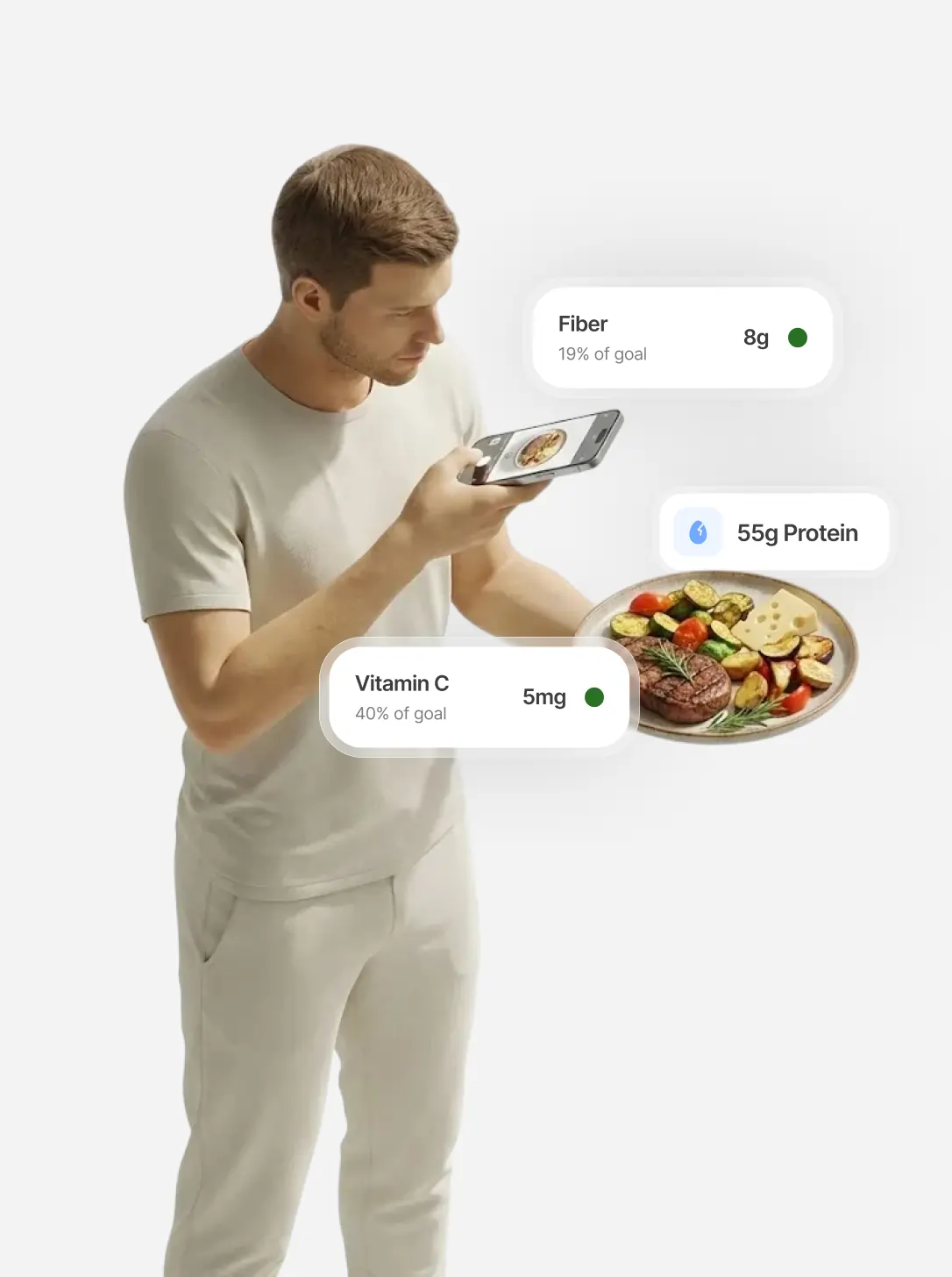
Track calories & nutrients fast


The gray zone: when hunger turns into a craving
The neat split in the table breaks down when you are under-fed. Skip lunch and by 5pm you may not feel "stomach hungry" at all — you just really want pastries. In the same 6-month study of 32 women, people with a greater susceptibility to hunger reported more frequent cravings, and after six months of calorie restriction, hunger scores were linked to how often and how strongly they craved, and how often they gave in.
So if your cravings are specific and it has been five hours since you ate, treat hunger first. Eat something with protein and fiber, wait 20 minutes, and see what is left of the craving. Often it is smaller and easier to handle with a small planned portion. If this pattern is your daily routine, the bigger fix is meal structure — covered in how to control cravings without willpower.
A note on thirst: you will often read that thirst is "commonly mistaken" for hunger. We could not find strong evidence for that specific claim. A glass of water is still a harmless way to pause and give yourself a minute to run the checklist.
What to do once you know which it is
If it is hunger
Eat. A meal with a palm-sized portion of protein, a vegetable or fruit, and some slow-digesting carbohydrate will usually hold you for several hours. Constantly overriding real hunger tends to backfire later in the day.
If it is a craving
- Name it. "This is a craving for chocolate, and I ate two hours ago." Labeling it creates a small gap between urge and action.
- Change the picture in your head. Cravings are partly vivid mental imagery. In a Plymouth University study, people who played Tetris reported weaker, less vivid cravings than those who waited for a program that never loaded. Any absorbing visual task — a puzzle, a short game, a sketch — is a reasonable stand-in.
- Move away from the cue. Leave the kitchen, close the delivery app, step outside for five minutes.
- Decide, don't drift. If the craving is still there after 15 minutes and you want the food, have a set portion on a plate and eat it sitting down. A planned portion is a choice, not a failure.
If it is emotional
Sweet, fatty foods really can lift mood and soften stress in the short term — a review of emotional influences on food choice describes how sensory cues like sweetness and fatty texture act on brain reward pathways. That is why stress cravings feel so convincing. Ask what the feeling needs: rest, company, a break, or a way to let off steam. Sometimes food is a fine answer; it just shouldn't be the only one. For persistent mental chatter about food, see how to stop thinking about food all the time.
Keeping track: notes vs an app
The checklist gets easier once you know your own patterns, and the simplest way to learn them is to write things down. Before eating outside your planned meals, jot the time, a hunger rating from 1 (not hungry) to 10 (starving), what you want, and what was happening. After a week, look at how many of your "hungry" moments were really 3s and 4s.
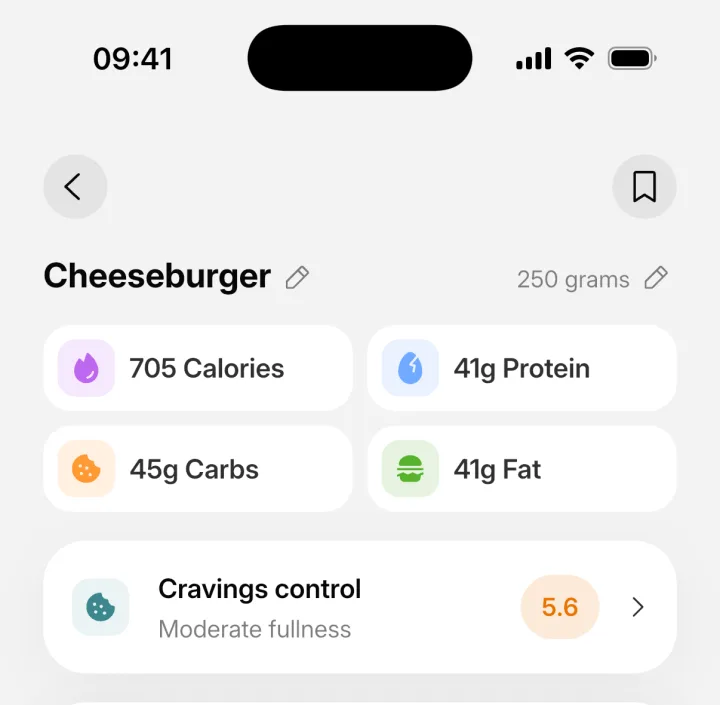
The other half of the picture is what you ate before the urge, and that is where an app saves time. IntakeAI is an iPhone and Android nutrition app designed to help you reduce cravings. It estimates calories, macros and 50+ nutrients from a meal photo, barcode, label scan or short typed description. Each logged meal gets a 0–10 Cravings control score based on its protein, fiber, calorie density, hyper-palatable combinations, satiety-related nutrients and processing level, and your day gets a fullness score. If a craving hits at 4pm, you can open your lunch and see whether it was a low-protein, low-fiber meal — a likely gray-zone moment — or a filling one, which points more toward a cue-driven craving.
The scores are estimates to guide you, not a diagnosis of why you feel a craving, and AI photo estimates can miss hidden oils or misjudge portions, so edit the weight when it looks wrong. IntakeAI does not have a dedicated hunger or craving journal, so keep those notes on paper or in a notes app.
When to get help
Talk to a doctor if hunger is extreme, sudden or comes with shakiness, sweating or confusion — especially if you have diabetes, where these can be signs of low blood sugar and your care plan comes first. Appetite-changing medicines, including GLP-1 drugs, can also shift hunger signals. And if you often eat very large amounts quickly while feeling out of control, read the NHS overview of binge eating disorder and consider speaking to a professional.
For the full picture of what drives cravings and food noise, start with our main guide: how to reduce food cravings and food noise.
Frequently asked questions
How do I know if I'm hungry or just craving food?
Ask whether a plain meal would satisfy you. Physical hunger builds gradually, is felt in your stomach and accepts most foods. A craving comes on suddenly, wants one specific food and can appear soon after eating. If it has been more than 3 hours since a meal and plain food sounds good, it is probably hunger.
How long does a food craving last?
There is no fixed duration, but cravings often behave like a wave that weakens if you move away from the cue or get absorbed in something else. In one lab study, a few minutes of playing Tetris lowered the strength and vividness of real-life cravings compared with waiting.
Do cravings mean your body is missing a nutrient?
Usually not. In a study where young adults ate a nutritionally complete but monotonous diet, cravings increased anyway, mainly for foods that tasted different. Craved foods also tend to be energy-dense rather than rich in any particular nutrient.
Is it bad to give in to a craving?
No. A planned portion eaten sitting down is a reasonable choice. Problems tend to come from eating straight from the packet while distracted, or from cravings that are really unmet hunger because meals were skipped earlier in the day.
Can emotional eating feel like real hunger?
Yes. Stress, boredom and tiredness can create a strong urge to eat that feels physical. Clues that it is emotional include sudden onset, a pull toward one comforting food, and eating past fullness. If this happens often and feels out of control, speak to a doctor or dietitian.
Related guides

How to Reduce Food Cravings and Food Noise
The main guide: why cravings and constant food thoughts build up, and the meal-level changes that quiet them.
READ MORE
How to Control Cravings Without Willpower
Environment design, meal structure, if-then plans and sleep: four levers that reduce how often you need to resist.
READ MORE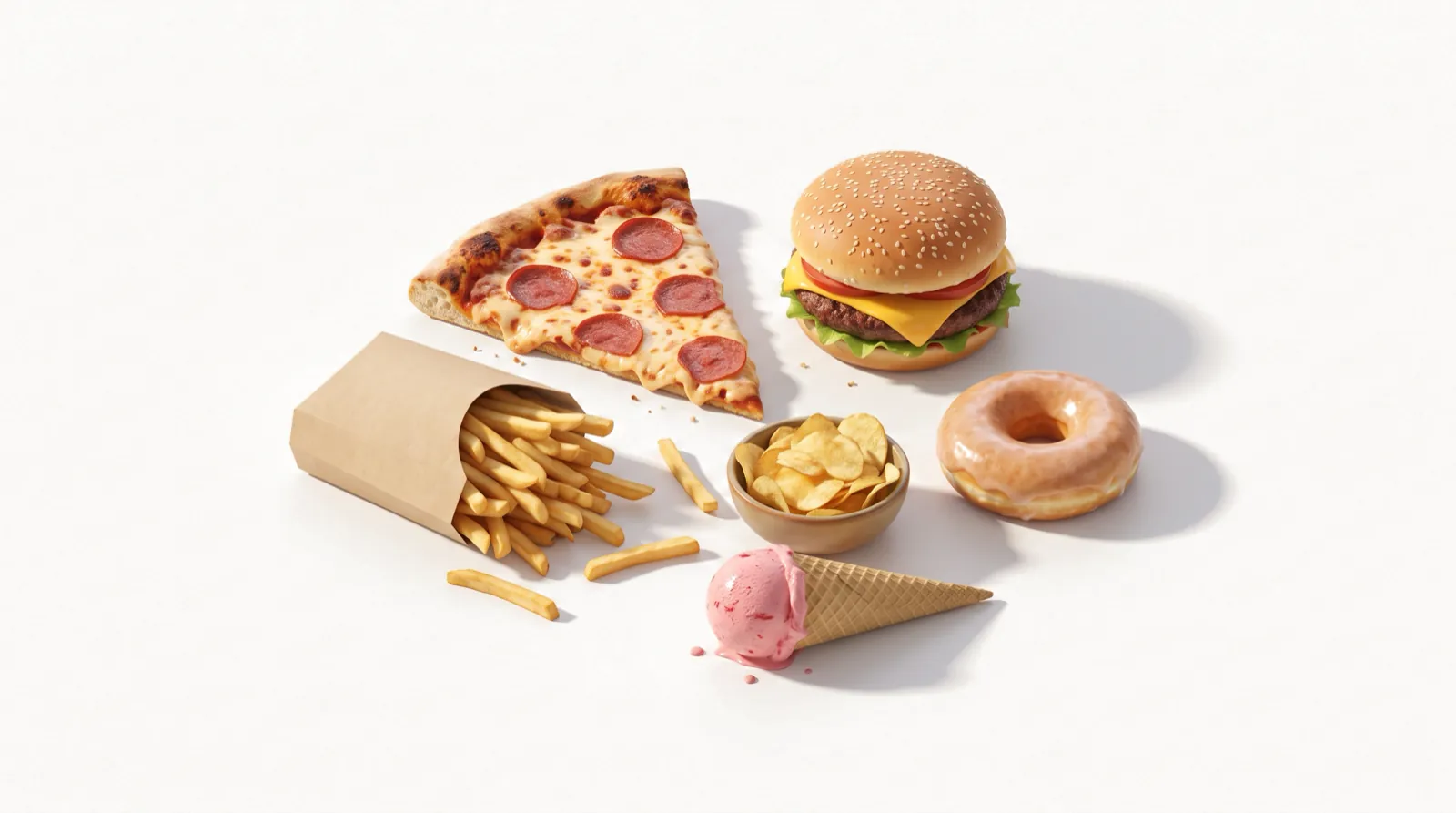
Why You Always Crave Junk Food
What makes some foods so hard to stop eating, and how to make your regular meals compete.
READ MORESee what you ate before the craving hit
IntakeAI estimates the nutrition of each meal from a photo, barcode or description and gives it a 0–10 Cravings control score, so you can spot under-filling meals behind afternoon cravings.
Sources
- Cummings DE, Purnell JQ, Frayo RS, Schmidova K, Wisse BE, Weigle DS (2001). A preprandial rise in plasma ghrelin levels suggests a role in meal initiation in humans. Diabetes, 50(8), 1714–1719. PubMed
- Weingarten HP, Elston D (1991). Food cravings in a college population. Appetite, 17(3), 167–175. PubMed
- Gilhooly CH, Das SK, Golden JK, et al. (2007). Food cravings and energy regulation: the characteristics of craved foods and their relationship with eating behaviors and weight change during 6 months of dietary energy restriction. International Journal of Obesity, 31(12), 1849–1858. PubMed
- Pelchat ML (1997). Food cravings in young and elderly adults. Appetite, 28(2), 103–113. PubMed
- Pelchat ML, Schaefer S (2000). Dietary monotony and food cravings in young and elderly adults. Physiology & Behavior, 68(3), 353–359. PubMed
- Skorka-Brown J, Andrade J, May J (2014). Playing 'Tetris' reduces the strength, frequency and vividness of naturally occurring cravings. Appetite, 76, 161–165. PubMed
- Gibson EL (2006). Emotional influences on food choice: sensory, physiological and psychological pathways. Physiology & Behavior, 89(1), 53–61. PubMed
- NHS. Binge eating disorder. NHS
This article is for general education and is not medical advice. If you have a medical condition, an eating disorder, are pregnant, or take medication, speak to a doctor or registered dietitian before changing your diet. IntakeAI's nutrition figures and scores are estimates to guide your choices.